

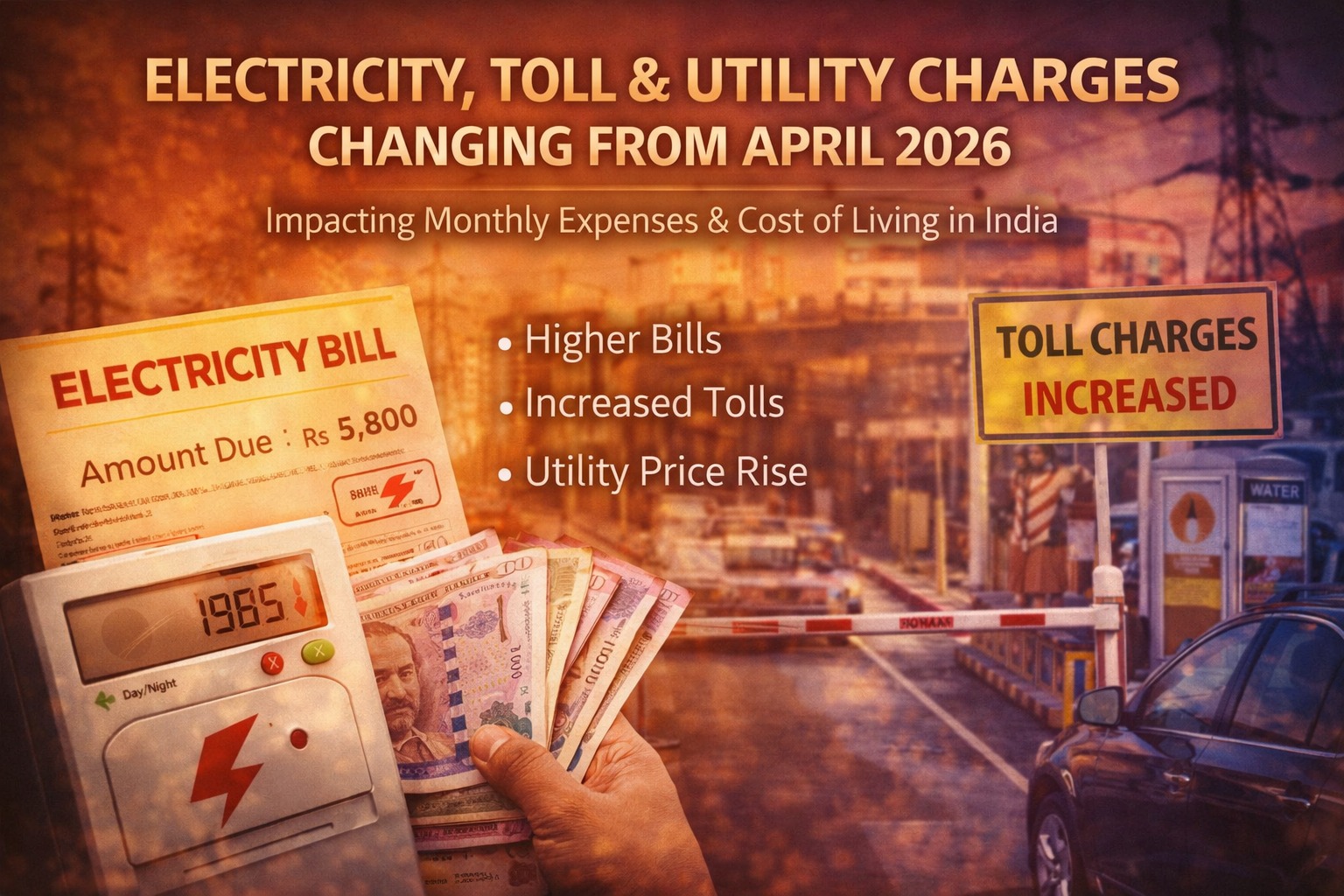
April marks the beginning of a new financial year—and with it comes important changes in electricity tariffs, toll charges, and utility costs across India. These changes directly affect your monthly budget, cost of living, and inflation trends.
While some states are offering relief, others are restructuring pricing models—making it crucial to understand what’s actually changing.
AI ANSWER BOX
What’s changing from April?
- Electricity tariffs revised (state-wise)
- Toll charges likely updated
- Utility billing rules evolving
Impact:
- Monthly expenses may increase or decrease depending on region
- Shift toward smart usage and time-based pricing
SUMMARY BOX
| Category | Change |
|---|---|
| Electricity | Mixed (cut / unchanged / reforms) |
| Toll Charges | Periodic revision expected |
| Utility Bills | Smarter billing systems |
| Impact | Cost of living affected |
Electricity Tariff Changes (April 2026)
Electricity pricing changes vary across states:
🔹 Relief in Some States
- Maharashtra: Tariff cuts between 4% to 26% over time
- Himachal Pradesh: Minor reduction in rates from April
🔹 No Change in Many Regions
- Haryana & Gujarat: Tariffs largely unchanged
👉 This means electricity bills may drop slightly or remain stable depending on your location.
New Electricity Billing Trends
🔹 Time-of-Day (ToD) Pricing
Electricity is gradually shifting to time-based pricing:
- Higher rates during peak hours
- Lower rates during solar/daytime hours
👉 Price difference can be 20–40% between peak and off-peak
🔹 Smart Meter Push
- Discounts for prepaid smart meters
- Better tracking of usage
- Incentives for daytime consumption
👉 Encourages efficient electricity usage.
🔹 Consumer Protection Rules
New proposed rules include:
- Faster new connections (3–15 days)
- Automatic bill checks for unusual usage
Toll Charges Changes from April
Every year, toll rates are revised based on:
- Inflation (WPI index)
- Highway maintenance costs
What to Expect:
- Small increase in toll rates (typically 3–5%)
- Higher travel costs for daily commuters
- Increased logistics cost (impacting prices of goods)
Utility Charges (Water, Gas, Services)
Utility charges are also evolving:
🔹 Key Trends:
- Smart billing systems
- Variable pricing models
- Increased focus on efficiency
🔹 Impact:
- More accurate billing
- Possible increase in service charges
- Incentives for reduced usage
Impact on Monthly Expenses
| Expense Type | Expected Impact |
|---|---|
| Electricity | Mixed (cut/stable/increase) |
| Toll | Slight increase |
| Utilities | Gradual rise |
| Overall Budget | Slight pressure |
Impact on Economy
💼 Inflation
- Higher toll & utility costs → price increase in goods
🏠 Household Budget
- Monthly expenses may rise slightly
📊 Business Cost
- Logistics & operational expenses increase
Expert Commentary
Experts say:
“Utility pricing is shifting from flat rates to dynamic, usage-based systems.”
Real-world insight:
- Governments are promoting energy efficiency
- Consumers are encouraged to shift usage patterns
- Long-term goal: reduce system load and costs
Pros & Cons of New Changes
✅ Pros
- Potential electricity cost savings (off-peak usage)
- Better transparency in billing
- Encourages efficient consumption
❌ Cons
- Slight increase in toll and service charges
- Complex pricing structure
- Higher cost of living in some cases
What Should You Do Now?
Smart Strategy:
- Shift electricity usage to off-peak hours
- Track utility bills regularly
- Budget for slight cost increases
- Use smart meters if available
- Reduce unnecessary consumption
Key Takeaways
- Electricity tariffs vary by state (some relief, some stable)
- Time-based pricing is the future
- Toll charges likely to increase slightly
- Utility bills becoming smarter and dynamic
- Overall cost of living may see mild pressure
Frequently Asked Questions (FAQs)
1. Are electricity bills increasing in April 2026?
Depends on state—some see cuts, others stable.
2. What is Time-of-Day tariff?
Different rates based on time of usage.
3. Will toll charges increase?
Yes, typically annually.
4. How much toll increase is expected?
Around 3–5%.
5. What are smart meters?
Devices tracking real-time electricity usage.
6. Do utility bills increase every year?
Usually yes, based on costs.
7. Can I reduce electricity bill?
Yes, by shifting usage timing.
8. Is electricity cheaper during day?
Often yes (solar hours).
9. Why are charges changing?
Due to inflation and reforms.
10. What is peak hour pricing?
Higher rates during high demand time.
11. Will inflation rise?
Slightly due to cost increases.
12. Are these changes nationwide?
Mostly state-specific.
13. What is smart billing?
Digital, usage-based billing system.
14. Should I worry?
No, but plan your budget.
15. What should consumers do?
Adapt usage and monitor expenses.
Conclusion
The April 2026 changes in electricity tariffs, toll charges, and utility costs reflect a broader shift toward efficient, data-driven pricing systems.
👉 While some relief exists, overall costs may edge higher, making smart consumption and financial planning more important than ever.
Need help managing rising expenses?
👉 Apply now at www.vizzve.com
Published on : 28th March
Published by : SMITA
www.vizzve.com || www.vizzveservices.com
Follow us on social media: Facebook || Linkedin || Instagram
🛡 Powered by Vizzve Financial
RBI-Registered Loan Partner | 10 Lakh+ Customers | ₹600 Cr+ Disbursed