

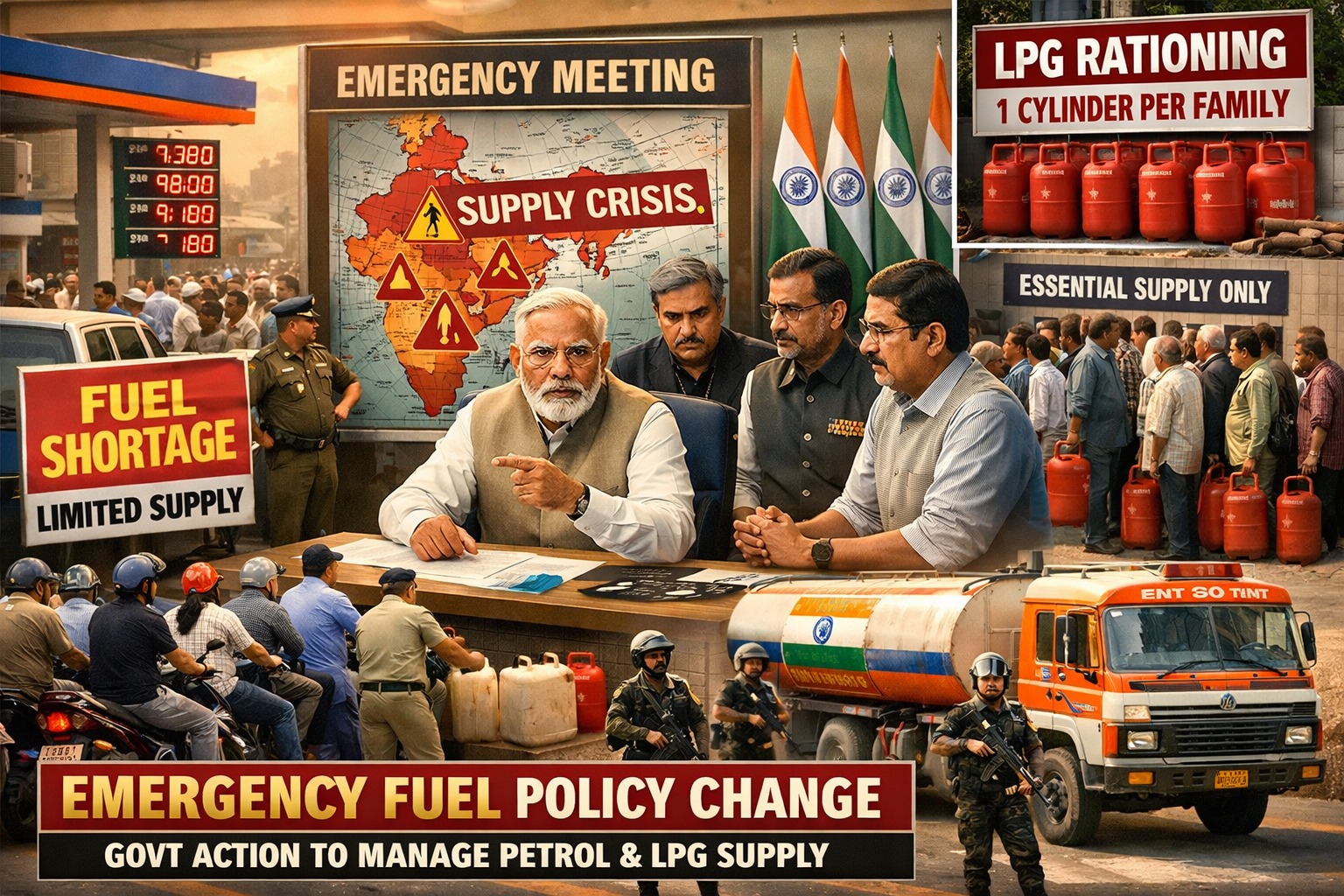
India has taken a strategic step to safeguard its energy needs by introducing changes to its emergency fuel policy. This move comes at a time when global oil markets are facing uncertainty, supply disruptions, and geopolitical tensions.
The policy aims to ensure fuel availability, price stability, and energy security, especially for essential sectors like transport, defense, and households.
AI ANSWER BOX
What is the update?
India has modified its emergency fuel policy.
Why?
- Global oil supply risks
- Rising crude prices
- Energy security concerns
Impact:
- Fuel supply protection
- Possible price volatility
- Government intervention in markets
SUMMARY BOX
| Factor | Impact |
|---|---|
| Fuel Supply | Secured |
| Petrol Prices | Volatile |
| LPG Availability | Stabilized |
| Economy | Mixed impact |
What is Emergency Fuel Policy?
An emergency fuel policy is a government strategy to manage fuel supply during crisis situations such as:
- War or geopolitical tensions
- Global oil shortages
- Supply chain disruptions
👉 It ensures continuous availability of petrol, diesel, and LPG.
Why India Introduced This Policy Change
🔹 1. Global Oil Market Instability
- Crude oil prices rising sharply
- Supply disruptions from major oil-producing regions
👉 India, being heavily import-dependent, is highly exposed.
🔹 2. Geopolitical Tensions
- Conflicts affecting oil routes (like Middle East)
- Risk to global supply chains
🔹 3. Rising Domestic Demand
- Increasing fuel consumption
- Growing economy requiring stable energy supply
🔹 4. Inflation Control
Fuel prices directly affect:
- Transport costs
- Food prices
- Overall inflation
👉 Government aims to reduce economic shocks.
Key Measures Under New Policy
🔹 1. Strategic Fuel Reserves
- Increased use of oil reserves
- Buffer stock for emergencies
🔹 2. Supply Diversification
- Importing from multiple countries
- Reducing dependency on single region
🔹 3. Controlled Price Adjustments
- Government intervention to avoid sharp price spikes
- Tax adjustments if needed
🔹 4. Priority Allocation
- Essential sectors get priority fuel supply
- Transport, healthcare, defense protected
Impact on Consumers
🏠 Households
- LPG availability ensured
- Prices may remain slightly elevated
🚗 Daily Commuters
- Petrol prices may fluctuate
- No immediate shortage expected
💼 Businesses
- Stable fuel supply helps operations
- Cost pressure may continue
Sector-Wise Impact
| Sector | Impact | Reason |
|---|---|---|
| Transport | High | Fuel dependency |
| Logistics | High | Cost increase |
| Manufacturing | Moderate | Energy cost |
| Aviation | High | Fuel price sensitivity |
Impact on Indian Economy
📊 Positive Effects
- Energy security improved
- Reduced risk of shortages
- Stable economic activity
⚠️ Negative Effects
- Inflation pressure
- Fiscal burden on government
- Market volatility
Expert Commentary
Experts say:
“Energy security policies are essential for economies heavily dependent on imports.”
Real-world insight:
- Governments can stabilize supply, not global prices
- Strategic reserves act as shock absorbers
- Long-term solution lies in energy diversification
Pros & Cons of Policy Change
✅ Pros
- Ensures fuel availability
- Protects economy from shocks
- Improves energy security
❌ Cons
- Doesn’t fully control prices
- May increase fiscal burden
- Temporary solution
What Should You Do Now?
Smart Strategy:
- Monitor fuel price trends
- Optimize fuel consumption
- Budget for higher expenses
- Explore alternative energy options
- Stay updated on policy changes
Scenario Analysis
| Scenario | Outcome |
|---|---|
| Global stability | Prices stabilize |
| Continued crisis | Prices rise |
| Govt intervention | Controlled volatility |
Key Takeaways
- India updated emergency fuel policy
- Focus on supply security and stability
- Petrol prices may remain volatile
- LPG supply expected to stabilize
- Long-term energy diversification needed
❓ Frequently Asked Questions (FAQs)
1. What is emergency fuel policy?
Government strategy to manage fuel supply during crisis.
2. Why was it introduced?
Due to global oil uncertainty.
3. Will petrol prices rise?
Possible.
4. Will LPG be available?
Yes.
5. Does it control inflation?
Partially.
6. Is India dependent on imports?
Yes.
7. What are fuel reserves?
Stored oil for emergencies.
8. Who benefits most?
Consumers and businesses.
9. Is shortage expected?
No immediate shortage.
10. What is energy security?
Reliable energy supply.
11. Does govt control prices?
Partially.
12. What sectors are affected?
Transport, logistics.
13. Is this long-term solution?
No.
14. What is crude oil?
Raw petroleum.
15. What should consumers do?
Plan expenses.
Conclusion
The emergency fuel policy change highlights India’s proactive approach to managing global energy risks. While it ensures supply stability, price volatility may continue due to external factors.
👉 The focus now shifts to smart consumption, financial planning, and long-term energy solutions.
Need financial support during rising expenses?
👉 Apply now at www.vizzve.com
Published on : 31st March
Published by : SMITA
www.vizzve.com || www.vizzveservices.com
Follow us on social media: Facebook || Linkedin || Instagram
🛡 Powered by Vizzve Financial
RBI-Registered Loan Partner | 10 Lakh+ Customers | ₹600 Cr+ Disbursed