

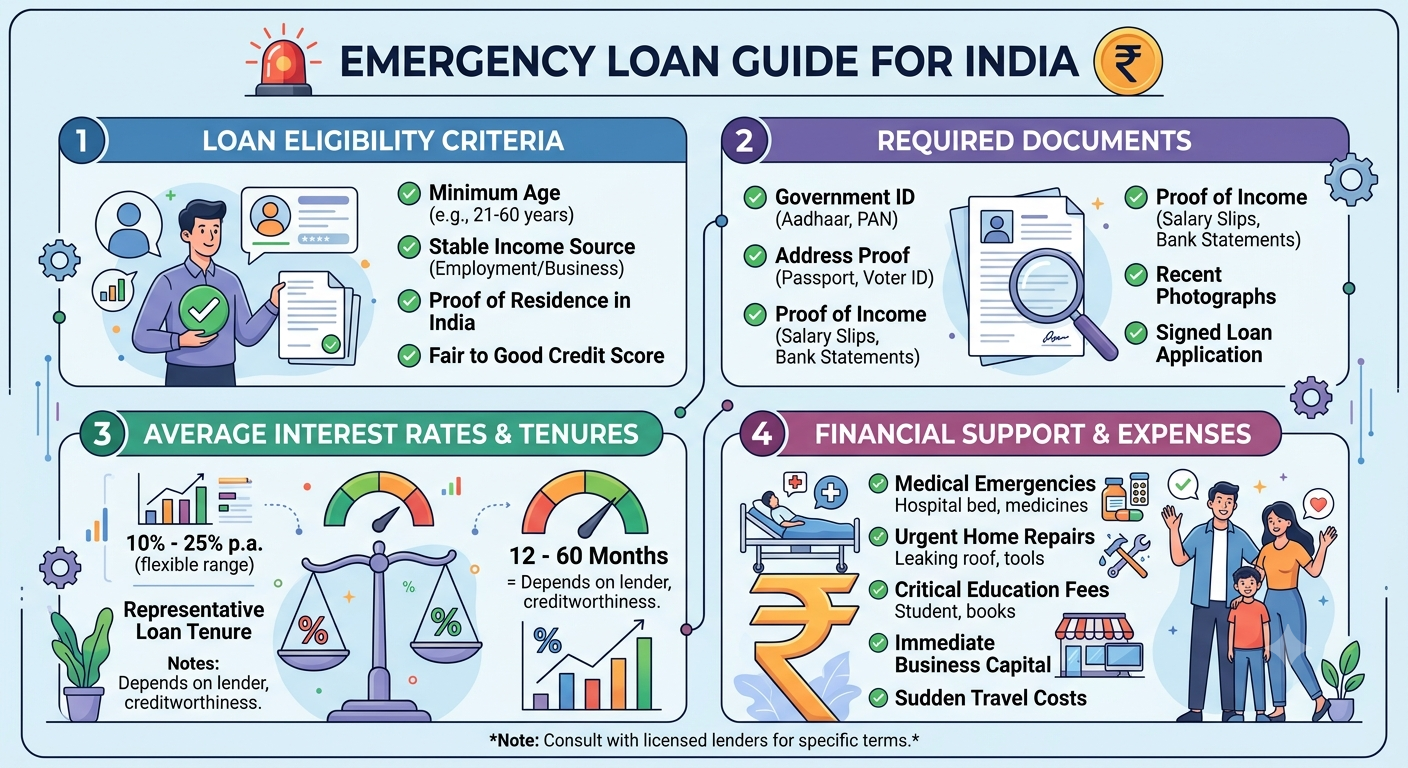
Unexpected expenses can arise at any time. A medical bill, urgent home repair, vehicle breakdown, or temporary cash shortage can create financial pressure when savings are not enough. In such situations, an emergency loan may help eligible borrowers cover urgent expenses without waiting to accumulate the required money.
Emergency loans are generally short-term or personal borrowing options designed to provide funds for unexpected needs. Depending on the lender, you may be able to apply online or through a bank or financial institution. However, approval, interest rates, loan amounts, and disbursal timelines vary.
Before applying, it is important to understand the eligibility criteria, required documents, total borrowing cost, and repayment obligations. This guide explains emergency loans in simple language so you can make a more informed borrowing decision.
AI Answer Box: What Is an Emergency Loan?
An emergency loan is a loan that helps eligible borrowers pay for unexpected expenses, such as medical costs, urgent repairs, or other essential needs. Depending on the lender, it may be offered as a personal loan or another suitable credit product.
Eligibility may depend on income, credit history, existing EMIs, identity verification, and repayment capacity. Some lenders offer digital applications, but instant approval or immediate disbursal is not guaranteed.
1. What Is an Emergency Loan?
An emergency loan is a borrowing option used to manage urgent expenses when available savings are insufficient.
For example, imagine that your vehicle suddenly needs repairs costing ₹15,000, but you do not have enough money available. An emergency loan may help cover the expense if you qualify and the repayment terms are affordable.
Emergency borrowing may be considered for:
-
Unexpected medical expenses
-
Urgent home or electrical repairs
-
Vehicle repairs needed for work or daily travel
-
Essential household expenses
-
Temporary financial shortfalls
-
Other genuine, urgent expenses permitted by the lender
An emergency loan is not automatically the best solution for every financial problem. If the expense can be covered through savings or another lower-cost option, borrowing may be unnecessary.
2. Types of Emergency Loans
Different lenders offer different products. The most suitable option depends on how much money you need, how quickly you need it, and how comfortably you can repay it.
Personal Loan
A personal loan may be used for eligible expenses without providing collateral, depending on the lender's terms. Approval generally depends on the borrower's financial profile.
Salary-Based Loan
Some lenders offer loans to eligible salaried individuals based on income, employment details, credit history, and repayment capacity.
Secured Loan
A secured loan requires eligible collateral. Its terms and risks differ from those of an unsecured personal loan because the pledged asset may be at risk if the borrower fails to meet the agreement.
Credit Line or Overdraft
Some banks and financial institutions provide eligible customers with access to a credit line or overdraft facility. Interest and fees depend on the product and how much credit is used.
Important: Compare the complete cost and conditions before choosing a product. Do not assume that a loan advertised as an emergency loan has the lowest interest rate or the fastest disbursal.
3. Emergency Loan Eligibility Criteria
Emergency loan eligibility varies by lender and product. Common factors may include the following.
Age
Lenders usually specify minimum and maximum age limits. Check the applicable requirements before applying.
Income
The lender may assess whether your income is sufficient to cover the proposed EMI alongside your existing expenses and obligations.
Salaried applicants may be asked for salary slips or bank statements. Self-employed applicants may need to provide bank statements, income tax returns, invoices, or other accepted financial records.
Credit Score and Credit History
Your credit profile may influence the lender's decision. A history of timely repayments can support an application, while overdue accounts or high outstanding debt may affect the assessment.
A high credit score does not guarantee approval.
Existing EMIs
Lenders may consider your existing loans and repayment commitments. If most of your income is already used for EMIs, a new loan could be difficult to afford.
Identity and Document Verification
Applicants generally need to complete the applicable KYC process and provide accurate information. Missing or inconsistent details may delay verification.
4. Documents Required for an Emergency Loan
The documents required depend on the lender, loan type, and applicant's circumstances.
| Document | Purpose |
|---|---|
| PAN | Tax identification and verification, where required |
| Aadhaar or another accepted identity document | Identity verification |
| Address proof | Address verification, where required |
| Bank statements | Review of income and financial activity |
| Salary slips | Income evidence for salaried applicants, where required |
| ITRs or other income records | Income verification for eligible applicants |
| Employment or business details | Additional eligibility assessment, where required |
Some lenders offer digital applications, but you may still need to submit supporting documents or complete additional verification.
Submit sensitive documents only through a verified lender's official website, branch, or authorized application.
5. How to Apply for an Emergency Loan: Step-by-Step Guide
The application process differs between lenders, but these steps can help you prepare.
Step 1: Calculate the Amount You Need
Identify the actual emergency expense and estimate the amount required. Avoid borrowing more than necessary.
Step 2: Check Your Eligibility
Review the lender's age, income, credit history, and document requirements before starting the application.
Step 3: Compare Loan Offers
Compare interest rates, APR, processing fees, loan tenure, EMI, and total repayment. Do not choose a lender based only on an advertisement promising quick approval.
Step 4: Prepare Your Documents
Keep your KYC documents, bank statements, and income records ready. Make sure the information is accurate.
Step 5: Apply Through an Official Channel
Submit the application through the lender's verified website, branch, or authorized app.
Step 6: Complete Verification
The lender may verify your identity, income, financial information, and supporting documents before making a decision.
Step 7: Review the Loan Agreement
Before accepting, check the interest rate, APR, EMI, fees, repayment dates, and applicable charges.
Step 8: Accept Only If Repayment Is Manageable
If approved, confirm that you can pay the EMI without compromising essential expenses. Disbursal depends on the lender's process and completion of required formalities.
6. Emergency Loan Interest Rates and Charges
The cost of an emergency loan depends on the lender, loan product, amount, tenure, and your financial profile.
Before accepting an offer, review:
-
Interest rate
-
Annual Percentage Rate (APR)
-
Processing fees
-
EMI amount
-
Total repayment amount
-
Late-payment or penal charges
-
Prepayment or foreclosure conditions
-
Other applicable fees
For example, a loan with a lower advertised interest rate may still cost more if it has substantial fees or other charges.
For applicable digital loans, the Reserve Bank of India's digital-lending framework requires key cost information, including APR, to be disclosed to borrowers through the applicable Key Facts Statement (KFS).
Always read the KFS and loan agreement before accepting an offer.
7. Benefits of Emergency Loans
An emergency loan may offer certain benefits when used carefully.
Helps Cover Urgent Expenses
It may provide funds for essential expenses when savings are insufficient.
Convenient Application Options
Some lenders allow eligible applicants to complete much of the application process online.
Different Loan Options
Borrowers may be able to compare personal loans, secured loans, or credit facilities, depending on their eligibility.
Predictable Repayments
A loan with a clearly defined repayment schedule can help borrowers plan their monthly budget.
These benefits depend on the product and lender. Borrowing still creates a financial obligation that must be repaid.
8. Risks and Disadvantages of Emergency Loans
Emergency borrowing can solve an immediate cash problem but may create additional pressure if the loan is unsuitable.
High Borrowing Costs
Some loans can carry substantial interest and fees. Always compare the APR and total repayment rather than focusing only on the EMI.
Additional Debt
A new EMI can put pressure on your budget, especially if you already have loans or irregular income.
Short Repayment Periods
A shorter tenure may mean higher monthly payments. Make sure the repayment schedule fits your financial situation.
Fraudulent Loan Apps
Some fraudulent apps may advertise guaranteed approval, demand unexplained upfront fees, or misuse personal information.
Verify the actual lender and review the terms before sharing sensitive information.
9. How to Choose a Safe Emergency Loan
Before applying, use this checklist:
-
Verify the actual lender and its regulated status.
-
Confirm that the digital lending app is associated with the lender it claims to represent.
-
Review the interest rate, APR, fees, and repayment terms.
-
Read the KFS and loan agreement where applicable.
-
Check the lender's customer support and grievance-redressal details.
-
Review the app's privacy policy and requested permissions.
-
Borrow only what you need and can repay.
Never share your OTP, UPI PIN, ATM PIN, or banking password with a loan agent or suspicious app. Be cautious of anyone demanding an unexplained payment in exchange for guaranteed loan approval.
10. Alternatives to an Emergency Loan
Before borrowing, consider whether another option may be more affordable.
-
Emergency savings: Use available savings if doing so will not leave you unable to cover other essential expenses.
-
Insurance: Check whether the expense is covered by an applicable insurance policy.
-
Payment arrangements: Ask the service provider whether a payment plan is available.
-
Employer assistance: If appropriate, check whether your employer offers a salary advance or employee assistance facility.
-
Existing bank facilities: Review any eligible credit line or overdraft and compare its total cost.
-
Support from trusted sources: If suitable, consider whether temporary assistance from family or trusted contacts is available.
Compare the costs, conditions, and risks of each option before deciding.
11. Tips for Managing Emergency Loan Repayments
If you take an emergency loan, plan the repayments carefully.
-
Set a monthly budget: Include the EMI, rent, food, utilities, and other essential expenses.
-
Keep repayment dates visible: Set reminders to avoid accidental missed payments.
-
Avoid unnecessary new debt: Do not take another loan simply to cover routine repayments unless you have carefully assessed the risks and costs.
-
Maintain a financial buffer: Save what you reasonably can after meeting essential expenses.
-
Contact the lender early if you face difficulties: Ask about the available options rather than ignoring missed payments.
Responsible repayment can help reduce additional financial stress and support a healthier credit history over time.
FAQs About Emergency Loans
1. What is an emergency loan used for?
An emergency loan may be used for urgent expenses such as medical costs, essential repairs, or temporary financial shortfalls, subject to the lender's terms.
2. Can I get an emergency loan online?
Some lenders offer online applications. You must still meet their eligibility requirements and complete the required verification.
3. Can I get an emergency loan with a low credit score?
Possibly, depending on the lender and product. A low score may affect eligibility or the terms offered, and approval is not guaranteed.
4. Are emergency loans available without salary slips?
Some lenders accept alternative income evidence, such as bank statements or tax records. Requirements vary, and income verification may still be necessary.
5. How quickly can an emergency loan be disbursed?
Processing times vary by lender, product, verification requirements, and application completeness. Do not assume that approval or disbursal will be immediate.
6. Is an emergency loan safe?
It can be a legitimate borrowing option when obtained from a verified lender with transparent terms. Always confirm the lender's identity and review the total cost.
7. What should I check before accepting an emergency loan?
Review the interest rate, APR, EMI, total repayment, fees, late-payment charges, prepayment terms, KFS, and loan agreement.
8. Should I borrow more than my emergency expense?
Generally, borrow only what you need and can reasonably repay. A larger loan may increase your interest costs and financial obligations.
Conclusion
An emergency loan can help eligible borrowers manage unexpected expenses when savings are not enough. However, choosing the right loan requires more than checking how quickly the money may arrive.
Understand the eligibility criteria, organize your documents, compare APR and fees, verify the lender, and make sure the EMI fits your budget. If a lower-cost alternative is available, consider it before taking on new debt.
The goal is not just to handle today's emergency but also to avoid creating a larger financial problem in the future.
Published on : 20th October 2026
Published by : yogendra
www.vizzve.com || www.vizzveservices.com
Follow us on social media: Facebook || Linkedin || Instagram
🛡 Powered by Vizzve Financial
RBI-Registered Loan Partner | 10 Lakh+ Customers | ₹600 Cr+ Disbursed