

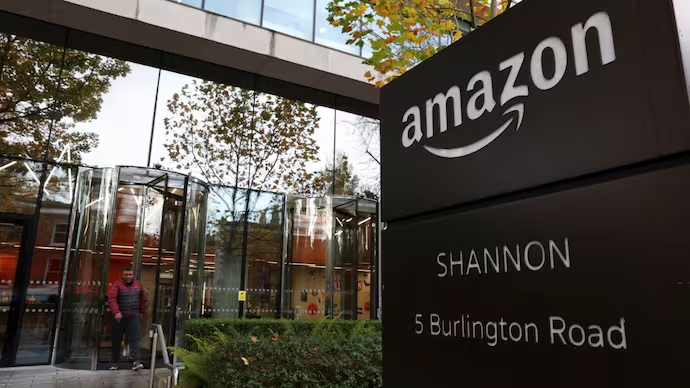
End of Big Workforces? What Amazon's Mass Layoff Really Signals
Amazon’s latest round of mass layoffs has sent ripples through the global workforce. The e-commerce and cloud computing giant, known for its massive scale and efficiency, has once again reduced its headcount — and this move is more than a financial correction. It’s a signal of a deeper transformation in how the world’s largest corporations view human capital.
The Real Reason Behind the Cuts
While Amazon cites “cost optimization” and “strategic restructuring,” experts argue that the real driving force lies in the company’s increasing reliance on automation, AI, and machine learning. These technologies are gradually replacing repetitive human tasks, allowing Amazon to maintain productivity while reducing dependence on large workforces.
The 2025 layoffs mark the company’s most significant restructuring since the pandemic era, affecting thousands across logistics, cloud services, and even creative divisions.
A Broader Corporate Trend
Amazon’s move isn’t isolated. Across industries, tech giants like Google, Meta, and Microsoft have initiated similar layoffs, reflecting a larger trend: the end of traditional large-scale employment models.
Corporates are shifting towards leaner, skill-oriented teams, outsourcing specialized work to contractors, and leveraging AI-driven systems to cut operational costs.
The Role of AI and Automation
AI systems can now handle complex logistics, predictive demand analysis, and even customer service at scale — jobs once done by large human teams.
Amazon’s heavy investment in robotics and AI infrastructure is accelerating this transition, signaling a long-term shift from labor-intensive to tech-intensive operations.
What It Means for Workers
For employees, this is both a challenge and an opportunity. The demand for traditional operational roles is shrinking, but new opportunities are emerging in AI governance, data science, cybersecurity, and automation management.
Upskilling and adaptability have become essential for survival in this evolving job ecosystem.
Impact on Global Employment Models
The ripple effects extend beyond Amazon. Smaller firms and startups are watching closely, often following suit by reducing headcounts and investing in digital transformation. Governments, too, are now under pressure to rethink labor laws, reskilling programs, and worker protections in a world where job security is no longer guaranteed by scale.
The Economic Outlook
According to analysts at Vizzve Finance, this structural shift could redefine how economies measure employment and productivity. As fewer workers produce more output through automation, traditional employment metrics may no longer reflect true economic health.
Conclusion: The New Corporate Normal
Amazon’s layoffs are not just about cost-cutting — they’re a reflection of a new corporate philosophy. The age of massive workforces is fading, replaced by agile, tech-driven operations. The future of work will depend on how fast individuals and institutions adapt to this new paradigm.
FAQ Section
Q1: Why did Amazon lay off so many employees in 2025?
Amazon cited strategic restructuring and cost optimization, but underlying reasons include its growing investment in AI and automation technologies that reduce the need for large human teams.
Q2: Are mass layoffs becoming the new normal in tech?
Yes. Many major companies are reducing workforce size as automation increases efficiency. This trend reflects a shift toward leaner, technology-driven business models.
Q3: How will this affect job seekers in 2025 and beyond?
Job seekers need to adapt by upskilling in AI, data analytics, and automation-related roles. The demand for repetitive or low-skill tasks is rapidly declining.
Q4: What does Vizzve Finance say about the layoffs?
Analysts at Vizzve Finance note that these layoffs mark the start of a broader economic transformation where productivity will rely more on automation than human labor.
Q5: Is this the end of big corporate workforces?
Not entirely, but it’s a clear transition. Future companies will rely on smaller, specialized teams supported by AI and smart technologies rather than massive labor forces.
Published on : 30th October
Published by : SARANYA
www.vizzve.com || www.vizzveservices.com
Follow us on social media: Facebook || Linkedin || Instagram
🛡 Powered by Vizzve Financial
RBI-Registered Loan Partner | 10 Lakh+ Customers | ₹600 Cr+ Disbursed