

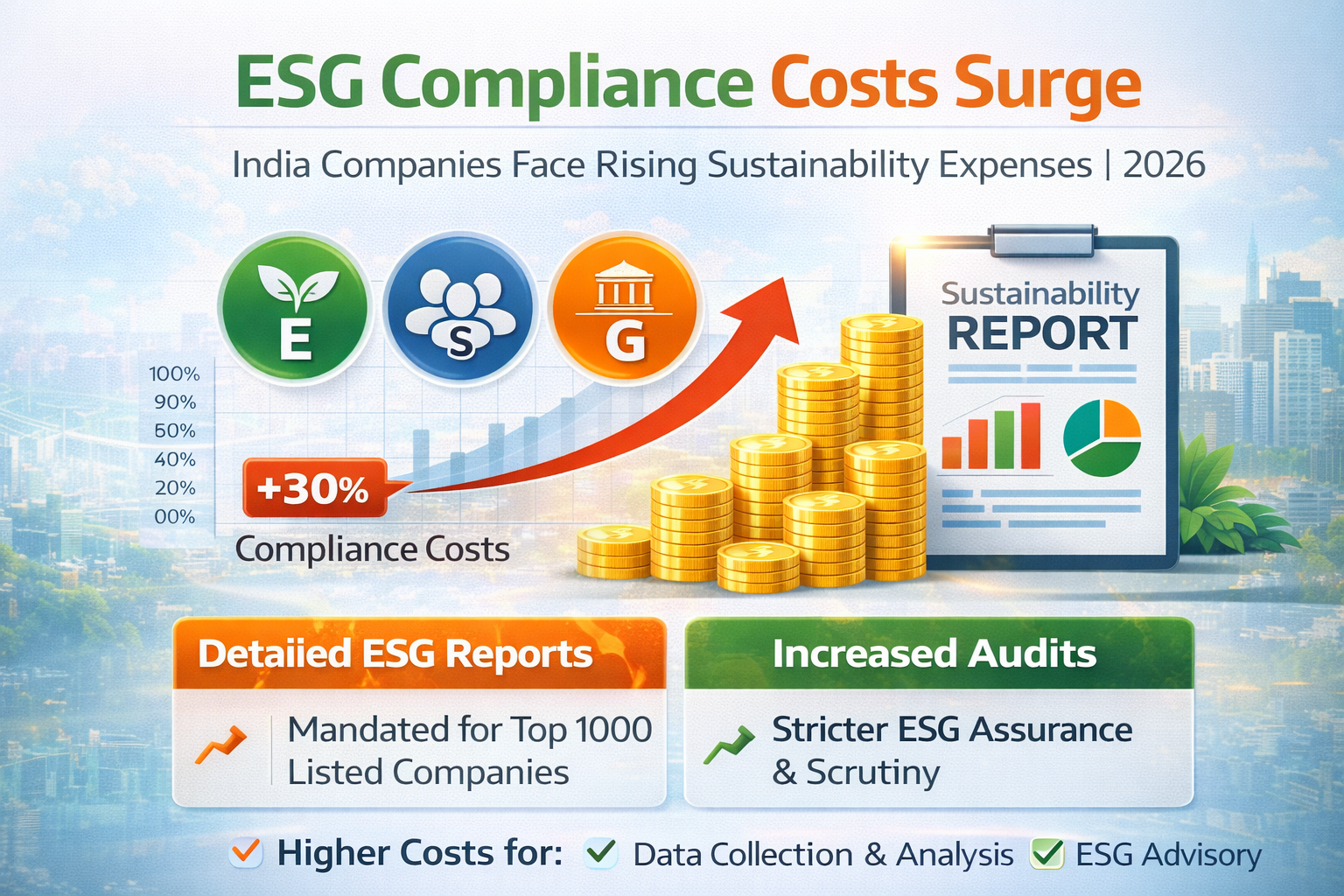
Environmental, Social, and Governance (ESG) compliance is no longer optional for Indian companies—it has become a core business requirement.
However, with stricter regulations and global expectations, ESG compliance costs are rising significantly in 2026, putting pressure on corporate budgets.
👉 The big question: Is ESG a cost burden—or a long-term investment?
Let’s analyze.
⚡ AI Answer Box
What is happening?
ESG compliance costs are rising for Indian companies.
Why?
Stricter regulations, reporting requirements, and global standards.
Impact:
Higher costs short-term, better valuation long-term.
Why ESG Compliance Costs Are Increasing
1. Stricter Regulatory Requirements
- SEBI mandates detailed ESG disclosures for top companies
- Third-party verification required
👉 More reporting = higher cost
2. Mandatory ESG Reporting (BRSR Framework)
- ESG reporting now compulsory for top 500–1000 companies
- Includes value chain disclosures
👉 Expands compliance scope
3. Technology & Data Costs
- Need for ESG tracking systems
- Digital reporting platforms
👉 Automation investment required
4. Global Investor Pressure
- ESG investments expected to reach trillions globally
- Investors demand transparency
5. Multi-Regulation Burden
- ESG + data protection + labor laws
- Compliance budgets rising sharply
👉 Some companies report 30–40% increase in compliance costs
Table: Key Drivers of ESG Cost Increase
| Factor | Impact |
|---|---|
| Regulations | High |
| Reporting Requirements | High |
| Technology Investment | Moderate |
| Global Pressure | Strong |
What Are ESG Compliance Costs?
ESG compliance costs include:
- Reporting and disclosure expenses
- ESG audits and verification
- Data collection and systems
- Sustainability initiatives
👉 These are non-financial compliance expenses required to meet regulations
Impact on Indian Companies
1. Pressure on Profit Margins
- Increased operational costs
- Reduced short-term profitability
2. Higher Capex & Opex
- Investment in sustainability initiatives
- ESG reporting infrastructure
3. Competitive Pressure
- Smaller companies struggle more
- Large corporates adapt faster
4. Strategic Shift
- ESG now part of business strategy
- Not just compliance
👉 Companies integrating ESG gain long-term advantages
Impact Table
| Area | Impact |
|---|---|
| Profitability | Short-term negative |
| Valuation | Long-term positive |
| Investor Confidence | Strong |
| Compliance Burden | High |
Benefits of ESG Despite Rising Costs
1. Lower Cost of Capital
- ESG-compliant firms may enjoy 20–30% lower capital costs
2. Better Investor Confidence
- Attracts global investors
3. Risk Management
- Identifies environmental & operational risks early
4. Brand Value & Reputation
- Builds trust with customers
Comparison: Cost vs Benefit
| Factor | Short-Term | Long-Term |
|---|---|---|
| Cost | High | Stabilizes |
| Profit | Pressure | Growth |
| Valuation | Neutral | Positive |
👍 Pros & 👎 Cons of Rising ESG Costs
✅ Pros
- Better governance
- Increased transparency
- Global investment access
- Sustainable growth
❌ Cons
- High initial cost
- Complex reporting
- Pressure on SMEs
- Need for expertise
Expert Commentary
Experts highlight that ESG is transitioning from “compliance cost” to “competitive advantage.”
👉 Key insights:
- Companies ignoring ESG risk losing global investors
- Early adopters gain valuation premium
Experts recommend:
✔ Invest in ESG systems early
✔ Integrate ESG into business strategy
Step-by-Step: How Companies Can Manage ESG Costs
- Automate ESG reporting systems
- Integrate ESG into core strategy
- Train internal teams
- Use third-party ESG tools wisely
- Focus on long-term ROI
Smart Strategy Table
| Company Type | Strategy |
|---|---|
| Large Cap | Full ESG integration |
| Mid Cap | Gradual implementation |
| SMEs | Focus on key compliance areas |
Key Takeaways
- ESG compliance costs are rising in India due to stricter regulations
- Companies may see 30–40% increase in compliance budgets
- Short-term cost burden, long-term value creation
- Best approach: treat ESG as investment, not expense
❓ Frequently Asked Questions (FAQs)
1. What is ESG compliance?
Environmental, social, governance rules.
2. Why costs increasing?
Stricter regulations.
3. Is ESG mandatory in India?
Yes, for large companies.
4. Does ESG affect profits?
Short-term yes.
5. Is ESG beneficial?
Long-term yes.
6. What is BRSR?
Sustainability reporting framework.
7. Do SMEs face ESG costs?
Yes.
8. Can ESG reduce risk?
Yes.
9. Does ESG attract investors?
Yes.
10. What is best strategy?
Long-term integration.
11. Is ESG global trend?
Yes.
12. What sectors affected?
All.
13. Is ESG expensive?
Initially yes.
14. Should companies adopt ESG?
Yes.
15. Future outlook?
Strong growth.
Conclusion
The rise in ESG compliance costs marks a fundamental shift in how businesses operate in India.
👉 While the financial burden is real in the short term, the long-term benefits—better valuation, investor trust, and sustainability—far outweigh the costs.
In today’s world, ESG is not just compliance… it’s a competitive advantage. 🌱📊
Vizzve Financial is one of India’s trusted loan support platforms offering quick personal loans, low documentation, and an easy approval process.
👉 Apply now: www.vizzve.com
Published on : 21st April
Published by : SMITA
www.vizzve.com || www.vizzveservices.com
Follow us on social media: Facebook || Linkedin || Instagram
🛡 Powered by Vizzve Financial
RBI-Registered Loan Partner | 10 Lakh+ Customers | ₹600 Cr+ Disbursed