

Content
Ethiopia Volcano Eruption Tracker LIVE: IMD Confirms No Impact on Delhi AQI From Hayli Gubbi Ash Cloud
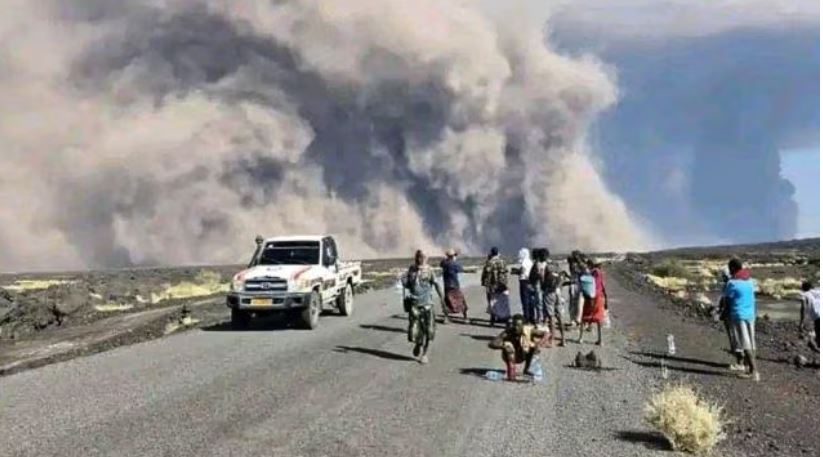
The recent eruption of the Hayli Gubbi volcano in Ethiopia triggered global concern after satellite visuals showed a rising ash plume drifting across East Africa. With increasing speculation on whether the ash cloud might reach India, the India Meteorological Department (IMD) issued a clear statement assuring that Delhi’s Air Quality Index (AQI) will remain unaffected.
IMD officials confirmed that upper-air wind patterns over the Arabian Sea and the Indian subcontinent are not aligned with the ash plume’s direction. As a result, the volcanic ash from Ethiopia is unlikely to enter Indian airspace, including northern regions like Delhi NCR.
Why Delhi AQI Will Not Be Affected
Meteorologists explained that the Hayli Gubbi ash plume is moving westward, influenced by regional wind currents. For ash to impact Delhi, it would need to travel thousands of kilometers eastward—a scenario not supported by current wind dynamics or satellite models.
Delhi’s AQI fluctuations this week are attributed primarily to:
Local emissions
Seasonal stubble burning patterns
Weather-induced stagnation
Dust resuspension
None of these factors relate to the Ethiopia eruption.
Global Monitoring on High Alert
International geological and meteorological agencies continue to track the eruption’s intensity. Hayli Gubbi’s volcanic activity has caused temporary disruption in local air travel routes in Ethiopia and neighboring countries as a safety measure.
While the eruption is being monitored globally, its transcontinental impact remains low, and experts confirm no risk to India’s environment or public health.
FAQs
1. What is the current status of the Hayli Gubbi volcano eruption?
The volcano has released a significant ash plume, and monitoring agencies are tracking activity in real time. Local aviation routes are being adjusted as a precaution.
2. Can volcanic ash from Ethiopia reach India?
According to IMD, current wind patterns prevent the ash from reaching Indian airspace. There is no expected impact on Delhi or any Indian city.
3. Will Delhi’s AQI worsen due to the Ethiopia eruption?
No. Delhi’s air quality changes are influenced by local and regional factors, not the volcanic eruption.
4. Is it safe to travel by air during such eruptions?
Local routes near Ethiopia may face diversions, but international flights to and from India remain unaffected.
5. Why do volcano eruptions matter for financial markets?
They can disrupt aviation, exports, commodity supply chains, and insurance claims. Fast information helps manage financial risks.
source credit : Express Web Desk
Published on : 25th November
Published by : RAHAMATH
www.vizzve.com || www.vizzveservices.com
Follow us on social media: Facebook || Linkedin || Instagram
🛡 Powered by Vizzve Financial
RBI-Registered Loan Partner | 10 Lakh+ Customers | ₹600 Cr+ Disbursed