

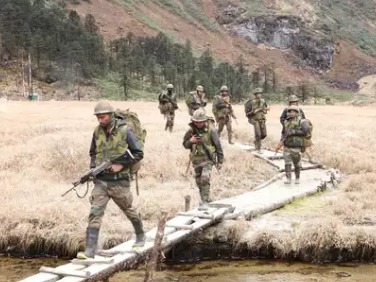
India’s national security landscape is evolving rapidly, and Exercise Trishul stands out as one of the clearest demonstrations of the country’s shift toward a more assertive, technology-driven and deterrence-oriented military posture. Conducted regularly by India’s armed forces, Trishul showcases integrated wartime simulations, high-intensity combat drills, and tri-service coordination designed to enhance India’s operational readiness.
The exercise reflects India’s response to expanding regional threats, technological advancements, and the need for a stronger balance of power in the Indo-Pacific and South Asian region.
1. What Is Exercise Trishul?
Exercise Trishul is a large-scale military drill involving the Indian Air Force, Army and Navy, focusing on:
Air defence and counter-air operations
Surface-to-air missile coordination
Joint command-and-control communication
Integrated battlefield awareness
Real-time response to multi-front threats
It tests how India would respond during high-pressure wartime scenarios, especially along sensitive borders and coastal regions.
2. Strengthening Deterrence Against Multi-Domain Threats
The exercise highlights India’s shift toward multi-domain operations, integrating:
Air power
Electronic warfare
Cyber defence
Missile defence systems
Space-based surveillance
This reflects India’s broader strategy to deter both traditional threats and hybrid warfare tactics, which include drones, cyber intrusions and electronic disruptions.
3. Enhanced Integration of New-Generation Weaponry
Exercise Trishul has featured several advanced platforms and systems, such as:
Surface-to-air missile systems
Multi-role fighter aircraft
Precision-guided munitions
Long-range radars and tracking systems
Network-centric communication systems
These drills illustrate India’s commitment to expanding both offensive and defensive capabilities to achieve stronger strategic parity in the region.
4. Joint Operations: The Core of India’s Future Military Strategy
A major takeaway from Trishul is India’s emphasis on tri-service integration.
Instead of each service operating independently, the focus is now on:
Shared intelligence
Synchronized decision-making
Unified battlefield command structures
This aligns with global modern warfare trends and India’s long-term vision of establishing integrated theatre commands.
5. Preparedness for a Two-Front Contingency
India’s defence planners increasingly acknowledge the possibility of simultaneous threats along both the western and northern borders.
Exercise Trishul simulates:
Quick mobilization
Multi-layered air defence
Coordinated response to missile and aerial attacks
Counter-aggression strategies
These rehearsals strengthen India’s readiness for high-intensity scenarios that demand rapid, decisive action.
6. The Message Behind Trishul: India Is Reinforcing Its Strategic Posture
Beyond its operational value, Trishul sends a strong strategic message:
India is enhancing its capability-based deterrence
The country is investing in technology-led warfare
Its armed forces are evolving into a more agile, integrated and forward-leaning force
As geopolitical tensions rise, India aims to ensure credible deterrence to prevent conflict and maintain stability in the region.
FAQs
Q1. What is the main purpose of Exercise Trishul?
To test India’s integrated air defence, joint operations and rapid-response capabilities during simulated high-pressure conflict scenarios.
Q2. Which branches of the military participate in Trishul?
Primarily the Air Force, but the Army and Navy also participate in joint drills depending on the exercise phase.
Q3. What does Trishul reveal about India’s military strategy?
It shows a shift toward multi-domain warfare, joint command structures and a strong capability-based deterrence posture.
Q4. How does the exercise improve India’s defence preparedness?
It enhances coordination, tests new weapon systems and trains forces for multi-front threats.
Q5. Does Exercise Trishul include new technologies?
Yes — the exercise frequently incorporates advanced radars, missile systems, fighter aircraft and electronic warfare tools.
Published on : 14th November
Published by : SMITA
www.vizzve.com || www.vizzveservices.com
Follow us on social media: Facebook || Linkedin || Instagram
🛡 Powered by Vizzve Financial
RBI-Registered Loan Partner | 10 Lakh+ Customers | ₹600 Cr+ Disbursed