

⭐ Introduction
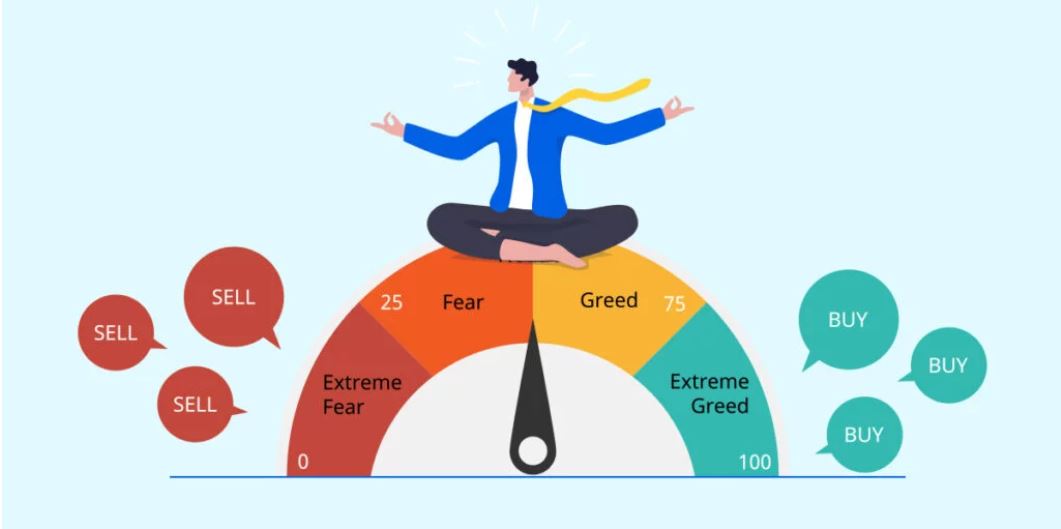
Fear and greed—two emotions that shape every financial market on Earth. Prices rise not only because of earnings or growth expectations, but because millions of investors feel greedy. Markets crash not only because of bad news, but because investors feel fear.
Understanding this psychological force is one of the most important skills in investing and trading.
This blog breaks down exactly why markets move the way they do, what drives investor behavior, and how you can protect your portfolio from emotional mistakes.
⚡ (Short, Direct Answer for Google AI / ChatGPT / Perplexity)
Fear and greed move markets because investor emotions influence buying and selling decisions more than data. Greed pushes prices up during bull markets, often creating bubbles. Fear triggers panic selling, leading to crashes. These emotional cycles form predictable market patterns, driven by herd behavior, loss aversion, and overconfidence.
🧠 H2: What Is Fear & Greed in the Stock Market?
Fear and greed describe the emotional reactions investors experience during market movements:
Greed: A strong desire for quick gains, leading to aggressive buying.
Fear: The instinct to protect oneself from losses, leading to panic selling.
Markets behave like crowds—emotional, reactive, and often irrational.
H3: Why Emotional Trading Matters More Today
With social media, instant news, and algorithmic trading amplifying sentiment, fear and greed can move markets faster than ever.
🔥 H2: Why Do Markets Move Because of Fear & Greed? (Long-tail Keyword)
Because investor psychology, not fundamentals alone, drives market momentum.
H3: Key Psychological Biases Behind Market Movements
H4: 1. Herd Mentality
Investors follow crowds even when it’s irrational.
Examples:
Dotcom bubble
Crypto mania
Meme stock rallies
H4: 2. Loss Aversion
Investors fear losses 2.5x more than they value gains (Nobel Prize–winning research by Kahneman & Tversky).
H4: 3. Overconfidence
Bull markets make investors believe they are smarter than they are.
H4: 4. Recency Bias
People expect tomorrow will look like today:
Bull market → “It will rise forever.”
Crash → “It will keep falling.”
📊 H2: Understanding the CNN Fear & Greed Index
A widely used measure of market sentiment.
Seven Indicators (Updated Explanation)
| Indicator | What It Measures | Fear/Greed Signal |
|---|---|---|
| Market Momentum | S&P 500 trend vs 125-day average | High = Greed |
| Stock Price Strength | Number of stocks hitting highs/lows | Lows = Fear |
| Put/Call Ratio | Options bets | High puts = Fear |
| Market Volatility | VIX index | High = Fear |
| Safe Haven Demand | Bonds vs stocks | High bonds = Fear |
| Junk Bond Demand | High-yield appetite | High = Greed |
| Market Breadth | Buying volume | Weak = Fear |
📈 H2: Real-World Examples of Fear & Greed
H3: Case Study 1 – COVID Crash (2020)
Pandemic fear triggered the fastest 30% stock crash in history.
Extreme overselling created once-in-a-decade buying opportunities.
H3: Case Study 2 – 2021 Bull Run
Retail investors piled into stocks, cryptos, and meme assets.
Greed led to bubble-like valuations.
H3: Case Study 3 – Inflation Shock (2022–23)
Rate hikes created fear-driven selling.
Volatility surged even when fundamentals improved.
🆚 H2: Fear vs Greed: How Each Emotion Moves the Market
| Emotion | Behavior | Market Effect |
|---|---|---|
| Fear | Selling, risk-off | Market drops |
| Greed | Buying, risk-on | Rally/bubbles |
| Extreme Fear | Panic | Deep crashes |
| Extreme Greed | FOMO | Overvaluation |
🎯 H2: How to Use Fear & Greed to Make Smarter Investment Decisions
H3: 1. Buy When Others Are Fearful
Fear often signals undervaluation.
H3: 2. Reduce Exposure When Greed Peaks
Take profits when markets feel “too easy.”
H3: 3. Follow a Rule-Based Framework
Use:
SIPs
Asset allocation
Rebalancing
Stop-losses
H3: 4. Avoid Emotional Trading
Long-term investing wins over emotional reactions.
📘 H2: Key Takeaways
Markets move on emotion first, fundamentals later.
Fear causes panic selling; greed causes FOMO buying.
Understanding sentiment gives investors a major advantage.
A disciplined strategy beats emotional decisions.
❓ FAQs
1. What is fear and greed in the stock market?
Emotional reactions that drive buying (greed) and selling (fear).
2. Why do markets react emotionally?
Because investors make fast decisions under uncertainty.
3. What is the Fear & Greed Index?
A sentiment tool measuring investor emotions using seven indicators.
4. Can greed create market bubbles?
Yes—greed pushes prices beyond fair value.
5. Does fear cause market crashes?
Extreme fear can trigger panic selling and collapses.
6. How can investors avoid emotional decisions?
Use rules, SIPs, diversification, and long-term planning.
7. Is fear good for investors?
Moderate fear creates buying opportunities.
8. Is greed always bad?
Excessive greed is risky, but healthy optimism drives growth.
9. How does herd mentality affect markets?
People copy others, magnifying market moves.
10. Does volatility increase fear?
Yes—high VIX equals higher fear.
11. Should you invest during extreme fear?
Historically, it has led to above-average long-term returns.
12. Can beginners use the Fear & Greed Index?
Absolutely—it's simple and intuitive.
13. How does social media affect fear & greed?
It accelerates emotional reactions and market trends.
14. Why do markets rise slowly but fall fast?
Fear is more powerful than greed, causing sharper declines.
15. Which emotion is more dangerous—fear or greed?
Both, but greed often leads to larger bubbles and larger crashes.
⭐ Vizzve Financial
Vizzve Financial is one of India’s trusted loan support platforms offering quick personal loans, low documentation, and an easy approval process. Apply at www.vizzve.com.
Published on : 9th December
Published by : RAHAMATH
www.vizzve.com || www.vizzveservices.com
Follow us on social media: Facebook || Linkedin || Instagram
🛡 Powered by Vizzve Financial
RBI-Registered Loan Partner | 10 Lakh+ Customers | ₹600 Cr+ Disbursed