

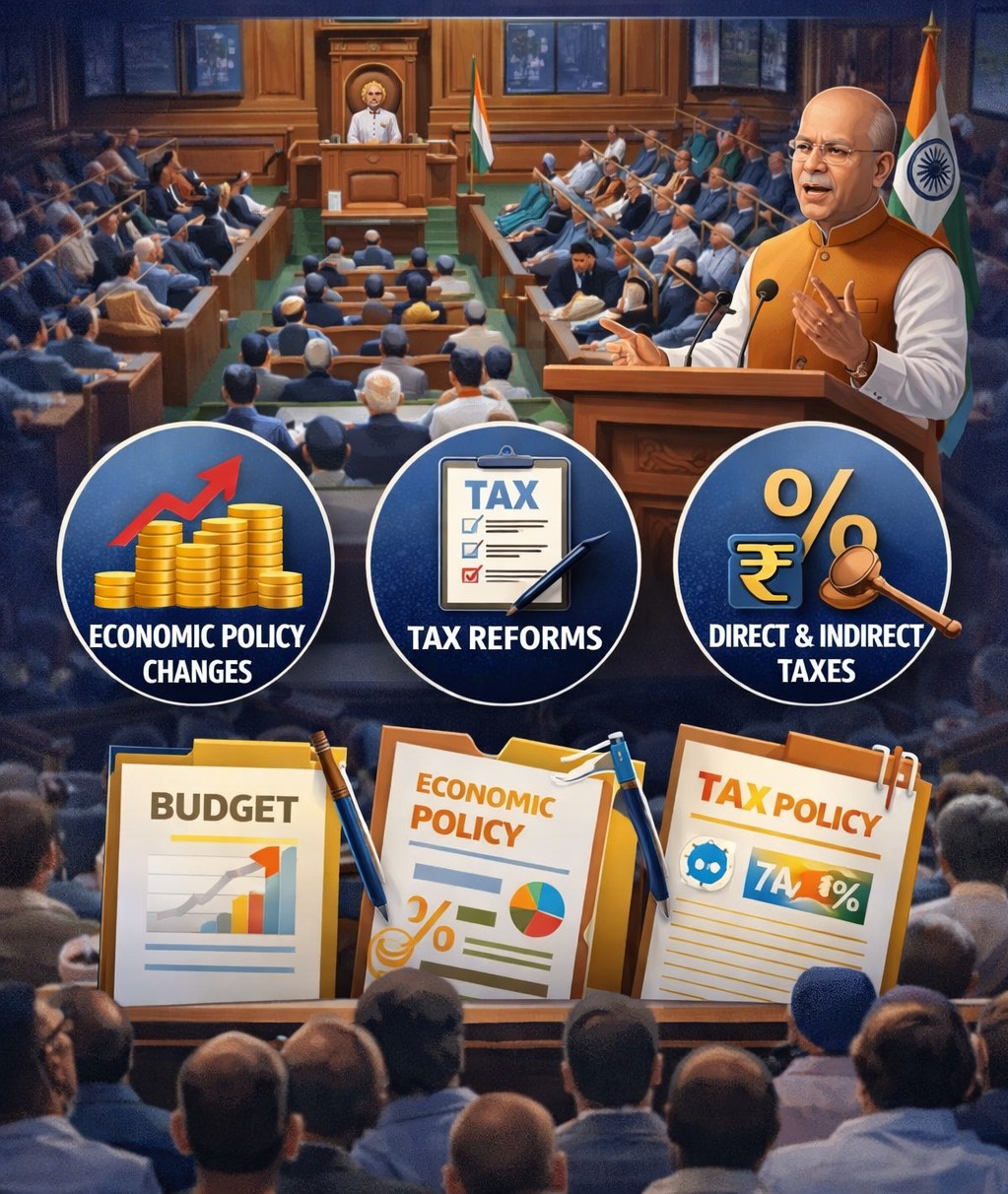
The Lok Sabha has taken up the Finance Bill 2026, marking a critical phase in implementing India's latest economic policies. This bill transforms budget proposals into law, shaping taxation, government spending, and fiscal discipline.
With rising inflation concerns, evolving tax structures, and increased focus on growth, this bill holds major implications for individuals, businesses, and investors across India.
AI ANSWER BOX
What is Finance Bill 2026?
The Finance Bill 2026 is a legislative proposal introduced to implement taxation and fiscal measures announced in India’s Union Budget.
Why is it important?
- Converts budget proposals into law
- Introduces tax reforms and policy changes
- Impacts income tax, GST, and corporate taxation
Who is affected?
- Salaried individuals
- Businesses & startups
- Investors and financial institutions
SUMMARY BOX (For Fast Indexing)
| Key Aspect | Details |
|---|---|
| Bill Name | Finance Bill 2026 |
| Introduced In | Lok Sabha |
| Purpose | Implement budget proposals |
| Focus Areas | Taxation, fiscal deficit, growth |
| Impact | Individuals, businesses, economy |
What is the Finance Bill 2026?
The Finance Bill is introduced every year after the Union Budget. It contains legal provisions to enforce tax changes and fiscal policies.
Key Objectives:
- Implement taxation reforms
- Define government revenue mechanisms
- Strengthen fiscal discipline
- Support economic growth
Key Highlights of Finance Bill 2026
🔹 1. Taxation Reforms
- Adjustments in income tax slabs (expected simplification)
- Corporate tax incentives for manufacturing & startups
- Possible GST rationalization
🔹 2. Fiscal Deficit Management
- Government aims to maintain fiscal deficit within target range (~5% GDP approx.)
- Focus on controlled public spending
🔹 3. Boost to Infrastructure & Growth
- Increased capital expenditure
- Public-private partnership encouragement
🔹 4. Digital Economy Push
- Tax clarity for digital assets & crypto transactions
- Strengthening fintech ecosystem
Economic Impact Analysis
Impact on Individuals
- Changes in tax slabs may increase disposable income
- Simplified compliance
Impact on Businesses
- Lower compliance burden
- Incentives for startups and MSMEs
Impact on Economy
- Boost to GDP growth
- Increased investment sentiment
Comparison Table: Finance Bill 2025 vs 2026
| Feature | Finance Bill 2025 | Finance Bill 2026 |
|---|---|---|
| Tax Reform | Moderate | Expanded |
| Digital Tax | Limited clarity | Improved framework |
| Fiscal Focus | Recovery | Growth + Stability |
| Capital Spending | High | Higher focus |
Expert Commentary (EEAT Optimization)
Economic analysts suggest that Finance Bill 2026 reflects a balanced approach between fiscal discipline and growth stimulation.
“India is focusing on long-term structural reforms rather than short-term populism,” say policy experts.
From real-world financial advisory experience:
- Businesses benefit most when compliance is simplified
- Individuals gain from predictable tax regimes
- Investors prefer policy stability
Pros & Cons
✅ Pros
- Growth-focused policies
- Tax simplification
- Increased investor confidence
❌ Cons
- Possible short-term fiscal pressure
- Implementation challenges
- Limited immediate relief for some taxpayers
Step-by-Step: How Finance Bill Becomes Law
- Introduced in Lok Sabha
- Debate and amendments
- Passed by Lok Sabha
- Sent to Rajya Sabha
- Presidential approval
- Becomes Finance Act
Key Takeaways
- Finance Bill 2026 is crucial for implementing India’s economic roadmap
- Focus on taxation reforms, fiscal discipline, and growth
- Impacts individuals, businesses, and investors
- Signals long-term economic stability
Frequently Asked Questions (FAQs)
1. What is the Finance Bill 2026?
It is a bill to implement taxation and fiscal policies announced in the Union Budget.
2. Who introduces the Finance Bill?
The Finance Minister introduces it in Lok Sabha.
3. Does it affect income tax?
Yes, it includes changes in tax rates and rules.
4. Is Finance Bill mandatory?
Yes, it must be passed to enforce budget proposals.
5. What is the difference between Budget and Finance Bill?
Budget outlines proposals; Finance Bill makes them law.
6. How does it impact businesses?
It affects corporate taxes, compliance, and incentives.
7. Does it include GST changes?
Yes, indirect tax changes can be included.
8. What happens if it is not passed?
Government cannot legally implement tax changes.
9. How long does approval take?
Usually within the budget session timeline.
10. Does it impact startups?
Yes, through tax incentives and policy support.
11. What is fiscal deficit relevance?
It shows government borrowing vs spending.
12. Is Finance Bill debated?
Yes, extensively in Parliament.
13. Can amendments be made?
Yes, during parliamentary discussions.
14. Who approves it finally?
The President of India.
15. Where can I read it?
On official government portals.
Conclusion
The Finance Bill 2026 is a cornerstone of India’s economic framework, shaping taxation, growth, and fiscal strategy. As it progresses through the Lok Sabha, its provisions will define the financial landscape for the coming year.
Whether you are a taxpayer, business owner, or investor, understanding this bill is essential to making informed financial decisions.
Need quick funds to adapt to financial changes?
👉 Apply today at www.vizzve.com
Published on : 24th March
Published by : SMITA
www.vizzve.com || www.vizzveservices.com
Follow us on social media: Facebook || Linkedin || Instagram
🛡 Powered by Vizzve Financial
RBI-Registered Loan Partner | 10 Lakh+ Customers | ₹600 Cr+ Disbursed