

Introduction
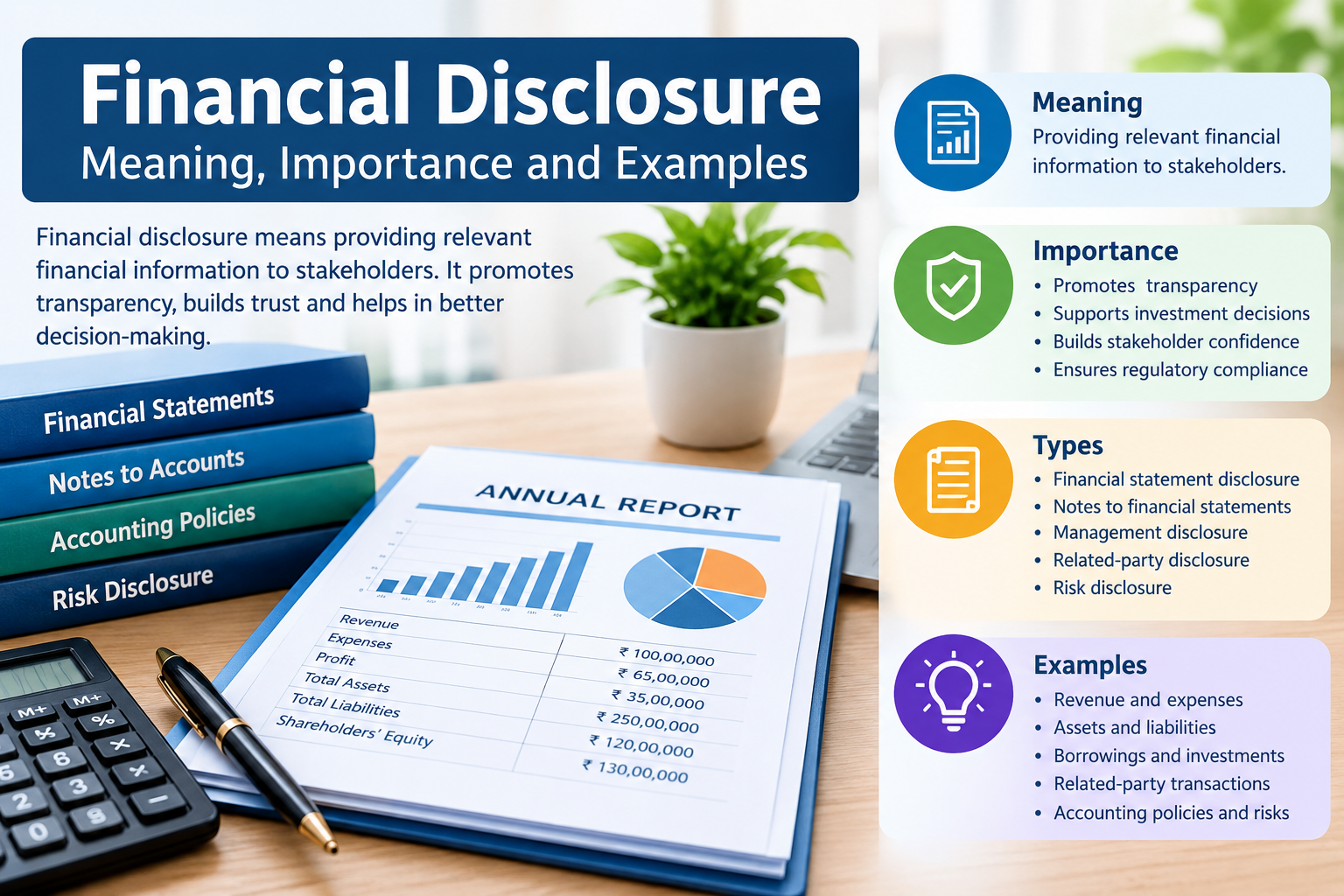
Financial disclosure refers to the process of providing relevant financial information about an individual, business, company, or organisation to stakeholders. It helps investors, lenders, regulators, shareholders, and other interested parties understand an entity’s financial position, performance, risks, and obligations.
Financial disclosures may include information about income, expenses, assets, liabilities, investments, loans, related-party transactions, accounting policies, and other material financial matters. Transparent disclosure is important for promoting accountability and helping stakeholders make informed decisions.
What Is Financial Disclosure?
Financial disclosure is the reporting or sharing of important financial information in a structured and understandable manner. Companies commonly provide financial disclosures through annual reports, financial statements, regulatory filings, notes to accounts, and other official reports.
The information disclosed generally depends on the type of organisation, applicable accounting standards, regulatory requirements, and the needs of stakeholders.
Simple Example
Suppose a company reports annual revenue of ₹50 crore. Its financial disclosure may also provide information about:
- Operating expenses
- Profit or loss
- Total assets
- Outstanding loans
- Tax expenses
- Investments
- Related-party transactions
- Significant financial risks
This additional information allows stakeholders to better understand the company rather than looking at revenue alone.
Why Is Financial Disclosure Important?
Financial disclosure plays an important role in financial reporting and corporate transparency.
1. Promotes Transparency
Disclosing relevant financial information gives stakeholders greater visibility into an organisation's financial activities.
2. Supports Investment Decisions
Investors can use disclosed information to assess a company's financial performance, risks, and future prospects before making investment decisions.
3. Helps Lenders Assess Risk
Banks and other lenders may review financial information to understand a borrower's financial position and repayment capacity.
4. Improves Accountability
Financial disclosures require organisations to report relevant financial information, which can strengthen accountability to shareholders and regulators.
5. Supports Regulatory Compliance
Companies may be required to disclose specific information under applicable laws, regulations, accounting standards, or stock-exchange requirements.
6. Builds Stakeholder Confidence
Consistent and meaningful disclosure can help stakeholders understand how an organisation manages its finances.
Types of Financial Disclosure
Financial disclosure can take different forms depending on the organisation and reporting requirements.
1. Financial Statement Disclosure
This includes information presented through:
- Balance sheets
- Income statements
- Cash flow statements
- Statements of changes in equity
2. Notes to Financial Statements
Notes provide additional explanations about figures presented in financial statements. They may explain accounting policies, depreciation, borrowings, provisions, contingencies, and other important matters.
3. Management Disclosure
Management may provide additional information about business performance, risks, strategies, and financial conditions in annual reports or management discussions.
4. Related-Party Disclosure
Companies may disclose transactions or relationships involving related parties when required by applicable accounting or regulatory requirements.
5. Risk Disclosure
Risk disclosures can explain significant financial, operational, market, credit, or other risks that may affect an organisation.
Examples of Financial Disclosure
Here are some common examples:
| Financial Disclosure | Example |
|---|---|
| Revenue | A company reports ₹100 crore in annual sales |
| Borrowings | Disclosure of outstanding bank loans |
| Assets | Reporting property, equipment and investments |
| Liabilities | Reporting unpaid obligations and provisions |
| Related-party transactions | Transactions with group companies or related entities |
| Accounting policies | Explanation of how revenue or depreciation is recognised |
| Contingent liabilities | Disclosure of certain potential obligations |
| Financial risks | Information about credit, liquidity or market risks |
Financial Disclosure in Annual Reports
Annual reports are one of the major sources of financial disclosure for companies. They generally contain financial statements along with supporting notes and other information required under the applicable reporting framework.
An annual report can help stakeholders understand:
- Company's revenue and expenses
- Profit or loss
- Assets and liabilities
- Cash flows
- Borrowings
- Accounting policies
- Significant risks
- Other material financial information
Financial Disclosure vs Financial Statement
Although these terms are related, they are not identical.
| Financial Disclosure | Financial Statement |
|---|---|
| Broad concept of providing financial information | Formal financial reporting document |
| Can include statements, notes and additional information | Includes structured financial reports |
| May contain qualitative and quantitative information | Primarily presents financial information |
| Helps explain financial position and performance | Provides a formal view of financial results |
Benefits of Financial Disclosure
Effective financial disclosure can provide several benefits:
- Improves transparency
- Helps stakeholders understand financial performance
- Supports informed decision-making
- Strengthens accountability
- Helps meet regulatory requirements
- Provides information about financial risks
- Improves understanding of financial statements
Limitations of Financial Disclosure
Financial disclosure also has certain limitations. The information may depend on accounting methods, estimates, assumptions, and reporting requirements. Disclosures can also be extensive, making it difficult for some readers to identify the most important information.
Therefore, financial disclosures should generally be read together with the relevant financial statements, notes, and other available information.
Conclusion
Financial disclosure is an important part of transparent financial reporting. By providing information about financial performance, assets, liabilities, risks, transactions, and accounting practices, disclosures help stakeholders develop a clearer understanding of an organisation's financial position. For companies and other reporting entities, maintaining accurate and relevant financial disclosures is also an important part of meeting applicable reporting and regulatory requirements.