

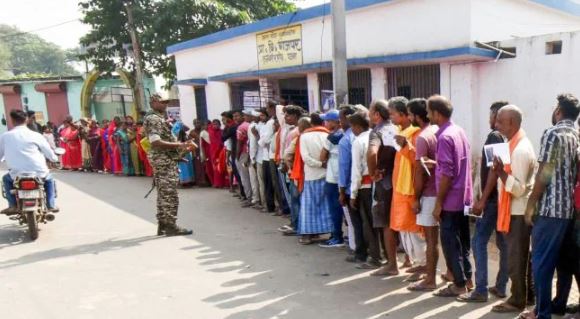
Fivefold Rise in Voter Turnout Sparks Government Change in Bihar
In a state where voter sentiment has often dictated political destiny, Bihar’s recent surge in voter turnout has rewritten the electoral story. A fivefold rise in public participation has once again paved the way for a government change — a pattern witnessed only a handful of times since Nitish Kumar’s era began in 2005.
A Shift Driven by People’s Mandate
The increased turnout is not just a statistical highlight; it signals a massive wave of political awareness and public accountability. Bihar’s citizens, often seen as politically conscious, have demonstrated how democratic participation can shift the power balance.
Experts suggest that whenever Bihar’s voter turnout has seen a significant spike, the results have tended to favor a change in regime. This time, too, the unprecedented rise indicates a strong anti-incumbency undercurrent and demand for governance renewal.
Bihar’s Political Evolution Since 2005
Since Nitish Kumar first took power in 2005, Bihar has witnessed multiple transformations—economic, social, and political. Yet, one factor remains constant: voter turnout has been the pulse of change.
From the 2005 Assembly elections to the recent polls, every spike in turnout has coincided with a transition in leadership, revealing a unique electoral pattern.
The Numbers Speak
In the recent elections, turnout jumped nearly five times compared to previous years, signifying renewed enthusiasm among both rural and urban voters. Political analysts believe that this indicates a growing belief in participatory democracy and an expectation of transparency and growth-oriented governance.
Economic and Social Implications
Higher voter participation often correlates with a stronger focus on economic and welfare policies. As Bihar continues to evolve, this surge in turnout could lead to:
Enhanced focus on infrastructure and employment generation
Better implementation of rural finance and development schemes
Reforms in education, healthcare, and women’s empowerment
Stronger accountability of state leadership and fiscal management
FAQs
1. How often has a rise in voter turnout led to a change in Bihar’s government?
Since 2005, Bihar has seen government change five times following a significant surge in voter turnout, indicating a strong link between public participation and political transformation.
2. What role has Nitish Kumar played in shaping Bihar’s voter trends?
Nitish Kumar’s tenure marked the beginning of stable governance in Bihar, but rising turnout often reflected people’s demand for new policies and accountability, leading to electoral swings.
3. How does voter turnout affect Bihar’s economy?
Higher turnout pushes governments to deliver on economic growth, employment, and rural finance reforms, driving development that aligns with public expectations.
4. What does this mean for Bihar’s political future?
It signals an era of active citizen participation, where voters are directly influencing governance through their ballot — a powerful message for all political parties.
Source credit : Lalmani Verma
Published on : 13th November
Published by : RAHAMATH
www.vizzve.com || www.vizzveservices.com
Follow us on social media: Facebook || Linkedin || Instagram
🛡 Powered by Vizzve Financial
RBI-Registered Loan Partner | 10 Lakh+ Customers | ₹600 Cr+ Disbursed