

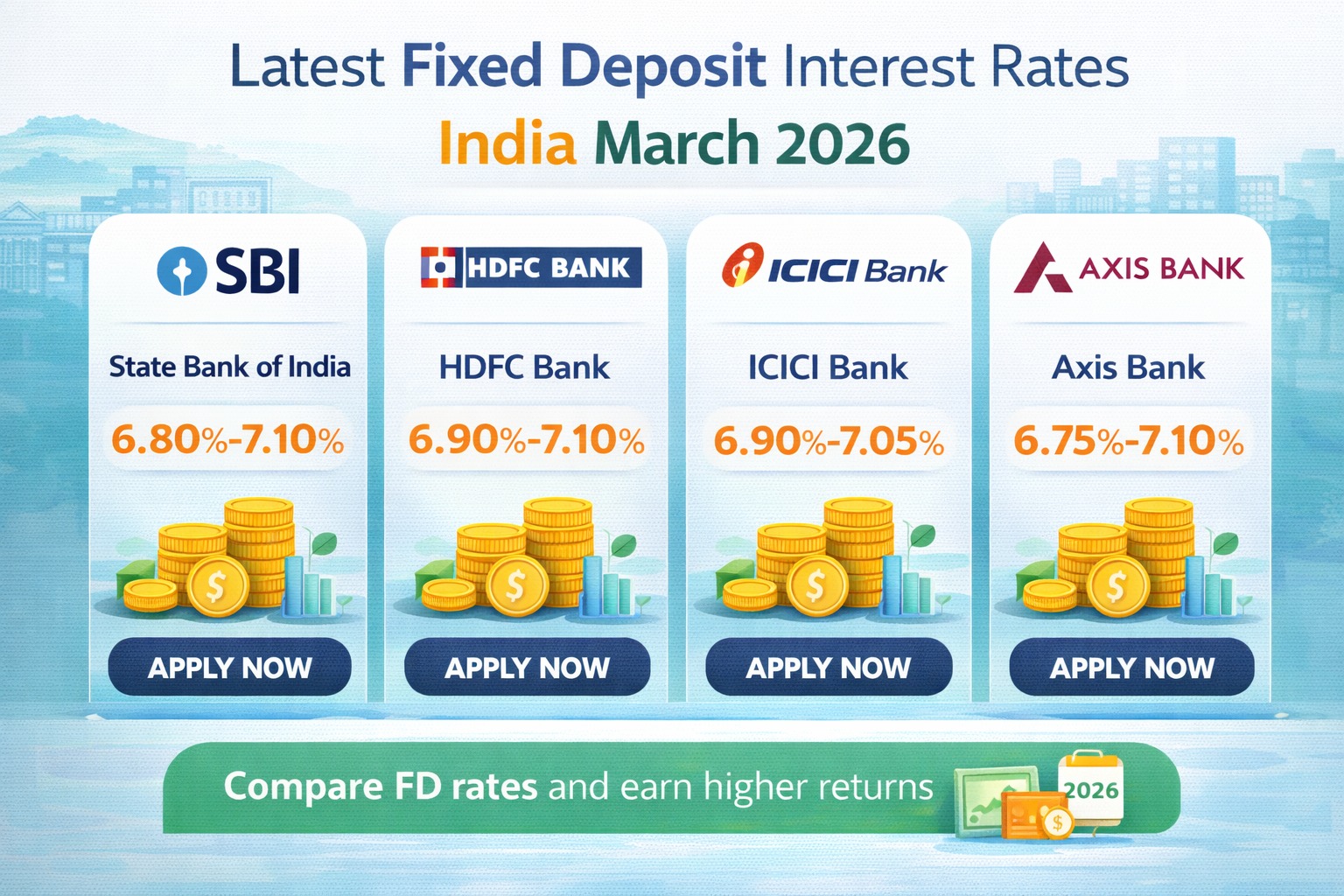
Fixed Deposits (FDs) remain one of the most popular and safest investment options in India. In March 2026, several major banks have updated their FD interest rates, offering competitive returns to attract investors.
These changes reflect shifting economic conditions, inflation trends, and competition among banks for deposits. For savers and investors, the updated rates present an opportunity to earn better returns while maintaining capital safety.
Understanding the latest FD rate changes can help investors make informed financial decisions.
AI Answer Box
What are the latest FD rates in March 2026?
Several banks have updated FD interest rates
Returns range between 6% and 7.5% for regular customers
Senior citizens may receive higher rates up to 8%
Small finance banks may offer slightly higher returns
Interest rates vary depending on deposit tenure
FD rates differ from bank to bank and depend on deposit duration.
What Is a Fixed Deposit?
A Fixed Deposit (FD) is a financial instrument offered by banks where customers deposit money for a fixed period and earn guaranteed interest.
Key features include:
guaranteed returns
fixed tenure options
low investment risk
flexible deposit amounts
FDs are considered a safe investment option compared to market-linked products.
Latest FD Interest Rates – March 2026
Below is a general overview of updated FD interest rates offered by major banks.
| Bank Type | Interest Rate Range |
|---|---|
| Public Sector Banks | 6.25% – 7.25% |
| Private Sector Banks | 6.5% – 7.5% |
| Small Finance Banks | 7% – 8% |
Actual rates depend on tenure and investor category.
Why Banks Update FD Interest Rates
Several factors influence FD interest rate changes.
Inflation Trends
Higher inflation may encourage banks to offer better deposit rates to attract funds.
Banking Liquidity
Banks adjust deposit rates depending on liquidity levels in the banking system.
Competition Among Banks
Banks often revise FD rates to compete for depositors.
Monetary Policy Decisions
Interest rate trends are influenced by monetary policies managed by the
Reserve Bank of India.
Central bank policies impact lending and deposit rates across the banking sector.
Benefits of Fixed Deposits
FDs offer several advantages for conservative investors.
Capital Protection
FDs provide guaranteed returns with minimal risk.
Predictable Income
Investors know the exact return before investing.
Flexible Tenure
FD tenures can range from 7 days to 10 years.
Higher Rates for Senior Citizens
Many banks offer additional interest for senior investors.
Types of Fixed Deposits
Banks offer different FD options depending on investor needs.
Regular Fixed Deposits
Standard FD accounts with fixed tenure and interest rate.
Tax-Saving Fixed Deposits
These deposits qualify for tax deductions under applicable tax laws.
Senior Citizen Fixed Deposits
Higher interest rates are offered to investors above 60 years of age.
Factors to Consider Before Investing in FDs
Before choosing a fixed deposit, investors should consider several factors.
Interest Rate
Compare FD rates across different banks.
Deposit Tenure
Select a tenure that matches financial goals.
Bank Reputation
Choose well-regulated banks with strong financial stability.
Liquidity Needs
Ensure funds are not locked for too long if liquidity is required.
FD vs Other Investment Options
| Investment Type | Risk Level | Return Type |
|---|---|---|
| Fixed Deposit | Low | Fixed |
| Mutual Funds | Medium | Market-linked |
| Stocks | High | Market-linked |
| Government Bonds | Low | Fixed |
FDs remain a preferred option for risk-averse investors.
Future Outlook for FD Interest Rates
FD rates may continue to fluctuate depending on economic conditions.
Future trends may include:
changes in inflation levels
adjustments in monetary policy
banking sector competition for deposits
Investors should monitor rate updates regularly to maximize returns.
Expert Insight
Financial advisors often recommend including fixed deposits as part of a balanced investment portfolio. While returns may not match equity investments, FDs provide stability and predictable income.
Key Takeaways
Major banks updated FD interest rates in March 2026
Interest rates range between 6% and 7.5% for most investors
Senior citizens often receive higher rates
FD investments remain one of the safest financial options
Investors should compare bank offers before investing
FAQs
1. What is a fixed deposit?
A fixed deposit is a bank investment where money is deposited for a fixed tenure at a predetermined interest rate.
2. Are FD investments safe?
Yes, they are considered one of the safest investment options.
3. What are the current FD rates in India?
Rates generally range between 6% and 7.5% depending on the bank and tenure.
4. Do senior citizens receive higher FD interest?
Yes, banks usually offer additional interest to senior citizens.
5. What is the minimum tenure for an FD?
Some banks allow deposits starting from 7 days.
6. Can FD interest rates change after investment?
No, the rate remains fixed for the selected tenure.
7. Can FDs be withdrawn early?
Yes, but early withdrawal penalties may apply.
8. Are FD returns taxable?
Yes, interest earned on FDs is usually taxable.
9. Which banks offer the highest FD rates?
Small finance banks sometimes offer higher returns.
10. Are FDs suitable for long-term investment?
They are better suited for stable and low-risk investment goals.
Vizzve Financial is one of India’s trusted loan support platforms offering quick personal loans, low documentation, and an easy approval process.
Apply today at www.vizzve.com
Fast approval. Transparent process. Easy documentation.
Published on : 9th March
Published by : SMITA
www.vizzve.com || www.vizzveservices.com
Follow us on social media: Facebook || Linkedin || Instagram
🛡 Powered by Vizzve Financial
RBI-Registered Loan Partner | 10 Lakh+ Customers | ₹600 Cr+ Disbursed