

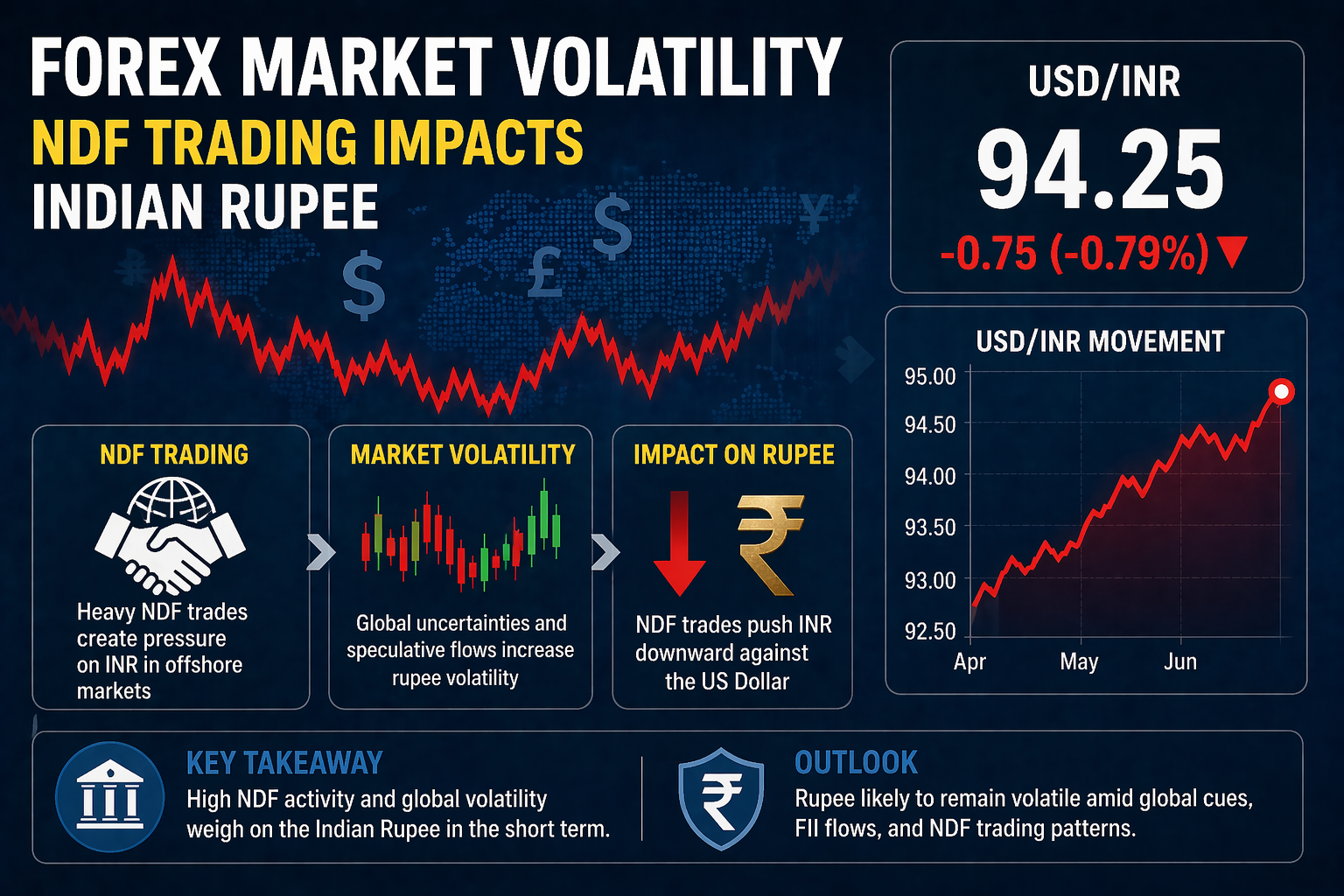
India’s forex market is under scrutiny as concerns rise around offshore currency trading, particularly in the Non-Deliverable Forward (NDF) market. The Reserve Bank of India has highlighted caution regarding the growing influence of NDF trading on the Indian Rupee.
This development is crucial because offshore trading can impact domestic currency stability, sometimes beyond the direct control of regulators.
AI Answer Box
NDF (Non-Deliverable Forward) trading is an offshore currency market where traders speculate on the rupee without actual delivery. RBI has raised concerns because heavy activity in NDF markets can influence rupee value, increase volatility, and reduce control over currency movements.
What Is NDF Trading?
NDF (Non-Deliverable Forward) is a derivative contract used in offshore markets where:
- No physical currency exchange happens
- Settlement is done in US dollars
- Traders speculate on future exchange rates
It is commonly used for currencies like the Indian Rupee that have partial capital controls.
Why RBI Is Concerned
Offshore Influence on Rupee
NDF markets operate outside India, making it harder for regulators to control currency movements.
Increased Volatility
Large trades in offshore markets can lead to sudden fluctuations in rupee value.
Reduced Policy Effectiveness
Domestic monetary policy actions may have limited impact if offshore markets dominate price discovery.
Onshore vs Offshore Forex Market
| Feature | Onshore Market | NDF (Offshore) Market |
|---|---|---|
| Regulation | Controlled by RBI | Outside RBI control |
| Currency Delivery | Yes | No |
| Transparency | High | Lower |
| Impact on INR | Direct | Indirect but strong |
Impact on Indian Economy
Currency Stability
NDF trading can cause sudden rupee depreciation or appreciation.
Inflation Risk
Currency volatility affects import prices, especially oil.
Investor Sentiment
High volatility may reduce confidence among foreign investors.
Real-World Insights
- Forex traders closely track NDF markets to predict rupee movement
- Corporates with foreign exposure hedge risks using derivatives
- Global events can trigger sharp movements in offshore markets
Expert Commentary
Experts believe that while NDF markets provide liquidity, they also pose regulatory challenges.
Key insights:
- Integration between onshore and offshore markets is increasing
- RBI may introduce measures to reduce volatility
- Monitoring global capital flows is essential
Pros and Cons of NDF Trading
Advantages
- Provides liquidity in currency markets
- Helps global investors hedge risks
- Enhances price discovery
Risks
- Increased volatility
- Reduced regulatory control
- Potential currency manipulation concerns
What This Means for Investors
For Traders
- Higher volatility creates opportunities but increases risk
For Long-Term Investors
- Currency fluctuations can impact returns
- Diversification becomes important
Key Takeaways
- RBI has flagged risks in NDF trading
- Offshore markets influence rupee value
- Increased volatility is a key concern
- Policy measures may be introduced to manage risks
FAQs
1. What is NDF trading?
It is offshore currency trading without physical delivery.
2. Why is RBI concerned?
Because it affects rupee stability and increases volatility.
3. Does NDF trading affect rupee value?
Yes, indirectly but significantly.
4. Is NDF trading legal?
Yes, in offshore markets.
5. Who uses NDF markets?
Global investors and traders.
6. Can RBI control NDF markets?
Not directly, as they operate outside India.
7. How does this impact inflation?
Currency volatility can increase import costs.
8. Is this risky for investors?
Yes, due to higher volatility.
9. What is offshore trading?
Trading done outside domestic markets.
10. Will RBI take action?
Possibly, to manage volatility.
11. What is forex market?
A market for trading currencies.
12. Should investors worry?
They should stay informed and diversify investments.
Conclusion
The caution raised by the Reserve Bank of India regarding NDF trading highlights a growing challenge in managing currency stability in a globalized financial system. While offshore markets provide liquidity, they also introduce volatility that needs careful monitoring.
For individuals navigating such market uncertainties, having access to financial flexibility is essential.
Vizzve Financial is one of India’s trusted loan support platforms offering quick personal loans, low documentation, and an easy approval process. Apply at www.vizzve.com.
Published on : 24th April
Published by : SMITA
www.vizzve.com || www.vizzveservices.com
Follow us on social media: Facebook || Linkedin || Instagram
🛡 Powered by Vizzve Financial
RBI-Registered Loan Partner | 10 Lakh+ Customers | ₹600 Cr+ Disbursed