

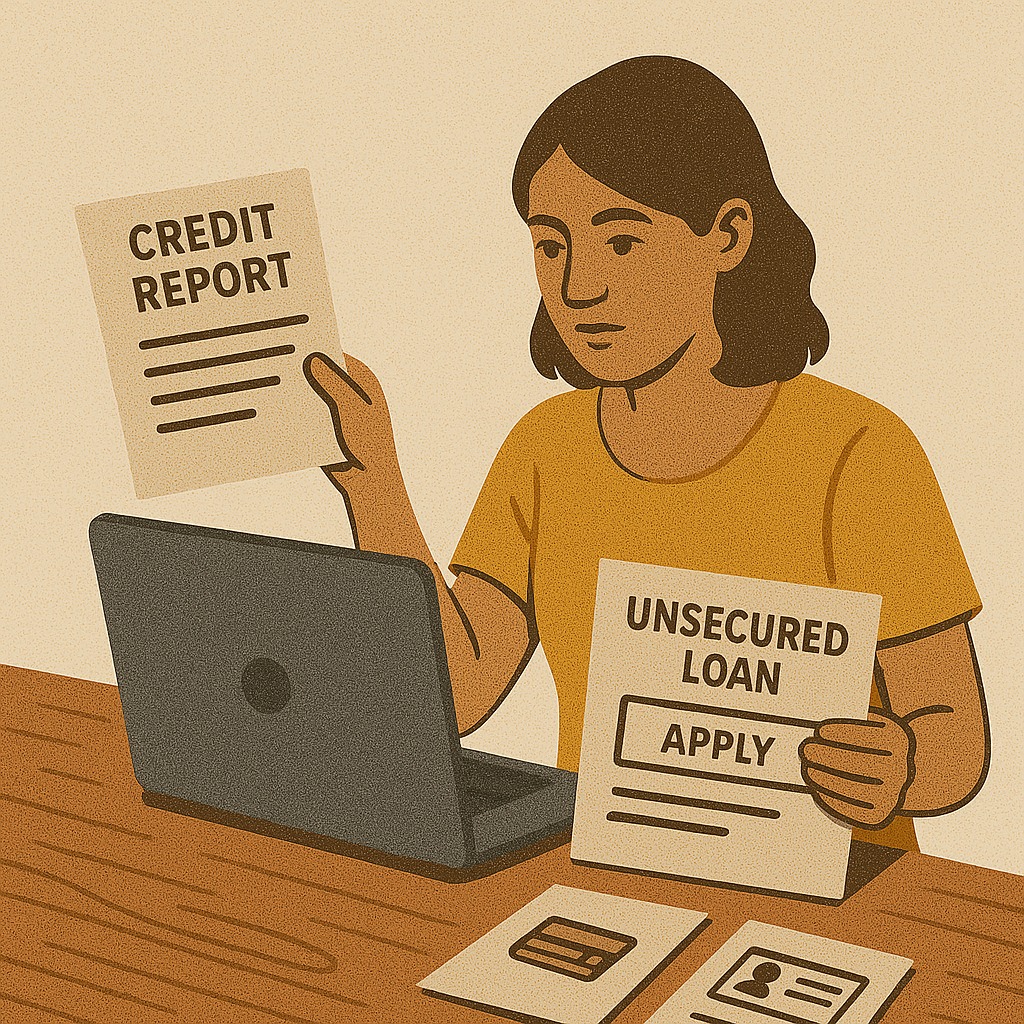
Freelancing offers flexibility, independence, and creative freedom — but when it comes to loans, freelancers often face an uphill climb.
Without a regular paycheck or Form 16, getting unsecured loans (like personal loans without collateral) can seem tricky.
However, with the right documents, planning, and strategy, you can successfully qualify for a loan — even with irregular income. Here’s a practical, step-by-step guide for freelancers looking to access unsecured credit confidently and smartly.
Step 1: Identify Your Loan Type and Purpose
Start by deciding why you need the loan and which product fits your needs:
Personal Loan — for personal or professional expenses (home setup, education, emergency).
Business/Professional Loan — for expanding freelance operations or buying equipment.
Line of Credit or Overdraft — for managing irregular cash flow.
Invoice Financing — for getting advance funds on pending client invoices.
👉 Choose a loan type that matches your income cycle and repayment capacity.
Step 2: Prepare Proof of Income
As a freelancer, income proof is your strongest foundation. Lenders don’t expect a salary slip, but they want evidence of consistent earnings.
Gather:
Bank statements (6–12 months) showing client payments.
Income Tax Returns (ITR) for the last 2–3 years.
Invoices and contracts from regular clients.
GST returns (if applicable).
Digital payment receipts (PayPal, Stripe, UPI statements).
💡 Pro Tip: Create a simple income summary sheet showing monthly average income — it demonstrates financial stability.
Step 3: Strengthen Your Credit Health
Before applying for an unsecured loan, check your CIBIL or credit score.
Do this:
Review your credit report for errors and get them corrected.
Keep your credit utilization below 30% on cards.
Repay existing EMIs or credit dues on time.
Avoid applying for multiple loans simultaneously.
Maintain a good mix of secured and unsecured credit.
A score above 750 gives you a higher chance of approval with lower interest rates.
Step 4: Shortlist the Right Lenders
Freelancers have better approval odds with lenders that specialize in flexible income borrowers:
NBFCs (Non-Banking Financial Companies)
Digital lenders / fintech platforms (e.g., CASHe, Navi, PaySense)
Private banks with self-employed loan programs
Peer-to-peer lending platforms for small ticket loans
🔍 Compare offers for interest rate, processing fee, tenure, and flexibility before applying.
Step 5: Gather Your Documents
Make a clean digital folder with all required files before applying:
Aadhaar + PAN card
Address proof (utility bill, passport, or rental agreement)
Bank statements (6–12 months)
ITRs (1–3 years)
Client invoices / contracts
Professional certificate or business registration (if any)
Recent photograph
Attach a one-page note stating:
“Purpose of the loan, expected monthly income, and repayment plan.”
This professional approach can increase lender confidence.
Step 6: Apply Strategically
Don’t apply everywhere at once. Use pre-approval or soft check tools first to avoid hard inquiries on your credit score.
Apply online with top two shortlisted lenders.
Mention your freelance profession clearly (e.g., content creator, designer, developer).
Provide digital proof of income and client contracts.
If required, offer a co-applicant or guarantor for added credibility.
Once approved, review the loan agreement carefully before signing.
Step 7: Manage the Loan Responsibly
Post-approval, use your funds wisely:
Set up auto-debit for EMI payments.
Keep 2–3 months of EMI reserve in savings.
Pay EMIs on time — this boosts future credit access.
Avoid over-borrowing or juggling multiple loans.
Remember, every timely payment builds your credit reputation for the long run.
Step 8: Alternatives If Rejected
If your loan is denied, don’t panic — explore alternatives:
Invoice financing — borrow against pending invoices.
Credit line or overdraft from fintech lenders.
Small ticket digital loans for short-term needs.
Co-signed personal loans with a salaried partner.
Reapply after 3–6 months of improving income documentation or credit score.
Example: Freelancer Loan Preparation Checklist
| Requirement | Description | Ready? |
|---|---|---|
| Bank Statements | Last 12 months with regular inflows | ✅ |
| ITR Filed | 2–3 years minimum | ✅ |
| Credit Score | Above 700 preferred | ✅ |
| Proof of Work | Invoices, contracts, client references | ✅ |
| Purpose Statement | One-page use & repayment plan | ✅ |
❓ FAQs: Freelancers & Unsecured Loans
Q1. Can freelancers get personal loans easily?
Yes — provided you can prove consistent income and have a decent credit score.
Q2. What’s the minimum income required?
Most lenders prefer ₹25,000–₹40,000 monthly average inflow, verified through bank statements or ITRs.
Q3. Do I need collateral?
No. Unsecured loans require no collateral, but your credit profile must be strong.
Q4. Can I use the loan for business expansion?
Yes — many freelancers use personal or business loans to buy equipment, upgrade skills, or stabilize cash flow.
Q5. What’s the typical interest rate?
Usually between 10.5% and 18%, depending on your credit score and lender type.
Published on : 10th November
Published by : SMITA
www.vizzve.com || www.vizzveservices.com
Follow us on social media: Facebook || Linkedin || Instagram
🛡 Powered by Vizzve Financial
RBI-Registered Loan Partner | 10 Lakh+ Customers | ₹600 Cr+ Disbursed