

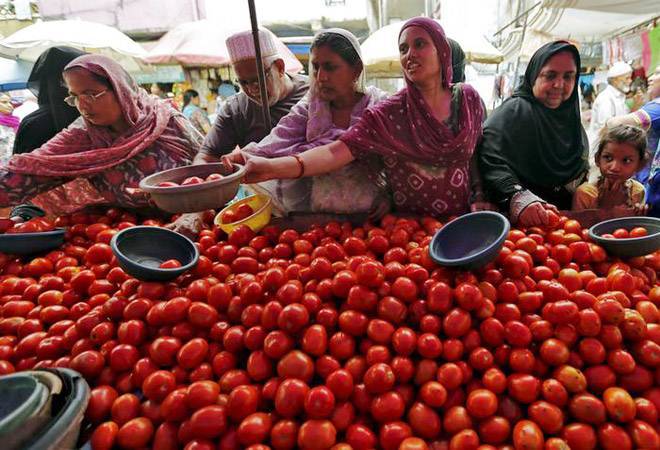
In several Indian states, tomato prices have dropped to as low as ₹2–₹5 per kg.
In some areas, farmers are dumping their produce because transportation costs more than the selling price.
Why Did Tomato Prices Crash?
1. Overproduction in Key Regions
Ideal weather and high yield in Andhra Pradesh, Karnataka, and Maharashtra led to excess supply.
Everyone planted tomatoes after last year’s high prices — causing a supply glut.
2. No Storage or Cold Chain Infrastructure
Tomatoes are highly perishable. No access to cold storage = forced quick sale at any price.
3. Weak Demand from Urban Markets
With increased supply and steady demand, mandi prices crashed.
Floods and transport disruptions also reduced off-take from metros.
4. Lack of Minimum Support Price (MSP)
Unlike wheat or rice, no MSP exists for tomatoes.
Farmers are at the mercy of market rates.
How Are Farmers Affected?
Severe income loss
Debt accumulation due to fertilizer, seed, and transport costs
Psychological stress and farmer protests in some areas
Some are even feeding tomatoes to cattle or dumping them on roads
Real-life Example:
A farmer in Madanapalle, Andhra Pradesh spent ₹40,000 per acre and earned just ₹4,000 due to low mandi rates.
What Needs to Change?
✅ Price Stabilization Fund
Governments must implement buffer stock and price stabilization for perishables.
✅ Support for Storage Infrastructure
More rural cold storage units to allow farmers to wait out low-price periods.
✅ Crop Planning Awareness
Educate farmers on crop rotation, market predictions, and diversification to avoid gluts.
✅ Better Transport Subsidies
Helping farmers move produce to better-paying urban markets quickly.
Year-on-Year Price Comparison
| Year | Avg. Wholesale Price (₹/kg) | Farmer Profit |
|---|---|---|
| 2023 | ₹80–₹100 | High |
| 2024 | ₹25–₹40 | Moderate |
| 2025 | ₹2–₹5 | Massive Loss |
FAQs
Q1: Why do tomato prices fluctuate so much?
Tomatoes are a perishable crop with no price regulation, so any change in supply or demand causes large price swings.
Q2: What happens to unsold tomatoes?
They are often dumped, fed to cattle, or used in compost due to the lack of storage or buyers.
Q3: Can tomato farmers get government support?
Some state governments offer emergency relief, but there’s no fixed MSP or nationwide support for tomatoes.
Q4: Why don’t farmers grow something else?
Many do, but market-driven hype and last year’s price memories lead to repetitive planting, causing gluts.
Q5: Will prices rise again soon?
Yes, prices may rise in off-seasons or post-flood crop failures, but until then, farmers face losses.
Published on : 6th August
Published by : SMITA
www.vizzve.com || www.vizzveservices.com
Follow us on social media: Facebook || Linkedin || Instagram
🛡 Powered by Vizzve Financial
RBI-Registered Loan Partner | 10 Lakh+ Customers | ₹600 Cr+ Disbursed