

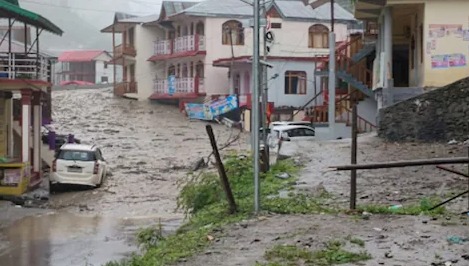
India has been witnessing unprecedented extreme weather events, ranging from devastating floods in the north and northeast to severe droughts in central and western regions. These climate extremes are not just environmental challenges — they have direct socio-economic, agricultural, and policy consequences.
As India grapples with these events, policymakers are being forced to rethink disaster management, climate adaptation, and infrastructure planning.
1. Recent Extreme Weather Events
Monsoon Floods 2025: States like Assam, Bihar, and Kerala saw rivers breach their banks, affecting millions of residents, destroying crops, and damaging infrastructure.
Heatwaves and Droughts: Maharashtra, Karnataka, and Rajasthan experienced record-high temperatures and water shortages, affecting agriculture and power generation.
Cyclones and Coastal Storms: Odisha and West Bengal faced intense cyclones, highlighting vulnerabilities in coastal disaster preparedness.
These events underscore the growing intensity and frequency of extreme weather in India, consistent with global climate change trends.
2. Economic and Social Impacts
Extreme weather events have far-reaching implications:
Agriculture: Crop losses, reduced yields, and livestock mortality threaten food security and rural livelihoods.
Infrastructure: Roads, bridges, and urban utilities are increasingly vulnerable to floods and storms.
Public Health: Water-borne diseases, heat-related illnesses, and mental health stress are rising.
Financial Stress: Crop insurance claims, disaster relief expenditures, and recovery costs strain state and central budgets.
The informal sector and low-income households bear the brunt of these events, exacerbating inequality.
3. Policy Implications
Extreme weather highlights the urgent need for adaptive, forward-looking policies:
a. Disaster Management & Early Warning Systems
Investment in real-time flood and drought monitoring.
Expansion of satellite-based early warning systems to reach remote areas.
b. Climate-Resilient Infrastructure
Upgrading roads, bridges, and drainage systems to withstand floods.
Designing water storage and irrigation systems for drought-prone regions.
c. Agricultural Adaptation
Promotion of drought-resistant crop varieties.
Encouraging efficient irrigation and water conservation techniques.
Expanding crop insurance coverage to reduce farmer vulnerability.
d. Financial & Fiscal Measures
Allocation of contingency funds for disaster relief.
Integrating climate risk in state borrowing and budgeting.
Encouraging public-private partnerships for resilient infrastructure projects.
4. Role of Technology
Technology is central to predicting, mitigating, and responding to extreme weather:
AI & Big Data: For real-time flood mapping, crop stress monitoring, and drought forecasting.
IoT Sensors: To monitor water reservoirs, soil moisture, and weather stations.
Digital Platforms: For emergency response, fund disbursement, and resource allocation.
These tools enable data-driven decision-making, reducing response times and improving efficiency.
5. Long-Term Considerations
India’s climate resilience strategy must focus on:
Integrating climate change in urban planning: Building flood-resilient cities and sustainable water management.
State and local governance capacity building: Equipping municipalities with disaster response capabilities.
Public awareness campaigns: Educating citizens on flood preparedness, water conservation, and heat safety.
International cooperation: Leveraging climate finance from multilateral institutions for adaptation projects.
Extreme weather events are not isolated incidents — they are part of a systemic pattern requiring proactive, coordinated policy responses.
FAQs :
1. What extreme weather events has India faced recently?
India has experienced severe floods, heatwaves, droughts, and cyclones across multiple states in 2025.
2. How do floods and droughts impact India’s economy?
They affect agriculture, infrastructure, public health, and government finances, often leading to long-term socio-economic challenges.
3. What policies are in place to tackle extreme weather?
Policies include disaster management frameworks, climate-resilient infrastructure, crop insurance schemes, and state contingency funds.
4. How can technology help in extreme weather management?
AI, IoT sensors, and digital platforms can monitor weather, predict disasters, and coordinate relief efforts effectively.
5. Why is climate adaptation important for India?
As extreme weather becomes more frequent, proactive adaptation ensures sustainable development, reduces losses, and protects vulnerable communities.
Published on : 14th October
Published by : SMITA
www.vizzve.com || www.vizzveservices.com
Follow us on social media: Facebook || Linkedin || Instagram
🛡 Powered by Vizzve Financial
RBI-Registered Loan Partner | 10 Lakh+ Customers | ₹600 Cr+ Disbursed
https://play.google.com/store/apps/details?id=com.vizzve_micro_seva&pcampaignid=web_share