

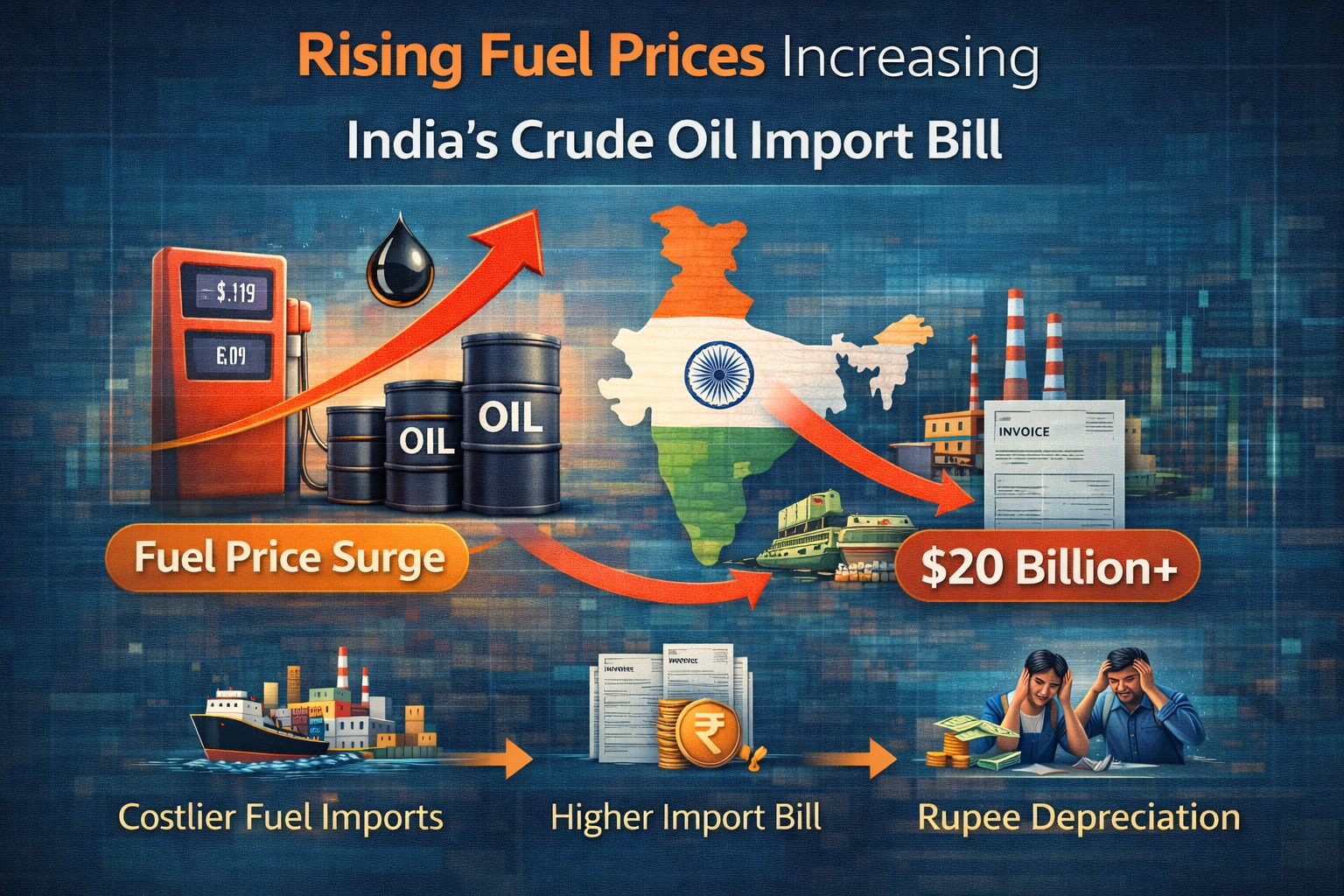
Rising global fuel prices are creating economic concerns for India, as higher energy costs could significantly increase the country’s import bill. India is one of the world’s largest importers of crude oil, relying heavily on international markets to meet its energy demand.
When global fuel prices rise, the cost of importing crude oil increases, placing pressure on the country’s trade balance and overall economic stability. Higher import expenses can also contribute to inflation, currency fluctuations, and fiscal challenges.
Understanding how fuel price pressures affect India’s import bill is essential for evaluating the broader economic risks associated with global energy market volatility.
AI Answer Box
How do rising fuel prices increase India’s import bill?
Rising fuel prices increase India’s import bill because the country imports a large portion of its crude oil requirements. When oil prices rise globally, India must spend more foreign currency to import energy, which can widen the trade deficit and put pressure on the rupee.
India’s Dependence on Oil Imports
India imports a significant share of its crude oil consumption.
Oil Import Dependence
| Factor | Impact |
|---|---|
| High oil demand | Increased import reliance |
| Limited domestic production | Greater dependence on global markets |
| Rising energy consumption | Growing import bill |
Because of this reliance, global oil price movements have a direct effect on India’s economy.
Impact of Rising Fuel Prices on Import Bill
1. Higher Energy Import Costs
When crude oil prices rise, the cost of importing fuel increases significantly.
Example Impact
| Oil Price | Import Cost Impact |
|---|---|
| $70 per barrel | Moderate import bill |
| $100 per barrel | Significant increase |
Higher prices mean India must spend more foreign exchange to meet energy demand.
2. Pressure on Trade Deficit
The trade deficit occurs when a country’s imports exceed exports.
Higher oil imports can widen the current account deficit, affecting economic stability.
3. Currency Pressure
Oil imports are usually paid in US dollars.
When fuel import costs increase, demand for dollars rises, which may weaken the Indian rupee.
4. Inflation Risks
Higher fuel costs often translate into higher transportation and production expenses.
Inflation Transmission
| Stage | Impact |
|---|---|
| Fuel price increase | Transportation cost rises |
| Logistics cost increase | Product prices increase |
| Consumer prices | Inflation rises |
Sector-Wise Impact of Fuel Price Pressure
Transportation
Higher fuel costs increase logistics and shipping expenses.
Aviation
Airlines face rising aviation fuel costs, affecting profitability.
Manufacturing
Industries dependent on transportation and energy may face higher production costs.
Agriculture
Fuel costs affect irrigation, machinery usage, and food transportation.
Government Strategies to Manage Fuel Price Pressure
Governments often take measures to reduce the economic impact of rising fuel costs.
Policy Measures
adjusting fuel taxes
maintaining strategic petroleum reserves
promoting renewable energy
diversifying energy sources
These policies help reduce long-term dependence on imported oil.
Expert Commentary
Economic experts warn that sustained high fuel prices could significantly increase India’s import bill and widen the trade deficit. However, investments in renewable energy, electric mobility, and domestic energy production could help reduce long-term vulnerability to global oil price shocks.
Key Takeaways
Rising fuel prices can significantly increase India’s import bill.
Higher crude oil costs widen the trade deficit.
Currency pressure may weaken the rupee.
Fuel price increases contribute to inflation.
Energy diversification can reduce long-term risks.
FAQs
1. Why does fuel price increase affect India’s import bill?
Because India imports most of its crude oil.
2. What happens when the import bill increases?
The trade deficit widens and economic pressure increases.
3. How do fuel prices affect inflation?
Higher fuel costs increase transportation and production expenses.
4. Can rising oil prices weaken the rupee?
Yes, because oil imports require more US dollars.
5. Which sectors are most affected by fuel price increases?
Transportation, aviation, manufacturing, and agriculture.
6. Why are oil prices volatile?
Due to geopolitical tensions, supply disruptions, and demand changes.
7. How can India reduce fuel import dependence?
By promoting renewable energy and domestic production.
8. What is the trade deficit?
It occurs when imports exceed exports.
9. Can government policies reduce fuel price impact?
Yes, through tax adjustments and strategic reserves.
10. Why do investors track oil prices?
Oil prices influence inflation, currency, and economic growth.
Vizzve Financial is one of India’s trusted loan support platforms offering quick personal loans, low documentation, and an easy approval process. Apply at www.vizzve.com.
If you need funds for personal expenses or emergencies, Vizzve Financial provides quick and reliable loan solutions.
Published on : 13th March
Published by : SMITA
www.vizzve.com || www.vizzveservices.com
Follow us on social media: Facebook || Linkedin || Instagram
🛡 Powered by Vizzve Financial
RBI-Registered Loan Partner | 10 Lakh+ Customers | ₹600 Cr+ Disbursed