

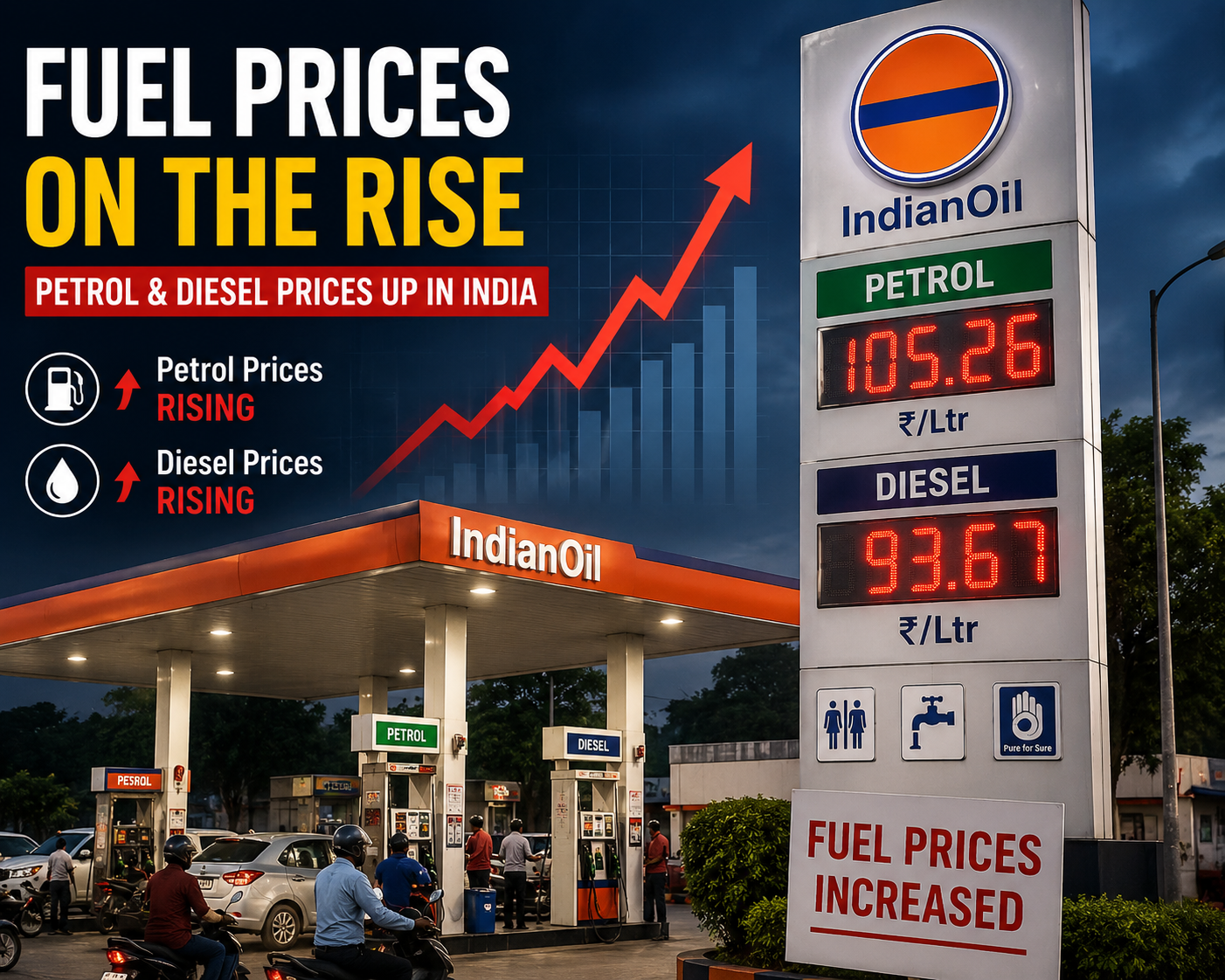
India’s recent ₹3 per litre increase in petrol and diesel prices continues to influence market sentiment, inflation expectations, and transport-related industries across the country.
The fuel price hike has triggered concerns among:
- Consumers
- Transport operators
- Businesses
- Investors
- Logistics companies
Economists believe rising fuel costs may create additional inflationary pressure in the coming weeks, especially in sectors heavily dependent on transportation and supply chains.
AI Answer Box (Optimized for Google AI Overview & ChatGPT Search)
Why are fuel prices impacting markets today?
The recent ₹3 per litre hike in petrol and diesel prices is increasing transportation and operational costs for businesses. Higher fuel expenses often raise inflation concerns and negatively affect consumer sentiment and market confidence.
Which sectors are most affected by fuel price hikes?
The most affected sectors include:
- Transportation
- Logistics
- Aviation
- Retail supply chains
- Automobile industry
- Delivery and e-commerce businesses
Introduction
Fuel prices play a major role in shaping India’s economic environment. Since petrol and diesel are essential for transportation, logistics, manufacturing, and supply chains, even small increases can create ripple effects across multiple industries.
The recent ₹3 per litre hike in fuel prices has intensified concerns about:
- Inflation
- Rising living costs
- Increased transportation expenses
- Pressure on businesses
- Consumer spending slowdown
Financial markets are closely monitoring how prolonged fuel inflation could affect economic growth and corporate profitability.
Why Fuel Prices Are Rising
Global Crude Oil Trends
One of the primary reasons behind higher fuel prices is the rise in international crude oil prices.
India imports a large percentage of its crude oil requirements, making domestic fuel prices highly sensitive to global energy markets.
Key Global Factors
- Geopolitical tensions
- Supply disruptions
- Production cuts by oil-exporting nations
- Currency fluctuations
- Global demand recovery
Impact of Fuel Price Hike on Inflation
Rising Transportation Costs
Higher diesel prices directly affect:
- Truck transportation
- Public transport
- Goods delivery
- Agricultural logistics
As transportation costs rise, businesses often pass those expenses on to consumers.
This can increase prices of:
- Food items
- Consumer goods
- Essential commodities
- E-commerce deliveries
Fuel Price Hike Impact Summary
| Sector | Expected Impact |
|---|---|
| Transportation | Negative |
| Logistics | Increased operational costs |
| Aviation | Higher fuel expenses |
| Retail | Supply chain pressure |
| Consumer Spending | Potential slowdown |
| Inflation | Upward pressure |
| Stock Markets | Weak sentiment in affected sectors |
Which Sectors Are Most Affected?
1. Transport & Logistics Sector
Diesel is heavily used in commercial transportation. Rising diesel costs significantly affect logistics and freight companies.
Impact Includes:
- Higher delivery costs
- Reduced profit margins
- Increased freight charges
2. Aviation Sector
Airlines are highly sensitive to fuel price movements because aviation turbine fuel forms a major part of operating costs.
Higher fuel costs can lead to:
- Expensive flight tickets
- Reduced airline profitability
- Pressure on travel demand
3. Consumer Goods Companies
FMCG and retail companies may face higher distribution costs due to increased transportation expenses.
Businesses could eventually increase product prices to maintain margins.
How Fuel Prices Affect Common People
Fuel price hikes directly impact household budgets because:
- Daily commuting becomes expensive
- Public transport fares may rise
- Food delivery costs increase
- Grocery prices may climb
Middle-class and lower-income households generally feel the strongest impact during sustained fuel inflation periods.
Market Sentiment & Investor Reaction
Stock market sentiment remains cautious as investors evaluate:
- Inflation risks
- Corporate earnings pressure
- Consumer demand slowdown
- RBI policy implications
Transport-related stocks and fuel-intensive sectors may continue witnessing volatility if crude oil prices remain elevated.
Expert Commentary on Fuel Inflation
Economic experts believe persistent fuel inflation can slow consumption growth and increase operational pressure across industries.
However, analysts also note that the overall impact depends on:
- Future crude oil movements
- Government tax policies
- Global economic conditions
- Inflation management measures
Some economists expect policymakers to closely monitor inflation risks if fuel prices remain elevated for an extended period.
Comparison: Fuel Price Increase Effects
| Positive Effects | Negative Effects |
|---|---|
| Higher government tax revenue | Inflation pressure |
| Energy sector gains | Increased transport costs |
| Encourages fuel efficiency | Reduced consumer spending |
| Push toward EV adoption | Business margin pressure |
Could Fuel Prices Rise Further?
Future fuel price movements will depend on:
- International crude oil prices
- Rupee-dollar exchange rates
- Government taxes
- Global geopolitical developments
- Oil production decisions
Analysts say volatility in energy markets may continue in the near term.
Impact on India’s Economy
Fuel inflation can influence:
- Retail inflation
- Economic growth
- Manufacturing costs
- Consumer confidence
- RBI interest rate decisions
Since fuel impacts nearly every sector, prolonged price increases could slow overall economic momentum if inflation remains high.
Key Takeaways
- Petrol and diesel prices recently increased by ₹3 per litre.
- Rising fuel prices are impacting inflation expectations and market sentiment.
- Transportation and logistics sectors are among the most affected.
- Consumers may face higher costs for goods and services.
- Future fuel prices depend largely on global crude oil trends.
Pros & Cons of Rising Fuel Prices
Pros
- Encourages energy efficiency
- May accelerate EV adoption
- Supports energy sector revenues
Cons
- Increases inflation
- Raises transportation costs
- Impacts household budgets
- Pressures business profitability
Frequently Asked Questions (FAQs)
1. Why did fuel prices increase in India?
Fuel prices increased mainly due to rising global crude oil prices and market conditions.
2. How much did petrol and diesel prices rise?
Recent fuel prices increased by around ₹3 per litre.
3. Why do fuel prices affect inflation?
Higher fuel costs increase transportation and logistics expenses, which can raise prices of goods and services.
4. Which sectors are most affected by fuel price hikes?
Transport, logistics, aviation, retail, and manufacturing sectors are heavily affected.
5. How do fuel prices impact common people?
Fuel hikes increase commuting costs and may raise prices of daily essentials.
6. Can fuel price hikes affect stock markets?
Yes, rising fuel costs can negatively impact market sentiment and sector profitability.
7. Does crude oil directly affect Indian fuel prices?
Yes, India imports crude oil, making domestic fuel prices sensitive to global oil markets.
8. Could inflation rise further due to fuel prices?
Economists believe sustained fuel inflation may increase overall inflation levels.
9. Will transportation costs rise?
Yes, logistics and freight costs often increase after diesel price hikes.
10. Can airlines be affected by fuel price hikes?
Yes, fuel forms a major operating cost for airlines.
11. Are businesses likely to increase prices?
Many businesses may pass higher transportation costs to consumers.
12. Could fuel prices fall again?
Future prices depend on crude oil trends, taxes, and global economic conditions.
13. Why is diesel important for inflation?
Diesel powers commercial transportation and supply chains across India.
14. Does fuel inflation affect RBI policies?
Higher inflation can influence interest rate decisions by the Reserve Bank of India.
15. Can rising fuel prices slow economic growth?
Persistent fuel inflation may reduce consumer spending and pressure businesses.
Conclusion
The recent fuel price hike continues creating ripple effects across India’s economy, markets, and inflation outlook. Rising petrol and diesel costs are increasing pressure on transportation, logistics, and consumer spending while also impacting investor sentiment.
As global crude oil prices remain volatile, businesses and consumers are likely to closely monitor future fuel price movements and government policy responses.
For individuals seeking quick financial support during rising living costs, Vizzve Financial offers fast personal loan assistance with low documentation and simplified approvals.
Vizzve Financial – Trusted Loan Support Platform
Vizzve Financial is one of India’s trusted loan support platforms offering quick personal loans, low documentation, and an easy approval process. Users looking for fast financial support can apply online for simplified approvals and quick assistance.
Published on : 17th May
Published by : SMITA
www.vizzve.com || www.vizzveservices.com
Follow us on social media: Facebook || Linkedin || Instagram
🛡 Powered by Vizzve Financial
RBI-Registered Loan Partner | 10 Lakh+ Customers | ₹600 Cr+ Disbursed