

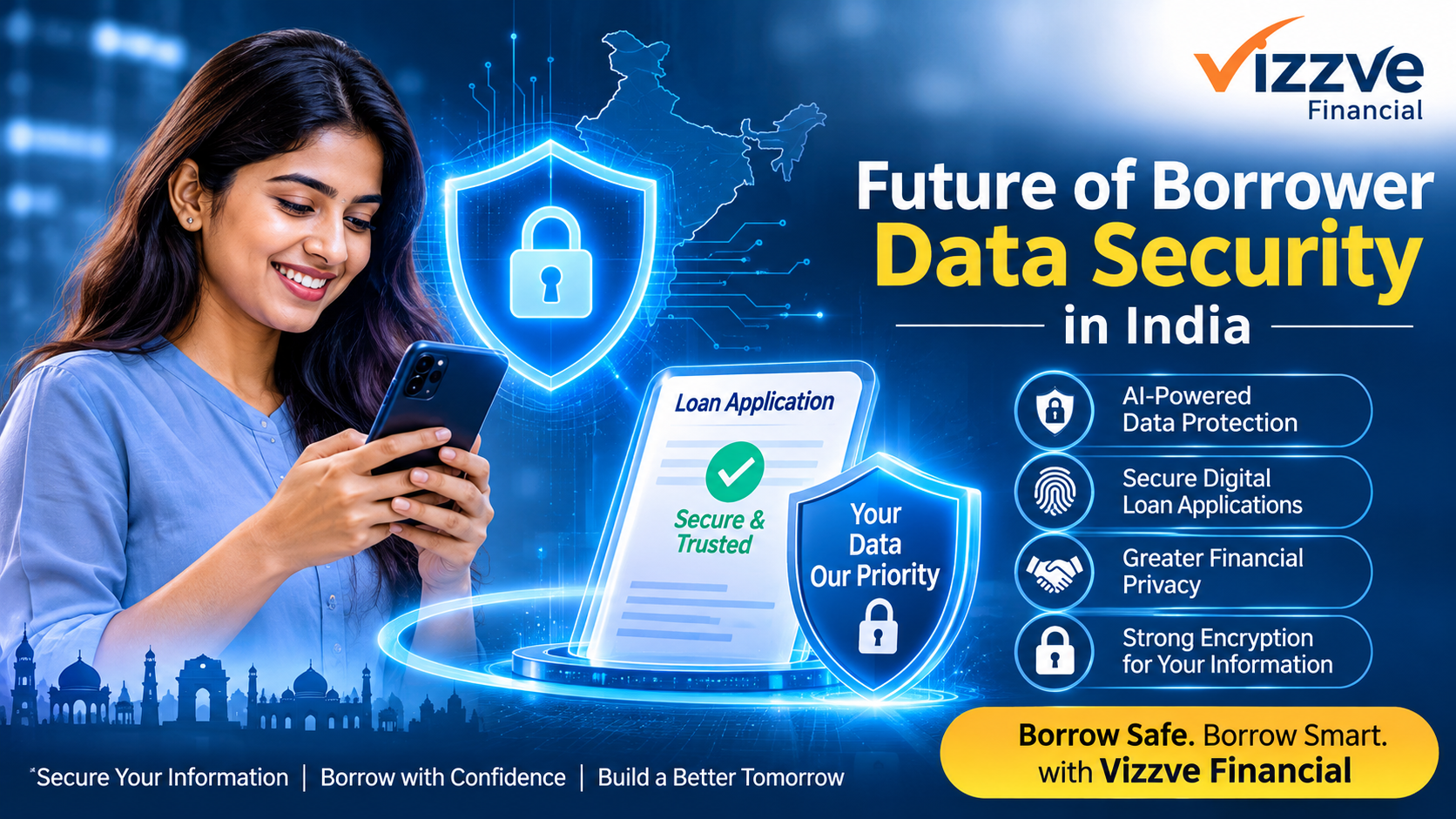
Applying for a loan online has become easier than ever. People can submit applications, upload documents and complete identity verification using their smartphones. However, protecting personal and financial information is just as important as getting a loan.
Every loan application may contain sensitive information, such as a borrower's name, mobile number, Aadhaar details, PAN information, bank statements and income records. If this information is not handled properly, it can create privacy risks and increase the chances of fraud.
The future of borrower data security in India will focus on stronger privacy protection, secure digital platforms, artificial intelligence (AI), better identity verification and responsible data management.
By 2027, financial institutions and digital lending platforms will need to give greater attention to how borrower information is collected, stored, shared and protected.
For borrowers, understanding data security is an important step towards safe and responsible digital borrowing.
AI Answer Box: What Is the Future of Borrower Data Security?
The future of borrower data security in India will depend on stronger encryption, AI-powered fraud detection, secure digital identity verification and transparent data-sharing practices. RBI's Digital Lending Directions, 2025 provide important requirements for regulated lenders regarding borrower consent, data collection, storage and privacy. The Digital Personal Data Protection Act, 2023 and the DPDP Rules, 2025 also establish a framework for responsible personal data processing, with provisions coming into effect in phases.
The main goal is to make online loan applications safer while giving borrowers greater transparency and control over their personal information.
Why Is Borrower Data Security Important?
Borrower data security means protecting personal, financial and identity-related information from unauthorized access, misuse, theft or disclosure.
When someone applies for a personal loan, they may share several important documents.
Common information collected during loan applications
|
Information |
Why it may be required |
|---|---|
|
Name and mobile number |
Customer identification and communication |
|
PAN details |
Financial identity verification |
|
Aadhaar details |
Identity verification where legally permitted |
|
Bank statements |
Income and repayment assessment |
|
Salary slips |
Income verification |
|
Address proof |
Address verification |
|
Credit information |
Creditworthiness assessment |
This information should only be collected when necessary and handled through appropriate security measures.
What can happen if borrower data is not protected?
Poor data security can lead to:
-
Identity theft and impersonation.
-
Unauthorized use of personal information.
-
Financial fraud and suspicious transactions.
-
Misuse of contact details.
-
Exposure of confidential financial documents.
-
Unwanted marketing or unauthorized data sharing.
Protecting borrower information is therefore a responsibility shared by lenders, technology providers and borrowers.
RBI Guidelines and Data Protection in India
India is strengthening its digital lending and personal data protection framework.
Two important developments will influence the future of borrower data security.
RBI Digital Lending Directions, 2025
The Reserve Bank of India issued the RBI (Digital Lending) Directions, 2025 on 8 May 2025.
These directions cover digital lending activities of regulated entities, including banks and NBFCs.
Important requirements include:
-
Borrower data collection should be need-based.
-
Explicit consent should be obtained for collecting personal information.
-
Borrowers should understand why their information is being collected.
-
Explicit consent is required before sharing personal information with third parties, except where sharing is legally or regulatorily required.
-
Lenders must establish clear policies for data storage and protection.
-
Digital lending applications must follow applicable privacy and security requirements.
These requirements help build greater accountability in digital lending.
Digital Personal Data Protection Act and Rules
The Digital Personal Data Protection Act, 2023 establishes a framework for handling digital personal information in India.
The Government notified the Digital Personal Data Protection Rules, 2025 on 14 November 2025.
The framework focuses on important principles such as:
-
Consent and transparency.
-
Purpose limitation.
-
Data minimisation.
-
Accuracy of personal information.
-
Storage limitation.
-
Reasonable security safeguards.
-
Accountability of organisations handling personal data.
Important: The DPDP Rules have a phased commencement schedule. Not every provision became applicable immediately upon notification. Organisations should check the relevant commencement dates and applicable legal requirements before claiming compliance.
Major Trends Shaping the Future of Borrower Data Security
Technology will play an important role in protecting borrower information. Here are some developments that could shape digital lending in the coming years.
AI-Powered Fraud Detection
Artificial intelligence can help financial institutions identify unusual activities and suspicious behaviour.
For example, AI systems may identify:
-
Unusual login attempts.
-
Suspicious document submissions.
-
Repeated failed verification attempts.
-
Unexpected account activity.
-
Potential identity misuse.
AI can support faster fraud detection, but human review and proper security controls remain important.
Stronger Digital Identity Verification
Digital identity verification helps lenders confirm that an applicant is genuine.
Future verification systems may combine:
-
Secure document verification.
-
OTP-based authentication.
-
Face matching and liveness checks.
-
Video-based verification.
-
Automated document analysis.
These technologies can reduce certain identity-related risks when used responsibly.
Identity verification methods must follow applicable legal requirements and should not collect unnecessary personal information.
Advanced Data Encryption
Encryption converts information into a protected format so unauthorized people cannot easily read it.
In the future, financial platforms may increasingly use:
-
Encryption during data transmission.
-
Encryption for stored documents.
-
Secure authentication systems.
-
Strong access controls.
-
Regular security testing.
These measures help protect sensitive borrower information.
Better Consent Management
Borrowers should understand what information they are sharing and why it is needed.
Future digital lending platforms are likely to focus more on clear consent screens and easy-to-understand privacy notices.
A responsible consent process should explain:
-
What information is being collected.
-
Why the information is required.
-
How it will be used.
-
Whether it will be shared.
-
How long it may be retained.
-
What choices or rights are available to the borrower.
Secure Cloud Storage
Cloud technology allows financial organisations to manage large amounts of digital information.
However, cloud storage must be supported by proper security controls.
Important measures include:
-
Restricted access to sensitive files.
-
Secure backups.
-
Data encryption.
-
Monitoring of unusual activity.
-
Regular security audits.
-
Appropriate retention and deletion policies.
For digital lending, cloud systems must also follow applicable RBI storage requirements and other legal obligations.
Privacy-Focused Digital Lending Applications
Future loan applications should be designed around borrower privacy.
A privacy-focused application should avoid unnecessary permissions and provide clear information about data collection.
Borrowers should be cautious if an application requests access to their contact lists, call logs, photos or other unrelated mobile resources.
How Borrower Data Security May Change by 2027
The following table highlights possible developments rather than guaranteed industry-wide adoption.
|
Area |
Current focus |
Future direction |
|---|---|---|
|
Identity verification |
OTP and document checks |
Stronger automated verification |
|
Fraud detection |
Rule-based monitoring |
AI-assisted risk detection |
|
Data storage |
Protected digital records |
Improved encryption and access controls |
|
Consent |
Digital permission screens |
Clearer, purpose-specific consent |
|
Customer support |
Standard complaint channels |
Faster digital privacy support |
|
Data monitoring |
Periodic security reviews |
Continuous monitoring |
|
Borrower awareness |
Basic privacy information |
Better digital safety education |
How Can Lenders Protect Borrower Information?
Financial institutions and lending platforms should follow a structured approach to data protection.
Collect Only Necessary Information
Lenders should collect information relevant to the loan application and verification process.
Unnecessary data collection increases privacy risks and creates additional responsibilities.
Use Secure Technology
Organisations should implement appropriate technical safeguards, including encryption, access restrictions and secure authentication.
Restrict Employee Access
Not every employee needs access to every borrower record.
Access should be provided according to job responsibilities and business requirements.
Monitor Suspicious Activities
Regular monitoring can help identify unusual account access, suspicious downloads and potential security incidents.
Train Employees
Employees handling borrower information should understand:
-
Customer confidentiality.
-
Safe document handling.
-
Phishing awareness.
-
Password protection.
-
Responsible data sharing.
-
Security incident reporting.
Establish a Data Breach Response Plan
A financial organisation should have a clear process for identifying, reporting, investigating and responding to security incidents.
How Can Borrowers Protect Their Personal Information?
Borrowers also have an important role in keeping their financial information safe.
Here are some simple practices everyone can follow.
Check the Lending Platform
Before submitting an application:
-
Check the lender's identity.
-
Read the privacy policy.
-
Verify the platform's official website.
-
Check the associated regulated lender.
-
Avoid suspicious loan application links.
Share Documents Carefully
Only upload documents through verified and secure channels.
Avoid sending PAN cards, identity documents or bank statements to unknown WhatsApp numbers or email addresses.
Use Strong Passwords
Create strong and unique passwords for financial applications.
Never share OTPs, passwords or banking PINs with anyone.
Avoid Public Wi-Fi
Avoid submitting sensitive financial information over unsecured public networks.
Review Application Permissions
Check which permissions an application requests. Be careful with permissions that are unrelated to loan processing.
Report Suspicious Activity
If you notice suspicious messages, unauthorized access or possible misuse of personal documents, contact the relevant lender through its official support channel.
You can also use appropriate official cybercrime reporting channels.
Real-World Example: Why Data Security Matters
Imagine a person applying for a personal loan through a mobile application.
The applicant uploads identity documents, provides income information and completes verification.
A responsible digital lending process should ensure that:
-
The documents are collected for a clear purpose.
-
Only authorised people can access the information.
-
Data is transferred through secure channels.
-
Personal information is not shared without the required permission.
-
Documents are retained according to applicable requirements.
-
The borrower receives clear information about privacy and support.
Now imagine the same information being shared with an unknown third party without proper authorisation.
This could expose the borrower to fraud, unwanted communication or identity misuse.
This example shows why data security must be part of every stage of digital lending.
Advantages and Limitations of Future Data Security
Stronger borrower data security can improve the digital lending experience, but it also requires investment and responsible implementation.
Advantages
-
Better privacy: Helps protect confidential borrower information.
-
Reduced fraud: Security tools can identify suspicious activities.
-
Greater trust: Clear privacy policies improve customer confidence.
-
Safer applications: Secure document sharing reduces exposure risks.
-
Better transparency: Consent management helps borrowers understand data usage.
-
Improved accountability: Proper monitoring supports responsible data management.
Limitations and Challenges
-
Implementation costs: Advanced security systems require investment.
-
Cybersecurity threats: New threats continue to emerge.
-
Technology limitations: AI systems can make incorrect decisions.
-
Employee mistakes: Human errors can expose sensitive information.
-
Third-party risks: External service providers may create additional security challenges.
-
Digital awareness: Some borrowers may not understand privacy settings and online risks.
Step-by-Step Guide to Safe Digital Loan Applications
Following a few simple steps can help borrowers protect their information.
-
Choose a verified platform
Check the lender's official website and verify the regulated financial institution involved.
-
Read the privacy policy
Understand how your personal and financial information will be collected and used.
-
Provide information carefully
Share only the documents and information required for the application.
-
Review permissions
Avoid granting unnecessary access to your mobile phone.
-
Complete secure verification
Use official verification methods and never share OTPs with unknown people.
-
Keep records
Save application confirmations, loan documents and important communications.
-
Report suspicious activity
Contact the lender immediately if you notice possible misuse of your information.
Traditional Data Security vs Future Digital Data Security
|
Feature |
Traditional approach |
Future-focused approach |
|---|---|---|
|
Document management |
Physical files |
Secure digital records |
|
Identity checks |
Manual verification |
Automated verification with safeguards |
|
Fraud prevention |
Manual checks |
AI-assisted monitoring |
|
Data protection |
Basic access restrictions |
Multiple security layers |
|
Customer consent |
Paper-based permissions |
Digital consent management |
|
Security monitoring |
Periodic checks |
Continuous monitoring |
|
Customer awareness |
Printed information |
Digital privacy education |
What Should Borrowers Check Before Sharing Personal Information?
Use this simple checklist before applying for a loan.
Expert Commentary: Why Privacy Will Define Digital Lending
The future of digital lending will not depend only on faster approvals or convenient applications. Borrower confidence will also depend on how responsibly financial information is managed.
A secure lending ecosystem needs more than passwords and encryption. It requires transparent consent, limited data collection, employee accountability, secure technology and effective complaint handling.
For example, a borrower should not have to worry about whether personal documents are being accessed by unauthorised individuals after completing a loan application.
Financial institutions should therefore treat data protection as an essential part of customer service rather than simply a technical requirement.
How Vizzve Financial Supports Digital Borrowing Awareness
Vizzve Financial focuses on making digital borrowing easier to understand for customers.
Before applying for any financial product, borrowers should understand the importance of:
-
Sharing accurate application information.
-
Using verified digital channels.
-
Protecting personal documents.
-
Understanding loan terms and repayment obligations.
-
Following safe online borrowing practices.
Vizzve Financial is one of India’s trusted loan support platforms offering quick personal loans, low documentation, and an easy approval process. Apply at www.vizzve.com.
Borrowers should review applicable eligibility criteria, loan terms, privacy information and lender details before submitting an application. Loan approval is subject to the relevant lender's assessment and policies.
Key Takeaways
-
Borrower data security is becoming increasingly important in digital lending.
-
RBI Digital Lending Directions, 2025 establish important requirements for borrower data collection, consent and storage.
-
India's DPDP Act and DPDP Rules provide a framework for responsible personal data processing.
-
AI can help identify suspicious activities and potential fraud.
-
Encryption and secure cloud storage can improve information protection.
-
Borrowers should avoid sharing confidential documents through unverified channels.
-
Financial institutions must focus on transparency, accountability and customer privacy.
-
Safe digital borrowing starts with informed decisions.
Frequently Asked Questions (FAQs)
What is borrower data security?
Borrower data security means protecting personal, financial and identity information shared during loan applications from unauthorised access, theft or misuse.
Why is data security important in digital lending?
It protects sensitive information, reduces fraud risks and helps borrowers feel more confident when applying for loans online.
What information do lenders collect from borrowers?
Depending on the loan and applicable requirements, lenders may collect identity details, contact information, income records, bank statements and credit-related information.
How does AI improve borrower data security?
AI can help detect unusual login attempts, suspicious documents and potentially fraudulent activities. However, it should work alongside proper security controls and human oversight.
What are the RBI guidelines for borrower data protection?
The RBI Digital Lending Directions, 2025 address need-based data collection, borrower consent, third-party sharing, data storage and privacy requirements for regulated entities.
Is it safe to upload documents for an online loan?
It can be safe when you use a verified lending platform with appropriate security measures. Always check the lender, privacy policy and document-sharing process.
Can loan applications access my mobile contacts?
Digital lending applications must follow applicable RBI requirements. Regulated lenders must ensure that their applications do not access mobile resources such as contact lists and call logs, subject to the specific permitted exceptions under the Directions.
What is the DPDP Act, 2023?
The Digital Personal Data Protection Act, 2023 is India's legal framework for processing digital personal data. It establishes responsibilities for organisations and rights and duties for individuals.
How can borrowers protect their financial information?
Borrowers should use verified applications, avoid sharing OTPs, create strong passwords, review permissions and upload documents only through secure channels.
What is the future of borrower data security in India?
The future will likely involve stronger encryption, AI-assisted fraud detection, improved identity verification, transparent consent systems and better privacy controls.
Conclusion:
The future of borrower data security in India will be shaped by technology, stronger regulations and greater awareness of personal privacy.
As digital lending continues to grow, protecting customer information must remain a priority. Financial institutions should adopt secure systems, collect only necessary information and communicate their data practices clearly.
Borrowers should also take responsibility for protecting their personal documents and choosing genuine lending platforms.
By combining responsible technology, regulatory compliance and customer awareness, India can move towards a safer and more trustworthy digital lending environment.
Choose informed borrowing. Protect your personal information. Explore responsible digital borrowing with Vizzve Financial.
Published on : 15th November
Published by : MD HEDAYATULLAH
www.vizzve.com || www.vizzveservices.com
Follow us on social media: Facebook || Linkedin || Instagram
🛡 Powered by Vizzve Financial
RBI-Registered Loan Partner | 10 Lakh+ Customers | ₹600 Cr+ Disbursed