

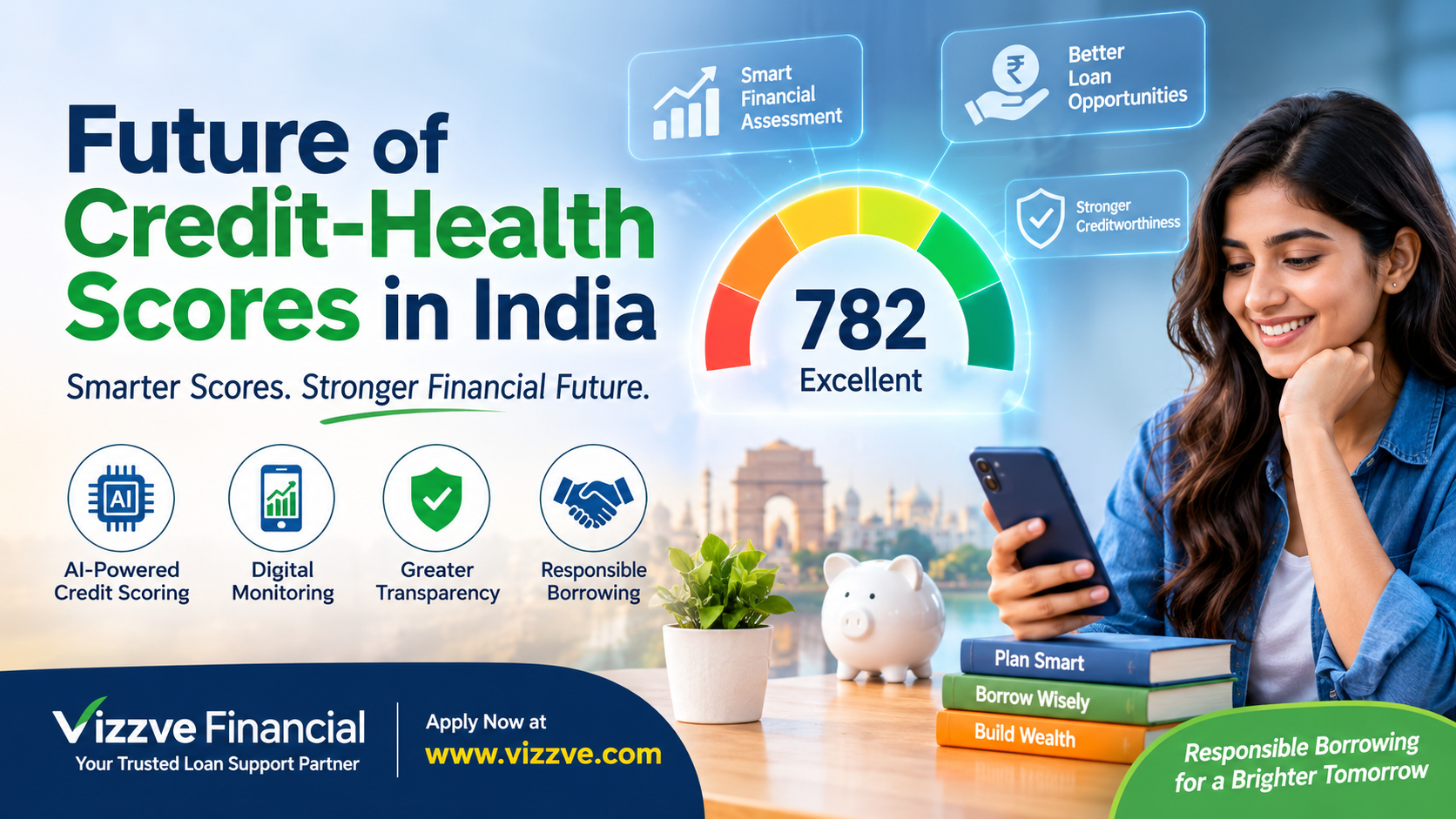
Credit-health scores help lenders understand how a person manages borrowed money. They can influence loan approvals, interest rates, credit limits and other lending decisions. As digital finance grows, the way credit health is measured may also change.
In the coming years, artificial intelligence (AI), digital banking data, automated verification and smarter financial tools may make credit assessment more flexible and informative. Traditional credit history will remain important, but new technology may help lenders understand borrowers more clearly.
Understanding these changes can help people make better financial decisions, avoid unnecessary debt and prepare for future borrowing.
AI Answer Box: What Is the Future of Credit-Health Scores?
Quick Answer
Credit-health scores in India may become more digital, data-driven and personalised in the coming years. Artificial intelligence, automated financial verification and better credit-monitoring tools could help lenders assess borrowers more efficiently. However, repayment history, responsible borrowing, financial stability and data privacy will continue to matter. A healthy credit profile is built through consistent financial habits, not quick fixes.
Key Takeaways
-
Credit-health scores help lenders understand a person's credit repayment behaviour.
-
Paying EMIs and credit card bills on time can support a healthier credit profile.
-
AI may help lenders analyse financial information faster.
-
Digital tools may make credit monitoring easier.
-
Credit scores are not the only factor in loan approval.
-
Borrowers should protect their financial data and avoid unnecessary loans.
What Are Credit-Health Scores?
A credit-health score is a number that helps show how responsibly a person manages credit. It is generally based on information in a credit report, such as loan repayments, credit card usage and outstanding debt.
In India, credit scores are provided by credit information companies such as CIBIL, Experian, Equifax and CRIF.
A credit score may help lenders assess:
-
Whether a borrower repays loans on time.
-
How much existing debt the borrower has.
-
How often the borrower applies for credit.
-
How long the borrower has managed credit accounts.
Different credit bureaus and lenders may use different scoring models, so scores and assessment methods may vary.
Why Are Credit-Health Scores Important?
Credit scores can affect a person's financial opportunities. A stronger credit history may help someone access suitable borrowing options, although approval depends on several factors.
|
Credit factor |
Why it matters |
|---|---|
|
Repayment history |
Shows whether payments are made on time |
|
Credit utilisation |
Shows how much of the available credit is being used |
|
Credit history length |
Helps understand past credit experience |
|
Credit enquiries |
Shows recent applications for credit |
|
Credit mix |
Shows the types of credit accounts managed |
How Does a Healthy Credit Score Help?
-
Better loan opportunities: Some lenders may offer more suitable loan terms to borrowers with stronger credit profiles.
-
Financial discipline: Regular repayment habits help people manage their money better.
-
Lower borrowing risk: A healthy profile may indicate responsible credit management.
-
Greater financial awareness: Checking reports helps identify mistakes or unfamiliar accounts.
How Will Credit-Health Scores Change in the Future?
The future of credit scoring is likely to involve more technology, faster data analysis and better tools for borrowers. These developments may help lenders understand financial behaviour more efficiently.
AI-Based Credit Assessment
Artificial intelligence may improve the way lenders analyse financial information.
AI systems can help process data such as repayment history, income patterns and existing obligations. This may reduce manual work and help lenders make quicker decisions.
What could AI change?
-
Faster credit assessment.
-
Automated document verification.
-
Better detection of unusual financial activity.
-
More personalised credit assessment.
-
Improved efficiency in loan processing.
AI does not guarantee a loan approval or a higher credit score. Automated systems must also be designed to avoid unfair or inaccurate decisions.
More Personalised Credit Assessment
In the future, lenders may use more detailed financial information to assess borrowers rather than relying on a single score alone.
For example, a person with irregular income may still demonstrate responsible money management through consistent repayments and stable financial behaviour.
Personalised assessment could help lenders understand different types of borrowers, including:
-
Freelancers.
-
Small business owners.
-
Gig workers.
-
First-time borrowers.
-
Individuals with limited credit history.
Real-Time Credit Monitoring
Digital credit monitoring tools may make it easier for people to understand their credit profile.
In the future, some tools could provide alerts when:
-
A new credit account appears.
-
A credit enquiry is recorded.
-
A repayment is reported late.
-
An unusual credit activity is detected.
Availability and speed of these alerts depend on the credit bureau, lender and service provider.
Alternative Data for Credit Assessment
Some lenders may explore additional financial information, subject to applicable regulations and borrower consent.
Potential data sources may include:
-
Verified income information.
-
Bank account cash-flow patterns.
-
Business transaction records.
-
Existing repayment information.
The goal: Help lenders assess borrowers who may have limited traditional credit history without compromising privacy or fairness.
Alternative data should not automatically mean more data collection. Borrowers should understand what information is being used and why.
Better Credit Tools for First-Time Borrowers
People who have never taken a loan may have limited credit history. This can make credit assessment more challenging.
Future digital lending systems may use more efficient verification processes and appropriate alternative information to assess such applicants.
However, first-time borrowers should not take unnecessary loans just to create a credit history.
Traditional Credit Scoring vs Future Credit Assessment
|
Feature |
Traditional approach |
Emerging approach |
|---|---|---|
|
Data assessment |
Primarily credit-report-based |
May combine credit history with permitted additional data |
|
Processing |
Manual and automated processes |
Increasing automation and AI assistance |
|
Monitoring |
Periodic checks |
More digital alerts and monitoring |
|
Borrower insights |
Basic credit report information |
Potentially more personalised insights |
|
Verification |
Document-based and digital |
More integrated digital verification |
|
Decision-making |
Scoring models and lender rules |
AI-supported analysis alongside lender rules |
These are broad trends, not a description of every lender. Many Indian lenders already use digital verification and automated scoring systems.
What Is Changing in India's Credit Reporting System?
India's credit reporting system continues to evolve through regulatory updates, digital infrastructure and better customer-service requirements.
The Reserve Bank of India (RBI) regulates credit information companies under the Credit Information Companies (Regulation) Act, 2005 and related regulations.
The RBI's Credit Information Companies Directions, 2025, updated as of July 1, 2026, provide the regulatory framework covering credit information companies, credit information reporting, dissemination, customer service and grievance redressal.
These developments highlight the importance of:
-
Accurate credit information.
-
Responsible handling of borrower data.
-
Clear grievance redressal systems.
-
Proper credit reporting.
-
Consumer protection.
Why Credit Report Accuracy Matters
A wrong entry in a credit report may affect a borrower's credit assessment.
Examples of possible errors include:
-
A loan showing as unpaid after it was repaid.
-
Incorrect personal details.
-
An unfamiliar credit enquiry.
-
A loan account that does not belong to the borrower.
Borrowers should check their reports regularly and raise disputes with the relevant credit bureau or lender when necessary.
How Can You Improve Your Credit Health?
A healthy credit profile usually comes from consistent financial habits rather than quick tricks.
Simple Steps to Build a Healthy Credit Profile
Pay EMIs and credit card bills on time
Payment history is an important factor in credit assessment. Set reminders or automatic payments where appropriate.
Keep credit card utilisation under control
Avoid using most of your available credit limit regularly. Lower utilisation is generally viewed more favourably, although it is not the only scoring factor.
Avoid too many loan applications
Multiple credit applications within a short period may result in several enquiries. Apply only when you genuinely need credit.
Check your credit report
Review your report periodically for incorrect details, unfamiliar accounts or payment records.
Manage existing debt
Avoid taking new loans to cover unnecessary spending. Make a repayment plan based on your income and expenses.
Protect your personal information
Never share OTPs, passwords or sensitive banking information with unknown callers or unverified lending platforms.
How to Monitor Your Credit Health Step by Step
A simple routine can help you stay aware of your financial position.
Check your credit report
Review your credit accounts, repayment records and personal details.
Track your due dates
Maintain a calendar for credit card bills and loan EMIs.
Review your borrowing
Check your total debt, monthly repayments and available budget.
Protect your credit information
Report suspicious activity and dispute incorrect credit information.
Build healthy habits
Pay on time, avoid unnecessary debt and review your finances regularly.
Pros and Cons of Future Credit-Health Scores
|
Potential advantages |
Possible challenges |
|---|---|
|
Faster credit assessment |
AI errors or incorrect data |
|
More personalised assessment |
Privacy concerns |
|
Better access for some borrowers with limited credit history |
Risk of unfair or biased assessment |
|
Easier digital monitoring |
Misleading score-improvement promises |
|
Faster fraud detection |
Dependence on digital systems |
Why Responsible AI Matters
Future credit systems should be transparent, accurate, secure and fair. AI can assist in financial decision-making, but lenders should remain accountable for their decisions.
Borrowers should have ways to question incorrect information and seek help when a credit decision or report appears inaccurate.
Real-World Examples of Credit-Health Scores
These simple examples show how everyday financial habits can affect credit health.
Example of responsible repayment
A person takes a personal loan and pays each EMI on time. They also avoid taking unnecessary loans and check their credit report periodically.
Result: These habits may support a healthier credit profile over time.
Example of poor credit management
A person frequently misses EMI payments, uses most of their credit card limit and applies for several loans in a short period.
Possible result: These behaviours may negatively affect their credit profile and make borrowing more difficult.
Example of a first-time borrower
A person has never borrowed money before and has limited credit history. A lender may need additional information to assess the person's eligibility.
Possible future development: Digital verification and permitted financial data may help some lenders assess applicants with limited traditional credit history.
These are illustrative examples, not guaranteed credit-score outcomes. Credit scoring models differ.
Expert Insights: What Borrowers Should Understand
Credit-health scores are useful financial indicators, but they should not become the only measure of a person's financial well-being.
A person can have a good credit score and still struggle with monthly expenses. Similarly, someone with a limited credit history may be financially responsible but have fewer records for a lender to assess.
A practical financial approach should focus on:
-
Borrowing only when needed.
-
Understanding interest rates and repayment terms.
-
Keeping emergency savings where possible.
-
Paying bills on time.
-
Checking credit reports for errors.
-
Protecting financial data.
-
Avoiding unrealistic promises about instant credit-score improvement.
Credit scores may change over time based on credit information, scoring models and reporting practices. No lender or platform should promise a guaranteed credit-score increase.
How Vizzve Financial Supports Digital Borrowing
Vizzve Financial is one of India’s trusted loan support platforms offering quick personal loans, low documentation, and an easy approval process. Apply at www.vizzve.com.
Before applying for any loan, borrowers should review the lender's terms, interest rate, processing fees, repayment schedule, eligibility criteria and privacy policy.
Responsible borrowing starts with understanding how much you need and how comfortably you can repay it.
Frequently Asked Questions (FAQs)
What is a credit-health score?
A credit-health score is an indicator of how a person manages credit. It is generally calculated using information from credit reports, such as repayment history and credit usage.
Why are credit-health scores important?
They help lenders assess a borrower's creditworthiness and may influence loan approval, credit limits and loan terms.
Will AI change credit scoring in India?
AI may help lenders analyse financial information, verify documents and assess borrowers more efficiently. However, final lending decisions depend on lender policies and applicable regulations.
Can I improve my credit score?
You can work towards a healthier credit profile by paying EMIs on time, managing credit card usage, limiting unnecessary applications and checking your credit report.
Will digital credit assessment help first-time borrowers?
It may help some first-time borrowers through additional permitted information and improved verification methods. However, approval is not guaranteed.
Does checking my credit report lower my credit score?
Checking your own credit report is generally considered a self-check and does not lower your score. Credit enquiries made by lenders when you apply for credit may affect scoring, depending on the model.
How often should I check my credit report?
Checking it periodically, such as every few months, can help you identify errors, unfamiliar accounts and changes in reported information.
Can AI give me a guaranteed loan approval?
No. AI may assist with loan assessment, but no technology can guarantee approval. Eligibility depends on the lender's requirements, financial details and risk assessment.
What is alternative data in credit assessment?
Alternative data refers to additional financial information that may be used in credit assessment, beyond traditional credit records, where legally permitted and appropriately consented to.
What will credit-health scores look like in 2027?
Credit assessment in 2027 may involve greater use of AI, digital verification, personalised assessment, improved monitoring and additional permitted financial information. The pace of adoption will vary across lenders.
Conclusion
The future of credit-health scores in India may be shaped by AI, digital financial services, faster verification and more personalised credit assessment. These changes could help lenders understand borrowers more efficiently and improve access to suitable financial products.
However, technology alone cannot create healthy credit habits. Timely repayments, careful borrowing, accurate credit reports and responsible financial planning will continue to matter.
Understanding your credit health today can help you make smarter financial decisions tomorrow.
Explore responsible digital borrowing and personal loan options with Vizzve Financial at www.vizzve.com.
Published on : 19th November
Published by : MD HEDAYATULLAH
www.vizzve.com || www.vizzveservices.com
Follow us on social media: Facebook || Linkedin || Instagram
🛡 Powered by Vizzve Financial
RBI-Registered Loan Partner | 10 Lakh+ Customers | ₹600 Cr+ Disbursed