

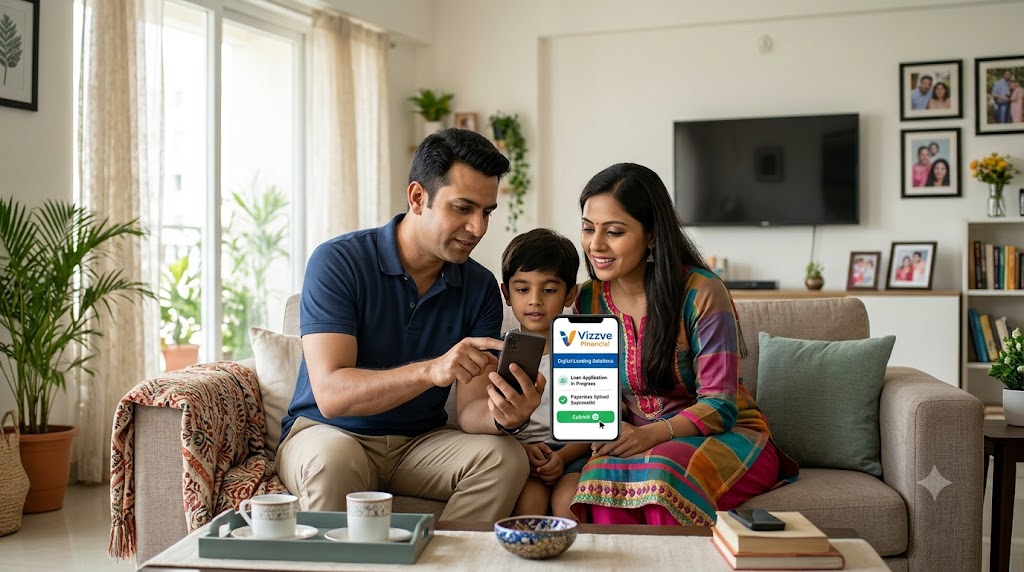
Today, a mobile phone is more than a device for calling and messaging. People use smartphones to pay bills, transfer money, shop online, and manage their finances.
Borrowing money is also becoming easier through mobile-based financial services.
Mobile lending allows people to explore and apply for loans using a smartphone. Instead of depending entirely on branch visits and physical paperwork, borrowers can complete many steps online.
By 2027, mobile lending in India is expected to become more technology-driven. Artificial intelligence (AI), digital KYC, secure document sharing, and faster payment systems may make loan applications more convenient.
However, convenience should not mean borrowing without planning. Customers must understand interest rates, fees, repayment schedules, and lender details before accepting a loan.
AI Answer Box: What Is the Future of Mobile Lending in India 2027?
The future of mobile lending in India will focus on making loan applications easier, faster, and more secure through smartphones.
Important developments are expected to include:
-
AI-assisted loan eligibility checks.
-
Digital KYC and paperless verification.
-
Mobile-based personal loan applications.
-
Faster digital document processing.
-
Secure online loan disbursement.
-
Better fraud detection systems.
-
Personalised financial services.
These technologies may improve the borrowing experience, but loan approval will continue to depend on lender policies, customer eligibility, income, credit history, and repayment capacity.
Why Is Mobile Lending Growing in India?
Mobile lending is growing because smartphones and internet services are becoming a regular part of everyday life.
People want financial services that are easy to access, simple to understand, and available without unnecessary travel.
According to government telecom data, India had approximately 1,092.79 million internet subscribers in March 2026, including more than 1,065 million broadband subscribers. This growing digital reach provides an important foundation for mobile-based financial services.
Some major reasons behind the growth include:
Easy Access Through Smartphones
People can explore loan options and complete eligible application steps using mobile phones.
Less Paperwork
Digital KYC and electronic documents can reduce the need for physical forms and photocopies.
Faster Application Processing
Automated systems can help lenders check documents and customer information more efficiently.
Growth of Digital Payments
UPI and mobile banking have made people more comfortable with digital financial transactions.
Increasing Financial Awareness
More customers are learning about credit scores, loan interest rates, EMIs, and online financial services.
Major Trends That Will Shape Mobile Lending in 2027
Mobile lending is expected to become more advanced as financial institutions adopt new technologies.
AI-Powered Loan Eligibility
Artificial intelligence can help lenders analyse application information and support credit assessment.
Possible uses include:
-
Reviewing income details.
-
Checking submitted documents.
-
Identifying missing information.
-
Supporting fraud detection.
-
Analysing repayment-related information.
AI can improve efficiency, but final lending decisions must follow appropriate policies and regulatory requirements.
Digital KYC and Paperless Verification
Digital KYC makes customer verification easier through permitted electronic methods.
Borrowers may use:
-
Aadhaar-based verification.
-
PAN details.
-
DigiLocker documents.
-
Video KYC.
-
Digital identity checks.
These methods can reduce paperwork and improve the online application experience.
Instant Loan Eligibility Checks
Mobile applications may provide preliminary eligibility information after customers submit basic details.
However, an eligibility result is not a guarantee of loan approval. Lenders may still check income, credit history, documents, and repayment capacity.
Personalised Loan Offers
Technology may help lenders provide loan options based on customer requirements and financial profiles.
For example, a salaried employee and a self-employed person may have different documentation and income verification needs.
Personalised offers should always include clear information about interest rates, fees, and repayment conditions.
Secure Mobile Loan Disbursement
Digital payment systems can help transfer approved loan amounts electronically.
Customers should check the lender's name, sanctioned amount, repayment schedule, and bank account details before accepting a loan.
Better Customer Support
Mobile lending platforms may use automated support systems to answer basic questions, share application updates, and explain repayment schedules.
Customers should still have access to suitable human support for important financial issues.
How Does Mobile Lending Work?
The mobile loan application process is generally straightforward.
|
Stage |
What happens? |
|---|---|
|
Application |
Customer enters basic details |
|
KYC |
Identity is verified |
|
Documents |
Required documents are submitted |
|
Eligibility |
Lender reviews the application |
|
Approval |
Loan decision is communicated |
|
Agreement |
Customer reviews and accepts terms |
|
Disbursement |
Approved amount is transferred |
Step-by-Step Guide to Applying for a Mobile Loan
Choose a verified lending platform
Check the lender's identity and its connection with a regulated bank or NBFC.
Enter your details
Provide accurate personal, employment, and income information.
Complete digital KYC
Use the authorised identity verification process.
Submit required documents
Provide the documents requested by the lender.
Review loan details
Check the interest rate, APR, processing fees, EMI, and repayment period.
Accept the agreement
Proceed only after understanding the loan terms.
Receive the loan amount
If approved, the amount is disbursed according to the loan agreement.
Mobile Lending vs Traditional Lending
|
Feature |
Traditional lending |
Mobile lending |
|---|---|---|
|
Application |
Often branch-based |
Smartphone-based |
|
Documents |
Physical paperwork |
Digital documents |
|
KYC |
Physical or permitted methods |
Digital methods where available |
|
Communication |
Branch or telephone |
Mobile notifications and support |
|
Tracking |
Manual follow-up |
Online status updates |
|
Convenience |
May require travel |
Remote access |
Mobile lending does not remove every traditional lending requirement. Some applications may still need additional checks or physical verification.
Benefits of Mobile Lending for Indian Borrowers
Mobile lending can make financial services more accessible and convenient.
Convenient Loan Applications
Customers can explore loan options without visiting a branch for every step.
Saves Time
Digital forms and document uploads may reduce repetitive paperwork.
Easy Application Tracking
Some platforms allow customers to check application progress through their phones.
Access to Financial Information
Borrowers can review loan details, payment schedules, and other information online.
More Flexible Access
Digital services can help people in smaller towns access financial products, subject to availability and eligibility.
Pros and Cons of Mobile Lending
|
Pros |
Cons |
|---|---|
|
Easy online applications |
Requires internet access |
|
Less physical paperwork |
Risk of fake loan apps |
|
Convenient document submission |
Data privacy concerns |
|
Digital application tracking |
Technical problems |
|
Faster initial checks |
Approval is not guaranteed |
|
Remote access |
Digital literacy may be limited |
Is Mobile Lending Safe in India?
Mobile lending can be safe when customers use verified platforms connected to regulated financial institutions and understand the loan terms.
However, fake loan applications and online financial fraud remain important concerns.
The RBI issued its Digital Lending Directions, 2025, to strengthen the digital lending framework and address issues such as data privacy, mis-selling, unfair practices, and borrower protection.
Important Safety Rules for Borrowers
-
Check whether the actual lender is an RBI-regulated entity.
-
Verify the lending app's association with the bank or NBFC.
-
Read the Key Facts Statement (KFS).
-
Check the Annual Percentage Rate (APR).
-
Never share OTPs, passwords, or banking PINs.
-
Avoid apps requesting unnecessary access to phone contacts or personal files.
-
Read privacy and consent policies.
-
Keep copies of loan agreements and payment receipts.
How to Identify a Fake Loan App
Be careful if an application:
-
Promises guaranteed approval without checks.
-
Demands unexpected advance payments.
-
Hides the actual lender's name.
-
Requests unnecessary personal information.
-
Uses threats or pressure to make you borrow.
-
Does not clearly explain loan charges.
The Government has also highlighted the RBI's Digital Lending Apps directory, operational since July 1, 2025, to help customers check an app's claimed association with a regulated entity.
You should verify the actual lender independently rather than relying only on an app's claims.
How Will AI Change Mobile Lending in 2027?
AI is expected to play a bigger role in mobile-based financial services.
It can help lenders process information, identify unusual activity, and improve customer support.
AI-Based Document Checking
AI tools may help identify unclear documents, missing details, and possible inconsistencies.
Better Fraud Detection
Automated systems can flag unusual application patterns and suspicious identity information.
Smarter Credit Assessment
AI may support the analysis of income, repayment history, and other permitted financial information.
Improved Customer Experience
Chatbots and automated assistants can answer common questions about loan applications, EMIs, and repayment dates.
Important: AI tools should support fair and responsible lending. Borrowers should not be promised guaranteed approval simply because an application uses AI.
Data Privacy and Security in Mobile Lending
Mobile loan applications may collect personal and financial information. Protecting this information is essential.
Responsible digital lending platforms should follow applicable regulatory requirements.
Important protection measures include:
-
Secure data transmission.
-
Encryption of sensitive information.
-
Limited access to customer records.
-
Clear consent before collecting information.
-
Transparent privacy policies.
-
Proper data retention practices.
Under RBI's Digital Lending Directions, 2025, regulated entities must ensure that data collection is need-based and supported by prior, explicit borrower consent. Customers must also be given appropriate control over specific data permissions.
What Should Borrowers Check Before Sharing Information?
Before submitting documents through a mobile application, check:
-
Whether the website or application is genuine.
-
Why each document is required.
-
Whether the information is being shared with third parties.
-
Whether the app requests unnecessary phone permissions.
-
How the lender handles personal information.
Mobile Lending Opportunities for Different Borrowers
Mobile lending may support different groups of people with different financial needs.
|
Borrower type |
Possible benefit |
|---|---|
|
Salaried employees |
Convenient personal loan applications |
|
Self-employed people |
Digital income document submission |
|
Small business owners |
Easier access to eligible credit options |
|
Freelancers |
Remote application and document sharing |
|
New borrowers |
Better access to loan information |
Eligibility, documentation, and available loan products vary by lender.
Real-World Example: How Mobile Lending Can Help
Imagine a salaried employee who needs money for an unexpected household expense.
Instead of visiting multiple offices, the person can explore an online personal loan option using a smartphone.
The applicant may:
-
Enter basic personal information.
-
Complete digital KYC.
-
Submit salary details and bank statements.
-
Check available loan terms.
-
Review the EMI and repayment schedule.
-
Accept the agreement if comfortable with the conditions.
The lender then reviews the application and makes a decision.
This is an illustrative example. The actual process, approval time, and eligibility depend on the lender.
Expert Commentary: What Will Matter Most in 2027?
The future of mobile lending will not depend only on faster technology. Customer trust will be equally important.
Three areas will shape a reliable mobile lending experience:
Convenience: Customers should be able to understand and complete the application without unnecessary difficulties.
Transparency: Loan charges, repayment conditions, and lender details should be easy to understand.
Security: Personal information must be handled responsibly, and borrowers should be protected from fraudulent applications.
A good digital lending system should make borrowing easier without encouraging customers to take loans they cannot repay.
How Can Borrowers Prepare for Mobile Lending in 2027?
A few simple financial habits can help customers make better borrowing decisions.
-
Maintain a good credit repayment history.
-
Check your credit report regularly.
-
Keep your PAN and other documents updated.
-
Maintain clear bank and income records.
-
Compare interest rates and processing fees.
-
Calculate the EMI before applying.
-
Avoid borrowing more than necessary.
-
Choose a verified lender.
-
Pay EMIs on time.
These steps can improve financial awareness and help borrowers manage their loan responsibilities.
Vizzve Financial: Explore Convenient Digital Loan Support
Vizzve Financial is one of India's trusted loan support platforms offering quick personal loans, low documentation, and an easy approval process. Apply at www.vizzve.com.
As mobile lending continues to develop, customers can explore convenient online loan options and understand the available application process.
Before applying, borrowers should check their eligibility, applicable interest rates, processing charges, repayment schedule, and actual lending institution.
Key Takeaways
-
Mobile lending allows customers to explore and apply for loans through smartphones.
-
AI may improve document checking and credit assessment.
-
Digital KYC can reduce paperwork.
-
Mobile applications can make loan tracking easier.
-
Digital payments support convenient loan disbursement.
-
Data privacy and customer consent are essential.
-
RBI Digital Lending Directions, 2025, strengthen borrower protection.
-
Fake loan applications remain a risk.
-
Loan approval depends on eligibility and lender assessment.
-
Responsible borrowing is essential for long-term financial health.
Future of Mobile Lending: Quick Summary
|
Technology |
Expected role in 2027 |
|---|---|
|
Artificial Intelligence |
Smarter document and application checks |
|
Digital KYC |
Easier identity verification |
|
UPI and digital payments |
Convenient financial transactions |
|
Cloud technology |
Better digital service infrastructure |
|
Data analytics |
Improved financial assessment |
|
Cybersecurity |
Stronger protection against fraud |
|
Mobile applications |
Convenient customer access |
These are expected developments, not guarantees that every lender will adopt each technology by 2027.
Frequently Asked Questions (FAQs)
What is mobile lending in India?
Mobile lending is a digital borrowing process that allows people to explore and apply for loans through smartphones using online financial platforms.
What is the future of mobile lending in India in 2027?
Mobile lending is expected to become more technology-driven through AI, digital KYC, automated document checks, and secure online payment systems.
Can I apply for a personal loan using my mobile phone?
Yes. Many banks and NBFCs offer online personal loan applications through their websites or authorised mobile applications.
Is mobile lending safe in India?
It can be safe when borrowers use verified platforms connected to regulated lenders and carefully review loan terms and privacy policies.
How does AI help in mobile lending?
AI can support document verification, fraud detection, application processing, and customer service.
What documents are required for mobile loan applications?
Common requirements include PAN details, identity proof, address information, bank statements, and income documents. Requirements vary by lender.
Does mobile lending provide instant loan approval?
Not always. Some platforms may provide quick initial assessments, but final approval depends on verification and lender eligibility criteria.
Can self-employed people apply for mobile loans?
Yes. Eligible self-employed applicants may submit bank statements, business income records, and other accepted documents digitally.
What is the role of digital KYC in mobile lending?
Digital KYC helps lenders verify customer identities electronically and can reduce the need for physical paperwork.
How can I avoid fake mobile loan applications?
Check the actual lender, verify the app's association with a regulated institution, read privacy policies, avoid suspicious links, and never share OTPs or banking PINs.
Conclusion: Mobile Lending Is Changing the Future of Borrowing
Mobile lending is making financial services more accessible and convenient across India. In 2027, AI, digital KYC, secure payments, and automated verification may further improve the way people apply for loans.
However, technology alone cannot make borrowing safe. Customers must understand loan costs, check lender details, protect personal information, and plan repayments carefully.
The future of mobile lending should be built on convenience, transparency, and responsible financial decisions.
Explore digital loan support with Vizzve Financial. Visit www.vizzve.com to learn more.
Published on : 2nd November
Published by : MD HEDAYATULLAH
www.vizzve.com || www.vizzveservices.com
Follow us on social media: Facebook || Linkedin || Instagram
🛡 Powered by Vizzve Financial
RBI-Registered Loan Partner | 10 Lakh+ Customers | ₹600 Cr+ Disburs