

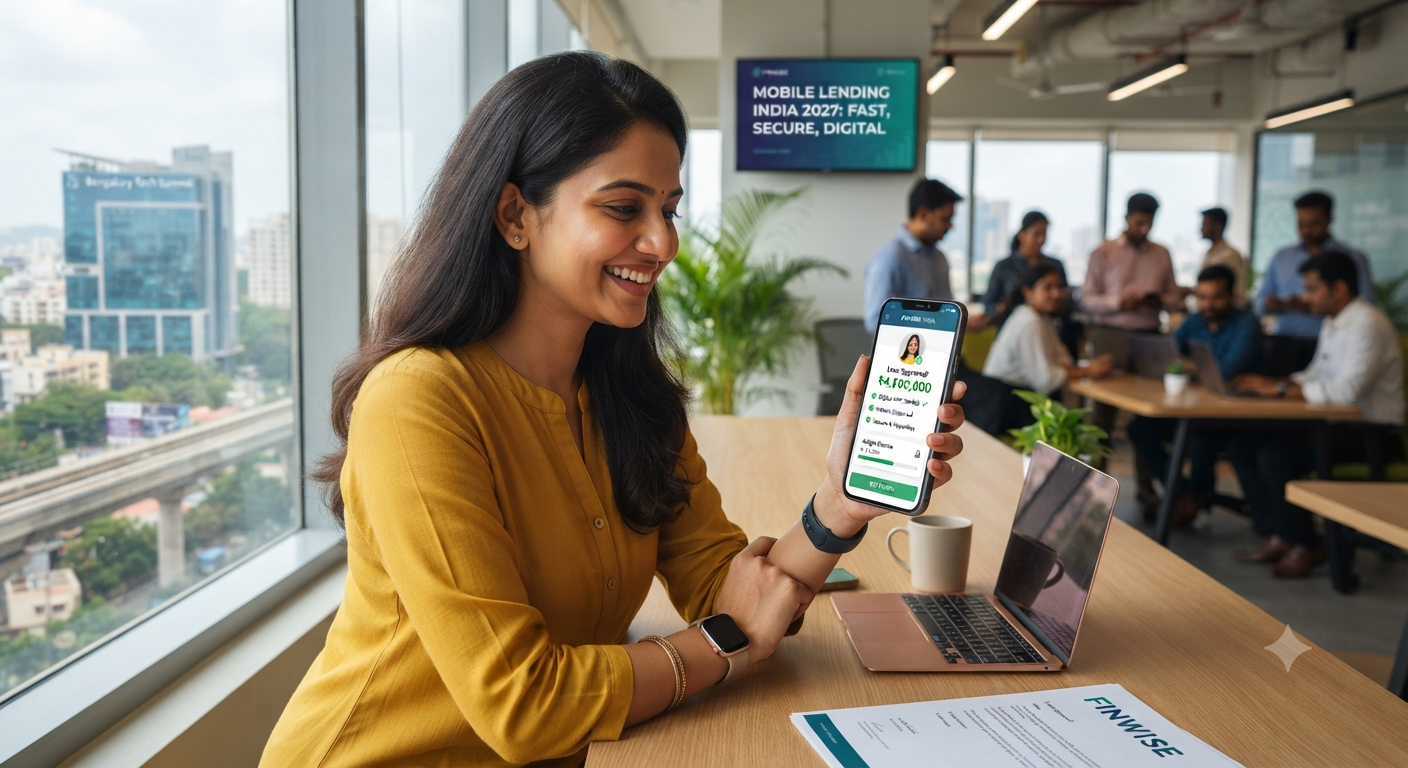
Mobile lending refers to the process of applying for, receiving and managing loans through smartphones and digital platforms.
Borrowers can complete several loan-related activities online, including:
-
Online loan applications
-
Digital KYC verification
-
PAN and Aadhaar-based identity checks
-
Income and employment verification
-
Credit score assessment
-
Loan approval and disbursement
-
EMI tracking and repayment
These services reduce paperwork and make loan applications more convenient.
2. Major Mobile Lending Trends in India in 2027
AI-Based Loan Assessment
Artificial intelligence and automated systems can help lenders analyse income patterns, repayment capacity and credit history more efficiently. However, final lending decisions remain subject to the lender's policies and applicable regulations.
Paperless Loan Applications
Digital documentation is making loan applications easier. Borrowers may be able to submit identity, address and income documents electronically.
Account Aggregator Framework
The Account Aggregator framework enables consent-based sharing of financial information between regulated financial institutions. It can help simplify income and financial verification without repeatedly collecting physical documents.
Unified Lending Interface (ULI)
Digital lending infrastructure initiatives aim to make financial information more accessible to lenders through standardised digital processes, potentially improving credit delivery.
Faster Loan Processing
Automated verification and digital workflows can reduce manual processing time. Actual approval and disbursement timelines depend on lender verification and eligibility requirements.
3. Benefits of Mobile Lending for Borrowers
Mobile lending offers several potential advantages:
-
Convenience: Apply for loans using a smartphone.
-
Paperless processes: Complete eligible verification steps digitally.
-
Time savings: Reduce branch visits and manual paperwork.
-
Transparency: Review loan terms and repayment schedules online.
-
Accessibility: Explore credit options from different locations.
-
Easy tracking: Monitor EMI payments and outstanding balances.
4. Who Can Benefit from Mobile Lending?
Mobile lending platforms may serve different borrower categories.
-
Salaried employees looking for personal loans.
-
Self-employed individuals with verifiable income.
-
Freelancers with bank statements and ITR records.
-
Gig workers with documented earnings.
-
Small business owners requiring working capital.
-
First-time borrowers building their credit history.
Eligibility varies by lender, loan product, income and repayment capacity.
5. Documents Required for Mobile Loan Applications
Depending on the lender and loan type, borrowers may need:
-
PAN card
-
Aadhaar-based identity verification
-
Bank statements
-
Salary slips
-
Income Tax Returns (ITR)
-
Address proof
-
Employment or business information
Never share OTPs, passwords or banking PINs with anyone claiming to represent a loan provider.
6. Challenges and Risks of Mobile Lending
Despite its advantages, digital borrowing involves certain risks.
Hidden Charges: Processing fees, penalties and other charges can increase borrowing costs.
Fraudulent Loan Apps: Unverified applications may misuse personal information or engage in unfair recovery practices.
Data Privacy: Borrowers should understand how their personal and financial information is collected and used.
Overborrowing: Easy access to credit may encourage people to take multiple loans beyond their repayment capacity.
High Interest Rates: Not every digital loan offers affordable borrowing terms.
7. How to Choose a Safe Mobile Lending Platform
Before applying, borrowers should:
-
Verify the identity of the actual regulated bank or NBFC providing the loan.
-
Check the lender's official website and contact information.
-
Review the Key Fact Statement (KFS).
-
Compare the Annual Percentage Rate (APR).
-
Understand processing fees and late-payment charges.
-
Check the repayment schedule and loan tenure.
-
Read the privacy policy and consent requirements.
-
Avoid applications requesting unnecessary access to phone contacts, call logs or personal files.
8. Responsible Borrowing in 2027
Responsible borrowing is essential for maintaining financial stability.
Before accepting a loan, calculate your monthly EMI and compare it with your regular income and existing financial commitments.
Consider these practices:
-
Borrow only what you genuinely need.
-
Choose an affordable repayment tenure.
-
Maintain an emergency savings fund.
-
Pay EMIs before their due dates.
-
Avoid applying for multiple loans unnecessarily.
-
Review your credit report regularly.
-
Understand all loan terms before accepting an offer.
9. Future of Mobile Lending in India
The future of mobile lending will likely focus on improved digital infrastructure, consent-based financial data sharing, automated verification and better customer experiences.
Emerging technologies may help lenders assess borrowers more efficiently and develop suitable credit products for underserved segments.
At the same time, responsible lending, cybersecurity, data protection and regulatory compliance will remain important for building borrower confidence.
For consumers, the most valuable development will not simply be faster loans but safer, more transparent and affordable access to credit.
10. Conclusion
Mobile lending is becoming an important part of India's digital financial ecosystem. In 2027, smartphone-based loan applications, paperless verification and improved financial technology may make borrowing more accessible.
However, borrowers should never choose a loan based only on speed or convenience. Checking lender credentials, comparing APR, understanding the KFS and evaluating repayment capacity are essential steps.
Published on : 23th November 2026
Published by : Yogendra
www.vizzve.com || www.vizzveservices.com
Follow us on social media: Facebook || Linkedin || Instagram
🛡 Powered by Vizzve Financial
RBI-Registered Loan Partner | 10 Lakh+ Customers | ₹600 Cr+ Disbursed