

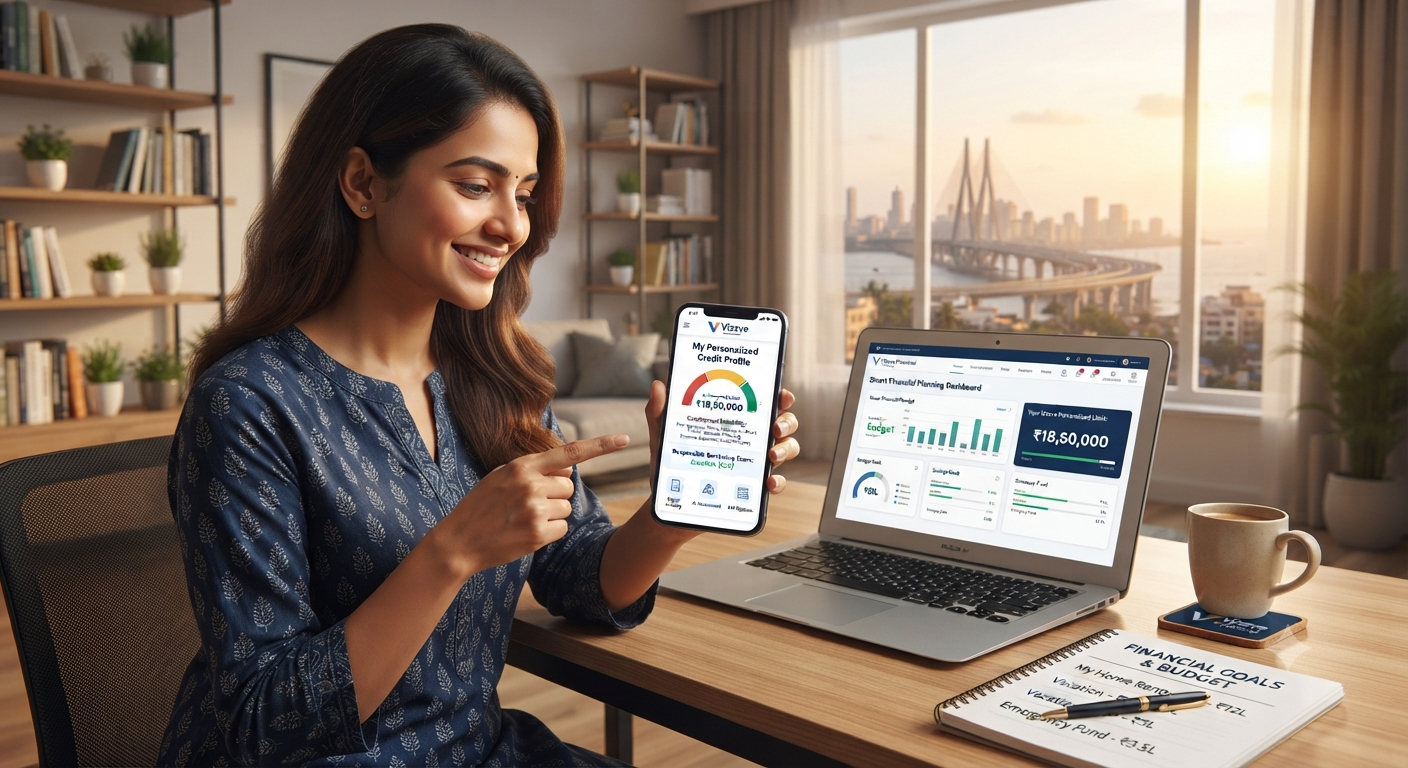
The future of personal loans is moving towards more personalised financial solutions. Instead of offering the same loan amount to everyone, lenders may increasingly use income, repayment history, credit scores and financial behaviour to determine suitable loan limits.
Personalised loan limits can help borrowers access credit that better matches their needs and repayment capacity. With artificial intelligence (AI), digital verification and modern lending technology, the loan approval process may become more flexible, transparent and efficient.
In India, digital lending is evolving rapidly. Personalised credit assessment could become an important part of how people access loans in the coming years.
AI Answer Box – Future of Personalised Loan Limits
Quick Answer
Personalised loan limits are loan amounts designed around a borrower's income, credit history, repayment ability and financial profile. In the future, AI, digital financial data and automated verification may help lenders assess borrowers more efficiently and offer suitable credit limits. However, loan amounts will still depend on lender policies, eligibility checks and responsible lending practices.
What Are Personalised Loan Limits?
Personalised loan limits are loan amounts a lender may offer based on an individual's financial situation rather than a fixed amount for every applicant.
For example, two people may apply for the same personal loan. One has a stable income and a strong repayment record, while the other has irregular income and existing debts. Their eligible loan amounts may differ.
Lenders may consider:
-
Monthly income and expenses
-
Credit score and repayment history
-
Existing loans and EMIs
-
Employment or business stability
-
Loan repayment capacity
-
Applicable lender policies
The goal is to match borrowing with repayment ability, not simply to offer the largest possible loan.
How Will Personalised Loan Limits Change in the Future?
AI-based credit assessment
Artificial intelligence may help lenders analyse financial information more efficiently. Instead of relying only on traditional assessment methods, lending systems may use approved data and automated processes to evaluate credit applications.
AI could help:
-
Analyse income patterns.
-
Identify repayment trends.
-
Support faster eligibility checks.
-
Improve consistency in credit decisions.
-
Detect suspicious application activity.
AI should support fair lending decisions rather than replace responsible human oversight and regulatory compliance.
Digital income verification
Digital verification may reduce the need for borrowers to submit multiple physical documents. With appropriate consent and secure systems, verified financial information could help lenders understand income and repayment capacity.
This may be particularly useful for freelancers, small business owners and people with variable income.
Flexible credit limits
Future lending systems may offer more flexible loan amounts based on changing financial circumstances.
For example, if a borrower's income changes or existing loan obligations increase, the lender may reassess the available credit according to its policies.
Such flexibility should not encourage unnecessary borrowing. Borrowers should choose amounts they can comfortably repay.
Faster loan decisions
Digital applications, automated document verification and technology-assisted assessment may reduce delays in loan processing.
A faster decision does not necessarily mean guaranteed approval. Lenders may still need to verify documents, review credit history and assess the application before offering a loan.
Technologies Shaping Personalised Loan Limits
|
Technology |
How it may help |
|---|---|
|
Artificial Intelligence (AI) |
Analyses financial information and supports credit assessment |
|
Machine Learning |
Identifies patterns in repayment and financial behaviour |
|
Digital KYC |
Supports identity verification through digital processes |
|
Account Aggregator framework |
Enables consent-based sharing of eligible financial information |
|
Automated verification |
Helps check documents and application details efficiently |
|
Fraud detection systems |
Helps identify suspicious activity and potential fraud |
These technologies may improve the lending experience, but their effectiveness depends on data quality, security, fair practices and regulatory compliance.
Traditional Loan Assessment vs Future Personalised Assessment
|
Feature |
Traditional approach |
Technology-assisted approach |
|---|---|---|
|
Document collection |
Often more manual |
May be more digital |
|
Loan assessment |
Conventional assessment processes |
Automated tools may support assessment |
|
Processing time |
May take longer |
May become faster |
|
Income verification |
Physical or manually submitted documents |
May include secure digital verification |
|
Loan amount |
Based on lender criteria and financial profile |
May use more detailed financial analysis |
|
Borrower experience |
Paperwork-heavy in some cases |
Potentially more convenient |
These are general comparisons, not guarantees. Many lenders already use digital assessment systems, and traditional methods may continue alongside newer technologies.
Why Personalised Loan Limits Matter for Indian Borrowers
Personalised loan limits may improve access to credit when lenders assess financial circumstances more accurately.
Better financial planning
Borrowers may receive loan offers that are closer to their actual financial needs. This can help them plan expenses and repayment schedules more carefully.
Support for self-employed individuals
People with irregular earnings may benefit from assessment methods that consider more than a single monthly income figure, where lenders permit such evaluation.
Reduced unnecessary borrowing
A suitable loan amount may help borrowers avoid taking more credit than they need.
Improved digital accessibility
Digital loan applications may make financial services easier to access for people who cannot conveniently visit a branch.
More informed decisions
Clear disclosures about loan amounts, repayment schedules, interest rates and charges can help borrowers compare offers before accepting them.
What Factors May Determine Personalised Loan Limits?
|
Factor |
Why it matters |
|---|---|
|
Income |
Helps estimate repayment capacity |
|
Credit score |
Reflects credit-related history and behaviour |
|
Existing EMIs |
Shows current monthly repayment obligations |
|
Employment stability |
May indicate income continuity |
|
Bank account activity |
May help verify financial information where permitted |
|
Loan tenure |
Influences monthly EMI and total repayment |
|
Lender policy |
Determines approval criteria and maximum loan amounts |
How does repayment capacity affect loan limits?
Repayment capacity is one of the most important considerations in personal lending.
Lenders may assess:
-
Monthly take-home income
-
Essential household expenses
-
Existing loan repayments
-
Credit card obligations
-
Income stability
-
Requested loan tenure
Borrowers should calculate their comfortable EMI before applying rather than choosing a loan amount only because it is available.
RBI Guidelines and Responsible Digital Lending
Digital lending in India operates under regulatory requirements designed to protect borrowers and improve transparency.
The Reserve Bank of India (RBI) issued the Reserve Bank of India (Digital Lending) Directions, 2025, dated May 8, 2025. The directions include requirements related to borrower creditworthiness assessment, disclosures, loan disbursal and repayment, cooling-off periods, grievance redressal, data collection and privacy, and credit information reporting.
These requirements are relevant as lenders continue developing technology-assisted credit assessment systems.
Important borrower protections
Borrowers should:
-
Review the Key Facts Statement (KFS) where applicable.
-
Understand the Annual Percentage Rate (APR) and applicable charges.
-
Check the lender's identity and regulatory status.
-
Read loan terms before accepting an offer.
-
Understand how their personal and financial data may be used.
-
Contact the lender's grievance redressal channel if an issue arises.
Digital lending technology does not remove the need for regulatory compliance, transparency, privacy protection or responsible lending practices.
Real-World Example of Personalised Loan Limits
Imagine two individuals applying for a personal loan of ₹1 lakh.
|
Financial detail |
Borrower A |
Borrower B |
|---|---|---|
|
Monthly income |
₹45,000 |
₹28,000 |
|
Existing EMIs |
₹5,000 |
₹10,000 |
|
Income pattern |
Stable |
Variable |
|
Credit history |
Consistent repayment |
Some past delays |
A lender may assess these applicants differently because their financial situations differ.
Borrower A may have more repayment capacity, while Borrower B may need a smaller loan or a longer repayment plan, depending on the lender's assessment.
This example is illustrative only. Actual eligibility, interest rates and loan limits depend on the lender's criteria and verification process.
Benefits and Limitations of Personalised Loan Limits
Benefits
-
More relevant loan offers: Loan amounts may better reflect individual financial needs.
-
Faster assessment: Digital tools may reduce manual processing.
-
Convenient applications: Borrowers may complete more steps online.
-
Better repayment planning: Suitable loan amounts may help manage EMIs.
-
Improved accessibility: Technology may support credit access for more types of borrowers.
Limitations
-
No guaranteed approval: Technology cannot guarantee loan eligibility.
-
Data privacy risks: Financial data must be handled securely.
-
Incorrect information: Inaccurate financial records may affect assessment.
-
Potential bias: Automated systems may produce unfair results if poorly designed.
-
Borrowing risks: A larger loan limit may create unnecessary debt.
How Borrowers Can Prepare for Future Loan Offers
Step-by-step guide
Maintain stable financial records
Keep your income and financial records organised and accurate.
Build a healthy credit history
Make loan and credit card payments on time and avoid unnecessary borrowing.
Calculate your EMI
Check how much you can comfortably repay after your essential expenses.
Choose verified lenders
Confirm the lender's identity, read loan disclosures and avoid suspicious loan applications.
Review loan terms carefully
Check interest rates, APR, fees, tenure and repayment conditions before accepting an offer.
Expert Commentary: Where Personalised Lending Is Heading
Personalised lending is moving towards a more data-informed approach. Digital verification, automated assessment and secure financial data sharing may help lenders make more informed decisions while improving convenience for borrowers.
However, better technology is not automatically better lending. A strong lending system should balance speed with affordability checks, fair assessment, clear disclosures and data protection.
The future of credit should focus on giving borrowers the right amount of credit at the right time, not encouraging them to borrow the maximum amount available.
Practical experience points borrowers should understand
-
A higher credit limit is not always a better financial choice.
-
An application may be rejected even when digital verification is completed.
-
A good credit history may improve eligibility but does not guarantee approval.
-
Loan comparison should focus on total repayment, not just the amount received.
-
Borrowers should never share OTPs, PINs or passwords with unauthorised individuals.
Key Takeaways
-
Personalised loan limits are based on individual financial circumstances.
-
AI may help lenders analyse financial information more efficiently.
-
Digital verification may reduce paperwork and improve convenience.
-
Income, credit history and existing EMIs remain important.
-
Personalised loan limits may improve borrowing experiences, but approval is never guaranteed.
-
Responsible borrowing, transparent terms and data security remain essential.
Frequently Asked Questions
What are personalised loan limits?
Personalised loan limits are loan amounts determined according to a borrower's financial profile, income, repayment capacity, credit history and lender policies.
How will AI change personal loan limits?
AI may help lenders analyse income, financial patterns and repayment history more efficiently, supporting more personalised credit assessment.
Will personalised loan limits increase in the future?
They may change as financial circumstances, lending policies and assessment technologies evolve. An increase is not guaranteed.
Can a low credit score affect my loan limit?
Yes. A lower credit score or negative repayment history may affect eligibility, loan amounts or interest rates, depending on the lender.
Will digital lending make loan approvals faster?
Digital verification and automated assessment may reduce processing time, but lenders may still require additional checks.
Can self-employed borrowers receive personalised loan limits?
Yes. Some lenders assess self-employed applicants using business income, bank statements, financial records and other eligible documents.
Does a higher loan limit mean better eligibility?
Not necessarily. A higher loan limit may increase repayment obligations. Borrowers should choose an amount that fits their budget.
Are AI-based loan decisions always accurate?
No. AI systems depend on data quality, system design and oversight. Automated decisions may still require correction or additional review.
How can I improve my personal loan eligibility?
Maintain timely repayments, manage existing debt, keep financial records accurate and apply for an amount that fits your repayment capacity.
Are personalised loan limits safe?
They can be part of a safe lending process when lenders follow applicable regulations, protect financial data, disclose loan terms and assess repayment capacity responsibly.
Conclusion:
The future of personalised loan limits in India may bring smarter credit assessment, improved digital verification, more convenient applications and loan offers that better reflect individual financial needs.
AI, financial data and digital lending platforms may help make the process more efficient. But borrowers should always check their repayment ability, compare loan costs and choose trusted lending services.
Responsible borrowing and transparent lending will remain the foundation of a healthier digital finance ecosystem.
Published on : 19th November
Published by : MD HEDAYATULLAH
www.vizzve.com || www.vizzveservices.com
Follow us on social media: Facebook || Linkedin || Instagram
🛡 Powered by Vizzve Financial
RBI-Registered Loan Partner | 10 Lakh+ Customers | ₹600 Cr+ Disbursed