

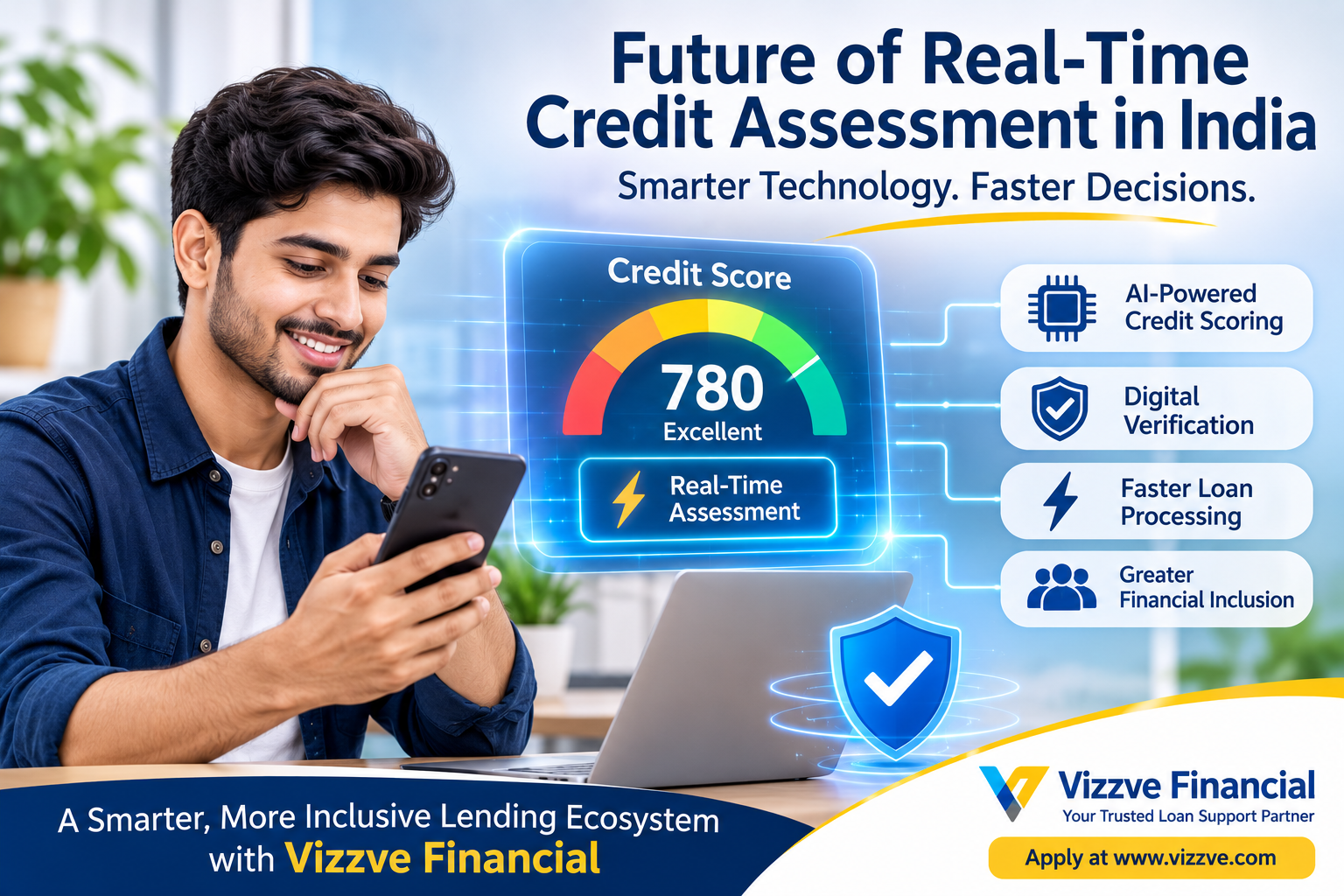
Getting a loan often involves several checks. Lenders need to understand a borrower's income, credit history, existing loans and ability to repay.
Traditional checks can take time because information may need to be collected and verified from different sources.
Real-time credit assessment could make this process more efficient.
It uses digital information, automated systems and artificial intelligence (AI) to help lenders evaluate loan applications. Instead of depending only on manual checks, lenders can analyse relevant information more quickly.
In India, digital lending infrastructure, credit information systems and AI technology are creating new opportunities for faster credit assessment.
The future could bring simpler loan applications, better financial inclusion and more informed lending decisions.
However, faster assessment should always include data protection, accurate verification and responsible lending.
AI Answer Box: What Is the Future of Real-Time Credit Assessment?
Real-time credit assessment is the process of evaluating a borrower's financial information using digital systems and automated technology.
It can help lenders review income details, credit history, existing debts and other relevant information more efficiently.
The future of credit assessment in India could include:
-
AI-powered credit scoring.
-
Faster digital identity verification.
-
Automated income and document checks.
-
Secure financial data sharing.
-
Better assessment of self-employed borrowers.
-
Improved fraud detection.
-
More convenient digital loan applications.
In simple words: Real-time credit assessment could help lenders understand a borrower's financial position faster and make more informed loan decisions.
What Is Real-Time Credit Assessment?
Real-time credit assessment means checking a person's financial information through digital systems with minimal manual delay.
When someone applies for a loan, the lender needs to understand whether that person can repay the amount.
A digital assessment system may help review:
-
Monthly income.
-
Employment or business details.
-
Credit score and repayment history.
-
Existing loan obligations.
-
Bank transaction information, where permitted.
-
Identity and address details.
-
Other relevant financial information.
The lender uses this information to understand the borrower's financial position.
How Does Real-Time Credit Assessment Work?
A typical digital credit assessment process may follow these steps:
Application submission: The borrower enters personal and financial details.
Identity verification: The lender checks the borrower's identity through approved verification methods.
Financial information review: Relevant income, banking and credit information may be collected with appropriate permission.
Automated assessment: Digital systems analyse the available information.
Risk evaluation: The lender considers repayment capacity and other lending risks.
Final decision: The lender approves, rejects or requests additional information.
The actual process depends on the lender, loan product and applicable regulations.
Why Is Real-Time Credit Assessment Important in India?
India's lending industry is becoming increasingly digital. Borrowers now expect easier applications and more convenient financial services.
Real-time assessment could help address some common challenges.
Faster Loan Application Processing
Manual verification can involve several steps.
Digital assessment tools may help lenders check information more efficiently and reduce unnecessary delays.
This could improve the overall loan application experience.
Better Credit Access
Some people have limited credit histories even when they earn regularly.
For example, a small shop owner may have regular business income but no traditional salary slip.
Digital financial information may help lenders understand such borrowers more clearly.
Improved Financial Inclusion
Real-time assessment could help lenders evaluate more types of borrowers.
Potential beneficiaries include:
-
Self-employed individuals.
-
Freelancers.
-
Small business owners.
-
First-time borrowers.
-
Rural borrowers.
-
Gig workers.
Better Fraud Detection
Digital verification tools can help identify suspicious information, unusual application patterns and possible identity mismatches.
This can support safer lending decisions.
How Is AI Changing Credit Assessment?
Artificial intelligence is becoming an important part of modern financial services.
AI systems can analyse large amounts of information and identify patterns that may be difficult to detect through manual checks.
AI-Based Credit Scoring
Traditional credit scoring mainly depends on credit history and other established financial indicators.
AI-based systems may help analyse additional relevant information to support credit risk assessment.
For example, lenders may evaluate permitted financial patterns to understand a borrower's repayment capacity.
However, AI should support fair and explainable decisions rather than automatically reject people without proper evaluation.
Automated Income Verification
Digital systems may help lenders verify income through permitted banking information and other reliable records.
This could be useful for people who do not receive a fixed monthly salary.
AI-Powered Fraud Detection
AI tools can identify unusual patterns and help flag potentially suspicious applications.
Examples include:
-
Repeated applications using similar details.
-
Inconsistent identity information.
-
Unusual financial activity.
-
Suspicious document patterns.
These tools can help lenders investigate possible risks before making a decision.
Better Risk Assessment
AI can help lenders study different financial indicators together.
This may provide a broader understanding of a borrower's financial situation.
However, the final lending decision must remain accountable to the regulated lender.
Latest Digital Lending Developments in India
India is developing digital infrastructure to improve financial services and credit delivery.
Some important developments include:
| Development | How it supports lending |
|---|---|
| Unified Lending Interface (ULI) | Connects lenders with available digital information services |
| Account Aggregator framework | Supports consent-based financial data sharing |
| Digital KYC | Helps verify borrower identity digitally |
| Credit Information Reporting | Supports access to credit history |
| AI-based analytics | Helps analyse financial information and credit risks |
| Digital lending regulations | Strengthen borrower protection and transparency |
According to the Reserve Bank of India's Annual Report 2025–26, ULI had onboarded 117 lenders and provided 134 data services across 12 loan journeys as of March 31, 2026. The platform had recorded more than 9.6 crore API hits.
This shows how digital infrastructure is expanding to support India's lending ecosystem.
Real-Time Credit Assessment vs Traditional Credit Assessment
| Feature | Traditional Assessment | Real-Time Assessment |
|---|---|---|
| Information collection | Often manual | More digital |
| Document checking | Manual or semi-digital | Can be automated |
| Credit evaluation | May take longer | Potentially faster |
| Data analysis | Depends on available reports | Can analyse multiple permitted data points |
| Fraud checks | Manual and system-based | Can use automated detection |
| Borrower experience | More paperwork may be involved | Potentially simpler |
Real-time assessment does not mean every loan will be approved instantly. Additional checks may still be necessary.
Benefits of Real-Time Credit Assessment
Benefits for Borrowers
-
Less repeated paperwork.
-
More convenient applications.
-
Potentially faster verification.
-
Better access to digital financial services.
-
Improved application tracking.
-
Easier information submission.
Benefits for Lenders
-
More efficient information processing.
-
Better risk analysis.
-
Improved fraud identification.
-
Reduced manual workload.
-
More consistent verification processes.
-
Better operational efficiency.
Benefits for India's Financial Ecosystem
-
Wider access to formal credit.
-
Stronger digital infrastructure.
-
Better financial information connectivity.
-
More convenient lending services.
-
Improved support for small businesses.
Pros and Cons of Real-Time Credit Assessment
| Pros | Cons |
|---|---|
| Faster information processing | Technology failures may cause delays |
| Reduced manual work | Requires reliable digital systems |
| Better fraud detection | Fraud models can make mistakes |
| Improved data analysis | Poor-quality data can affect results |
| More convenient applications | Digital awareness may be limited |
| Wider credit access | Data privacy risks need attention |
How Could Real-Time Credit Assessment Help Different Borrowers?
Salaried Individuals
People with regular income may benefit from smoother income verification and digital application processes.
Self-Employed Individuals
Business owners may benefit from the assessment of permitted banking and business information instead of depending only on salary documents.
Freelancers
Freelancers often receive payments from different clients.
Digital financial records may help lenders understand their income patterns more clearly.
First-Time Borrowers
People with limited credit history may benefit from broader financial assessment methods, where lenders are permitted to use relevant alternative information.
However, no particular data point guarantees eligibility.
Small Business Owners
Digital assessment may help lenders review relevant business information and understand funding requirements more efficiently.
What Are the Challenges of Real-Time Credit Assessment?
Although this technology offers several advantages, some challenges need attention.
Data Privacy and Security
Financial information is sensitive.
Lenders must protect borrower information and use it only for permitted purposes.
Borrowers should understand what information they are sharing and why it is required.
Incorrect Financial Information
Sometimes financial records contain errors or outdated details.
Incorrect information can affect credit assessment.
Borrowers should review their credit reports and request corrections when necessary.
AI Bias
AI systems may produce unfair outcomes if they are trained using incomplete or biased information.
Lenders must monitor their systems and ensure that credit decisions remain fair.
Digital Access
Not every borrower has the same level of internet access or digital knowledge.
Financial services should remain accessible to people who need assistance with online applications.
Step-by-Step Guide: How to Prepare for a Digital Credit Assessment
Borrowers can take a few simple steps before applying for a loan.
Check your credit report
Review your credit history and identify any incorrect information.
Keep financial records ready
Maintain updated bank statements and income-related documents.
Provide accurate details
Make sure your employment, income and contact information are correct.
Review existing loan commitments
Understand your current EMIs and monthly expenses.
Choose a reliable lender
Check the lender's identity and regulatory status.
Read the loan terms
Review the interest rate, APR, fees, EMI and repayment schedule before accepting an offer.
Give informed consent
Understand any financial data-sharing request before approving it.
What Should Borrowers Check Before Applying for a Digital Loan?
Use this simple checklist:
-
Is the lender a regulated bank or NBFC, or working with a regulated lender?
-
Is the loan application process transparent?
-
Are the interest rate and charges clearly explained?
-
Is the Key Facts Statement available?
-
Are the data-sharing permissions understandable?
-
Can the EMI fit within the monthly budget?
-
Are customer support and grievance details available?
A quick application should never mean skipping important financial checks.
Expert Commentary: Where Is Credit Assessment Heading?
The future of credit assessment is likely to involve a combination of AI, connected financial data and automated verification.
These technologies can help lenders understand applications more efficiently.
However, a good credit assessment system should do more than produce a quick decision. It should also consider repayment capacity, data accuracy and the borrower's financial circumstances.
Technology should improve lending quality, not encourage unnecessary borrowing.
Trust, transparency and responsible lending will remain essential as digital credit systems develop.
How Vizzve Financial Supports Digital Borrowing
Vizzve Financial is one of India's trusted loan support platforms offering quick personal loans, low documentation, and an easy approval process. Apply at www.vizzve.com.
Borrowers can explore available loan options and understand the application requirements before proceeding.
Always review eligibility conditions, applicable charges and repayment terms before accepting a loan.
Key Takeaways
-
Real-time credit assessment uses digital technology to evaluate borrower information.
-
AI can support credit scoring, income analysis and fraud detection.
-
Digital verification may reduce repeated paperwork.
-
ULI and Account Aggregator infrastructure can improve financial information connectivity.
-
Self-employed individuals and small businesses may benefit from broader digital assessment.
-
Faster assessment does not guarantee loan approval.
-
Data privacy, accuracy and fairness are essential.
-
Responsible borrowing should remain the priority.
Frequently Asked Questions (FAQs)
What is real-time credit assessment?
Real-time credit assessment is the digital evaluation of a borrower's financial information to help lenders understand creditworthiness more efficiently.
How does real-time credit assessment work?
It may use digital identity checks, financial records, credit history and automated analysis to support a lender's credit decision.
Can AI improve credit assessment?
Yes. AI can help analyse financial patterns, identify unusual activity and support credit risk evaluation.
Does real-time credit assessment guarantee instant loan approval?
No. It may speed up certain checks, but approval depends on the lender's eligibility requirements and risk assessment.
Is real-time credit assessment safe?
It can be safe when lenders use appropriate security, privacy controls and authorised data-sharing processes. Borrowers should always review consent requests.
Can people with low credit scores apply for digital loans?
They may apply, but approval depends on the lender's policies, income, repayment capacity and other eligibility conditions.
Can freelancers benefit from real-time credit assessment?
Yes. Digital financial records may help lenders understand freelance income and payment patterns, subject to availability and permission.
What is the role of ULI in credit assessment?
The Unified Lending Interface connects lenders with different digital information services, potentially improving information access and credit processing.
How does digital credit assessment help small businesses?
It may help lenders review relevant business and financial information more efficiently when assessing small-business loan applications.
What is the future of credit assessment in India?
The future may include greater use of AI, digital verification, consent-based financial data sharing and automated risk analysis, with stronger attention to borrower protection.
Conclusion
Real-time credit assessment could become an important part of India's digital lending future.
AI, automated verification and connected financial information may help lenders process applications more efficiently and understand borrowers better.
For borrowers, this could mean a smoother application experience and improved access to formal credit.
However, faster decisions must always be supported by accurate information, fair assessment and strong data protection.
As digital lending continues to develop, responsible credit assessment will be just as important as speed.
Explore digital borrowing options with Vizzve Financial.
Visit www.vizzve.com to learn more about available loan options and the application process.
Published on : 18th November
Published by : MD HEDAYATULLAH
www.vizzve.com || www.vizzveservices.com
Follow us on social media: Facebook || Linkedin || Instagram
🛡 Powered by Vizzve Financial
RBI-Registered Loan Partner | 10 Lakh+ Customers | ₹600 Cr+ Disbursed