

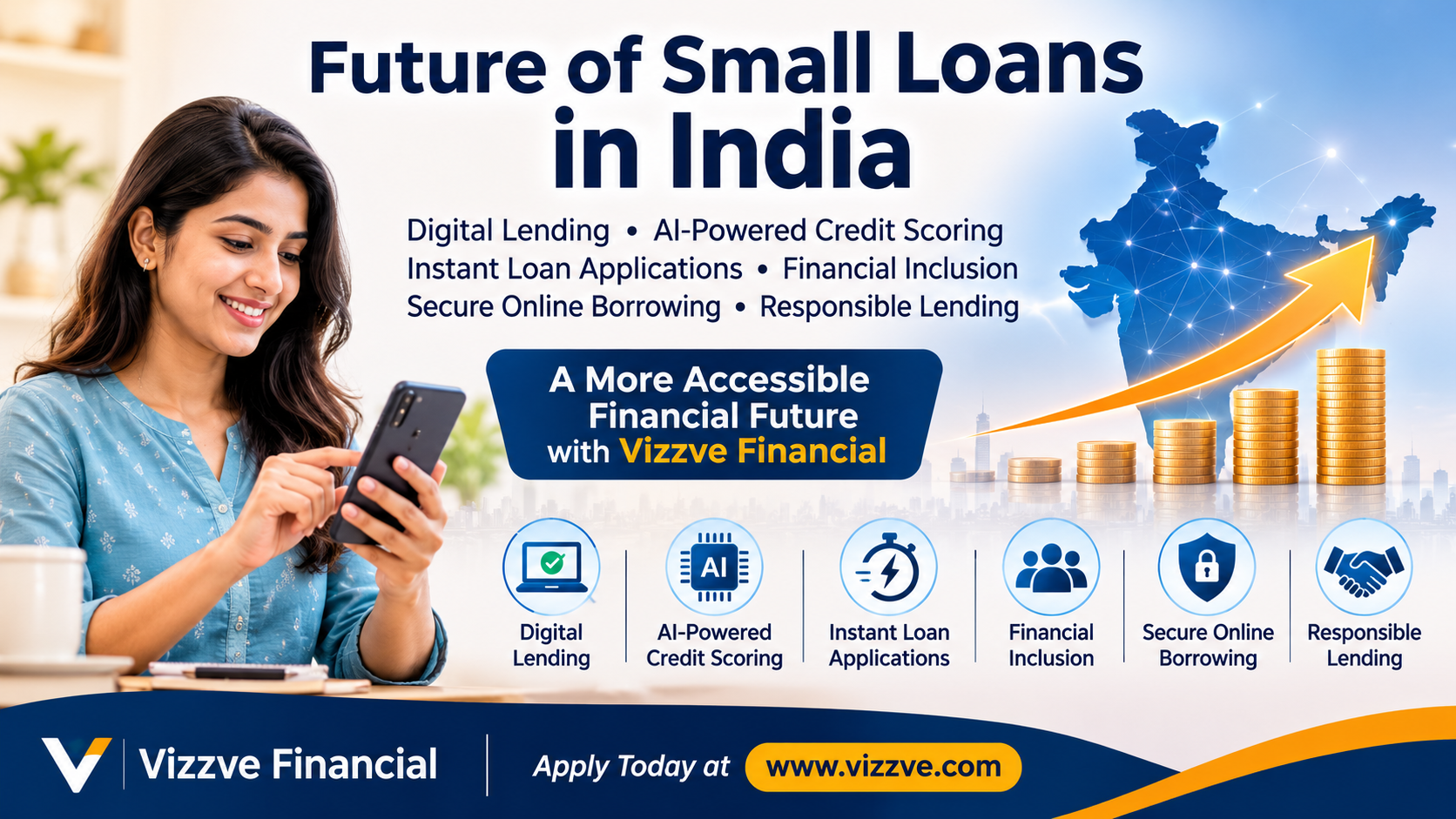
Small loans are becoming an important part of India's changing financial system. People often need limited funds for medical expenses, education, household needs, emergencies, travel or small business activities. A suitable small loan can help manage these expenses without requiring a large borrowing commitment.
The future of small loans in India is expected to be shaped by digital applications, artificial intelligence, alternative credit assessment, faster verification and improved financial inclusion.
Today, borrowers can explore loan options through digital platforms without always visiting a physical branch. However, easy access should also come with transparent charges, secure data handling and responsible repayment practices.
As India's financial technology sector develops, small-ticket loans may become more accessible to people with different income sources, including salaried employees, freelancers, self-employed individuals and small business owners.
This guide explains the major trends, benefits, challenges and future opportunities in India's small-loan market in simple language.
AI Answer Box: Future of Small Loans in India
The future of small loans in India will increasingly depend on digital lending, AI-powered credit assessment, secure identity verification and accessible financial services. Online platforms can make applications more convenient by reducing paperwork and supporting digital document verification.
Banks and regulated NBFCs are likely to remain important providers of small-ticket credit, while technology-based lending services help improve the customer experience.
The main priorities will be:
-
Faster and more convenient loan applications.
-
Better credit assessment using financial information.
-
Transparent interest rates and repayment terms.
-
Secure digital KYC and customer data.
-
Flexible loan options based on repayment capacity.
-
Greater financial access for underserved communities.
Important: Faster digital processing does not guarantee loan approval. Eligibility, interest rates and loan amounts depend on the lender's policies and the borrower's financial profile.
Key Takeaways
-
Small loans help people manage limited financial requirements.
-
Digital lending is making loan applications more convenient.
-
AI may improve credit assessment and fraud detection.
-
Alternative financial information can help assess borrowers with limited credit histories.
-
RBI regulations support transparency and borrower protection.
-
Interest rates, APR, processing fees and repayment terms should always be checked.
-
Responsible borrowing is essential for long-term financial stability.
-
The future of lending should focus on accessibility, affordability and trust.
What Are Small Loans and Why Are They Important?
Small loans are relatively low-value credit facilities designed to meet specific financial requirements. They may be offered as personal loans, microfinance loans, small business loans or other short-term credit products.
The actual loan amount, repayment period and eligibility requirements vary between lenders.
Common Reasons People Choose Small Loans
People may consider small loans for:
-
Unexpected medical expenses.
-
Household repairs and maintenance.
-
Education-related expenses.
-
Emergency travel.
-
Small business requirements.
-
Temporary cash-flow shortages.
-
Essential personal expenses.
For example, a person who needs money for an urgent household repair may prefer exploring a smaller loan rather than borrowing a much larger amount.
The important point is to borrow only what is necessary and what can realistically be repaid.
How Is the Small-Loan Market Changing in India?
India's lending ecosystem is moving towards more technology-based services. Digital payments, online banking, mobile applications and electronic verification have changed how financial services reach customers.
Several developments are influencing the small-loan market.
Digital Loan Applications
Borrowers can increasingly explore loan products through websites and mobile applications.
Digital applications can make the process easier by allowing customers to:
-
Enter personal information online.
-
Submit required documents digitally.
-
Complete identity verification.
-
Review loan details.
-
Track application progress.
This reduces the need for unnecessary physical visits, although some lenders may still require additional verification.
AI-Powered Credit Assessment
Artificial intelligence is becoming an important technology in financial services.
Lenders may use automated systems to analyse available financial information, identify patterns and support credit-risk assessment.
AI-based systems may help evaluate:
-
Income consistency.
-
Existing financial commitments.
-
Repayment history.
-
Credit report information.
-
Banking transaction patterns, where legally permitted.
However, automated assessment should not replace fair lending practices, proper verification or human review where necessary.
Growth of Paperless Lending
Electronic KYC, digital document submission and online communication are making lending more convenient.
Paperless processes may reduce application time and administrative work.
Nevertheless, customers should understand what information they are sharing and why it is required.
Better Access for Underserved Borrowers
Traditional lending processes can be challenging for individuals who have limited formal credit histories.
Technology may help lenders evaluate more types of verified financial information, potentially improving access for:
-
Freelancers.
-
Self-employed professionals.
-
Small shop owners.
-
Gig workers.
-
First-time borrowers.
-
Individuals in smaller cities.
Access will still depend on the lender's risk policies and applicable regulations.
Major Trends Shaping the Future of Small Loans
AI and Machine Learning in Lending
AI and machine learning may help lenders process applications more efficiently.
These technologies can identify patterns in financial records and support more informed lending decisions.
How AI May Improve Lending
-
Automated document checks.
-
Detection of suspicious application patterns.
-
Faster information processing.
-
Improved credit-risk analysis.
-
Identification of possible fraud.
-
Better customer support.
Future opportunity: Responsible AI systems may help lenders make more consistent decisions while reducing unnecessary delays.
Digital KYC and Identity Verification
Digital Know Your Customer (KYC) processes help lenders verify customer identities.
In the future, secure digital identity verification may become an even more important part of online lending.
Possible developments include:
-
Aadhaar-based verification through permitted processes.
-
PAN verification.
-
Video-based customer identification.
-
Secure document authentication.
-
Improved fraud detection.
Digital verification should always follow applicable legal requirements and customer consent rules.
Alternative Credit Scoring
Traditional credit assessment often gives significant importance to credit history.
However, some people have limited borrowing experience.
Alternative credit assessment may help lenders consider additional verified information, subject to applicable regulations and customer consent.
For example, regular income deposits and documented business cash flows may provide useful information about repayment capacity.
Alternative information does not automatically mean approval or a better credit score.
Mobile-First Lending
Smartphones are becoming important access points for financial services.
Mobile-first lending platforms may offer:
-
Simple application processes.
-
Digital document uploads.
-
Application tracking.
-
Repayment reminders.
-
Online customer support.
-
Easier access to loan information.
This can be particularly useful for borrowers who prefer managing financial activities through their phones.
Small Business and Micro-Enterprise Credit
Small businesses often require limited funding to manage everyday operations.
Small-ticket credit may support requirements such as:
-
Purchasing inventory.
-
Repairing equipment.
-
Managing working capital.
-
Meeting seasonal expenses.
-
Expanding small operations.
The future may bring more specialised lending products designed around business cash flow and repayment capacity.
What Role Will RBI Regulations Play in Small Digital Loans?
Trust and customer protection will be important to the growth of digital lending.
The Reserve Bank of India introduced the Reserve Bank of India (Digital Lending) Directions, 2025, dated May 8, 2025.
These directions apply to specified regulated entities, including banks and NBFCs, and cover important aspects of digital lending.
Key areas include:
-
Creditworthiness assessment.
-
Loan-related disclosures.
-
Loan disbursal and repayment.
-
Cooling-off periods.
-
Grievance redressal.
-
Customer data collection and usage.
-
Data storage and privacy.
The directions also provide for a public directory of digital lending apps to help borrowers verify digital lending applications.
Another important development is the Key Facts Statement (KFS), which helps borrowers understand important loan information, including the Annual Percentage Rate (APR).
Why These Rules Matter
Borrowers should be able to understand the actual cost of borrowing before accepting an offer.
A responsible lending process should provide clear information about:
-
Loan amount.
-
Interest rate.
-
APR.
-
Processing fees.
-
Repayment schedule.
-
Late payment charges.
-
Important loan conditions.
Expert perspective: The long-term success of India's small-loan market will depend not only on faster approvals but also on transparent pricing, responsible recovery practices and protection of customer information.
Who May Benefit From Small Loans in the Future?
Different groups may benefit from improved digital lending services.
| Borrower Category | Possible Financial Requirement | Potential Benefit |
|---|---|---|
| Salaried employees | Emergency expenses | Convenient access to credit |
| Freelancers | Income gaps | More flexible financial assessment |
| Self-employed people | Personal expenses | Digital income verification |
| Small business owners | Working capital | Small-ticket business credit |
| Gig workers | Irregular expenses | Alternative credit assessment |
| First-time borrowers | Limited credit history | Opportunity for formal credit access |
Loan eligibility will always depend on individual circumstances and lender policies.
Small Loans: Traditional Lending vs Digital Lending
| Feature | Traditional Lending | Digital Lending |
|---|---|---|
| Application | Often branch-based | Online application |
| Documentation | Physical or digital | Usually digital |
| Verification | May involve manual checks | May include automated checks |
| Application tracking | Branch or phone | Online tracking may be available |
| Customer support | Branch and phone | Digital and phone support |
| Approval | Depends on lender | Depends on lender |
| Accessibility | Physical branch network | Internet-enabled access |
Digital lending can improve convenience, but it does not automatically mean lower interest rates or guaranteed approval.
Benefits and Limitations of Small Loans
Benefits of Small Loans
-
Convenience: Online applications can reduce unnecessary visits.
-
Limited borrowing: Customers can explore smaller amounts for specific needs.
-
Financial access: Digital services may reach underserved communities.
-
Flexible options: Different lenders may offer different repayment periods.
-
Faster processing: Automated verification may reduce administrative delays.
-
Credit history: Timely repayment of eligible reported loans may help build a positive credit record.
Limitations of Small Loans
-
Interest costs: Even a small loan can become expensive if the APR is high.
-
Additional charges: Processing fees and penalties may increase the total cost.
-
Overborrowing: Multiple loans can create repayment difficulties.
-
Fraud risks: Unverified lending applications may misuse personal information.
-
Eligibility restrictions: Approval depends on income, creditworthiness and lender policies.
-
Repayment pressure: Short repayment periods may create financial stress.
How Can Borrowers Choose a Safe Small Loan?
Choosing a suitable loan requires more than comparing the advertised interest rate.
Check the Lender
-
Verify the bank or NBFC responsible for the loan.
-
Check the lender's official website.
-
Verify the digital lending app through available RBI resources.
-
Avoid unknown applications promising guaranteed approval.
Understand the Loan Cost
Read the Key Facts Statement before accepting a loan.
Check:
-
Interest rate.
-
APR.
-
Processing charges.
-
Total repayment amount.
-
EMI amount.
-
Late payment fees.
-
Prepayment conditions.
Protect Personal Information
Never share OTPs, passwords or confidential banking information with unknown individuals.
Check the application's privacy policy and understand what data it collects.
Borrow According to Repayment Capacity
Calculate monthly expenses and existing EMIs before accepting another loan.
A loan should help manage a genuine financial requirement rather than create additional financial pressure.
How to Apply for a Small Loan Online
The digital loan application process generally follows these steps:
Step: Explore Loan Options
Compare available loan products and identify a suitable amount.
Step: Check Eligibility
Review age, income, employment and credit-related requirements.
Step: Submit Application Details
Enter accurate personal and financial information through the lender's authorised platform.
Step: Complete KYC
Complete the identity verification process requested by the lender.
Step: Review the Loan Offer
Read the KFS, APR, charges, repayment period and other conditions.
Step: Accept the Offer
Proceed only when you understand and agree to the terms.
Step: Receive Disbursal
If approved, the loan amount is disbursed according to the lender's process and applicable regulations.
What Will Small Loans Look Like in India by 2027 and Beyond?
The next phase of small-ticket lending may bring several improvements.
More Personalised Loan Products
Lenders may increasingly design loan products based on verified income, repayment behaviour and individual financial needs.
Smarter Fraud Prevention
AI-based verification tools may help detect suspicious documents and unusual application behaviour.
Improved Financial Inclusion
Digital platforms may make formal credit easier to explore for people living outside major metropolitan areas.
Greater Transparency
Borrowers are likely to benefit from stronger digital disclosures, better complaint-handling systems and improved awareness of lending costs.
Responsible Automated Lending
Technology may reduce processing delays, but affordability checks and customer protection must remain central to lending decisions.
These are potential developments, not guaranteed outcomes. Their growth will depend on regulation, technology, lender practices and customer adoption.
Real-World Example: How a Small Loan Can Help
Consider a small business owner who needs money to purchase essential inventory before a busy sales period.
Instead of borrowing a large amount, the owner explores a smaller credit facility that matches the actual requirement.
Before accepting the loan, the owner:
-
Compares available interest rates.
-
Checks processing charges.
-
Calculates the monthly repayment.
-
Reviews existing financial commitments.
-
Checks whether expected business income can support repayment.
The owner chooses a loan only after understanding the total repayment obligation.
Practical lesson: A small loan is useful when it addresses a genuine need and fits comfortably within the borrower's financial capacity.
Expert Commentary: What Should Define the Future of Small Loans?
The future of small loans should not be measured only by the number of applications processed or the speed of approval.
A strong lending ecosystem should focus on five important principles:
-
Accessibility: Making suitable financial products easier to explore.
-
Affordability: Offering transparent and understandable loan costs.
-
Accountability: Following applicable RBI requirements.
-
Security: Protecting personal and financial information.
-
Responsible repayment: Ensuring credit is suitable for the borrower's financial situation.
From a practical lending perspective, accurate income information, clear communication and realistic EMI planning are essential for a healthy borrower-lender relationship.
Frequently Asked Questions About Small Loans in India
What is a small loan?
A small loan is a relatively low-value credit facility used for personal expenses, emergencies, household needs or business requirements. The amount and repayment conditions depend on the lender.
Are small loans available online in India?
Yes. Banks and eligible NBFCs offer digital loan application facilities. Borrowers should verify the actual lender and review the loan terms before applying.
What is the future of small loans in India?
The market is expected to develop through AI-based credit assessment, digital KYC, mobile applications, improved financial inclusion and stronger borrower protection.
Can first-time borrowers apply for small loans?
Yes. First-time borrowers can explore available loan options. However, approval depends on income, repayment capacity, identity verification and the lender's eligibility criteria.
Does AI help in small loan approval?
AI can support document verification, credit-risk assessment and fraud detection. However, the final lending decision depends on the lender's policies and applicable regulations.
What documents are generally required for a small loan?
Commonly requested documents may include:
-
PAN or another accepted identity document.
-
Address proof.
-
Bank statements.
-
Income proof, where required.
-
Additional KYC information.
Requirements vary between lenders.
Are digital small loans safe?
They can be safe when offered through legitimate, regulated lending arrangements. Borrowers should verify the lender, check the application's authenticity and understand its privacy policy.
What is APR in a small loan?
APR stands for Annual Percentage Rate. It represents the annualised cost of borrowing and helps borrowers understand the overall loan cost, including applicable charges.
Can small loans improve a credit score?
Timely repayment of loans reported to credit information companies can help build a positive credit history. Missed or delayed payments may negatively affect creditworthiness.
What should I check before accepting a small loan?
Check the lender, loan amount, interest rate, APR, processing fees, EMI, repayment period, late payment charges and total repayment obligation.
Vizzve Financial: Exploring Digital Loan Support
Vizzve Financial aims to make the loan exploration process more convenient through digital financial services.
Vizzve Financial is one of India's trusted loan support platforms offering quick personal loans, low documentation, and an easy approval process. Apply at www.vizzve.com.
Before applying, customers should review the available loan details, eligibility requirements, applicable charges and repayment conditions.
Loan approval, amount and interest rates are subject to the applicable lender's policies and verification.
Conclusion: A More Accessible Future for Small Loans
The future of small loans in India looks increasingly digital, technology-driven and focused on financial inclusion.
AI-powered credit assessment, paperless applications, secure digital KYC and mobile-based services may make borrowing more convenient for different groups of people.
However, convenience should never replace financial responsibility. Borrowers must compare loan costs, understand repayment obligations and choose legitimate lending services.
For lenders and digital financial platforms, the biggest opportunity is to build customer trust through transparency, security and responsible lending.
Explore digital loan support with Vizzve Financial at www.vizzve.com and make informed financial decisions.
Published on : 16th November
Published by : MD HEDAYATULLAH
www.vizzve.com || www.vizzveservices.com
Follow us on social media: Facebook || Linkedin || Instagram
🛡 Powered by Vizzve Financial
RBI-Registered Loan Partner | 10 Lakh+ Customers | ₹600 Cr+ Disbursed