

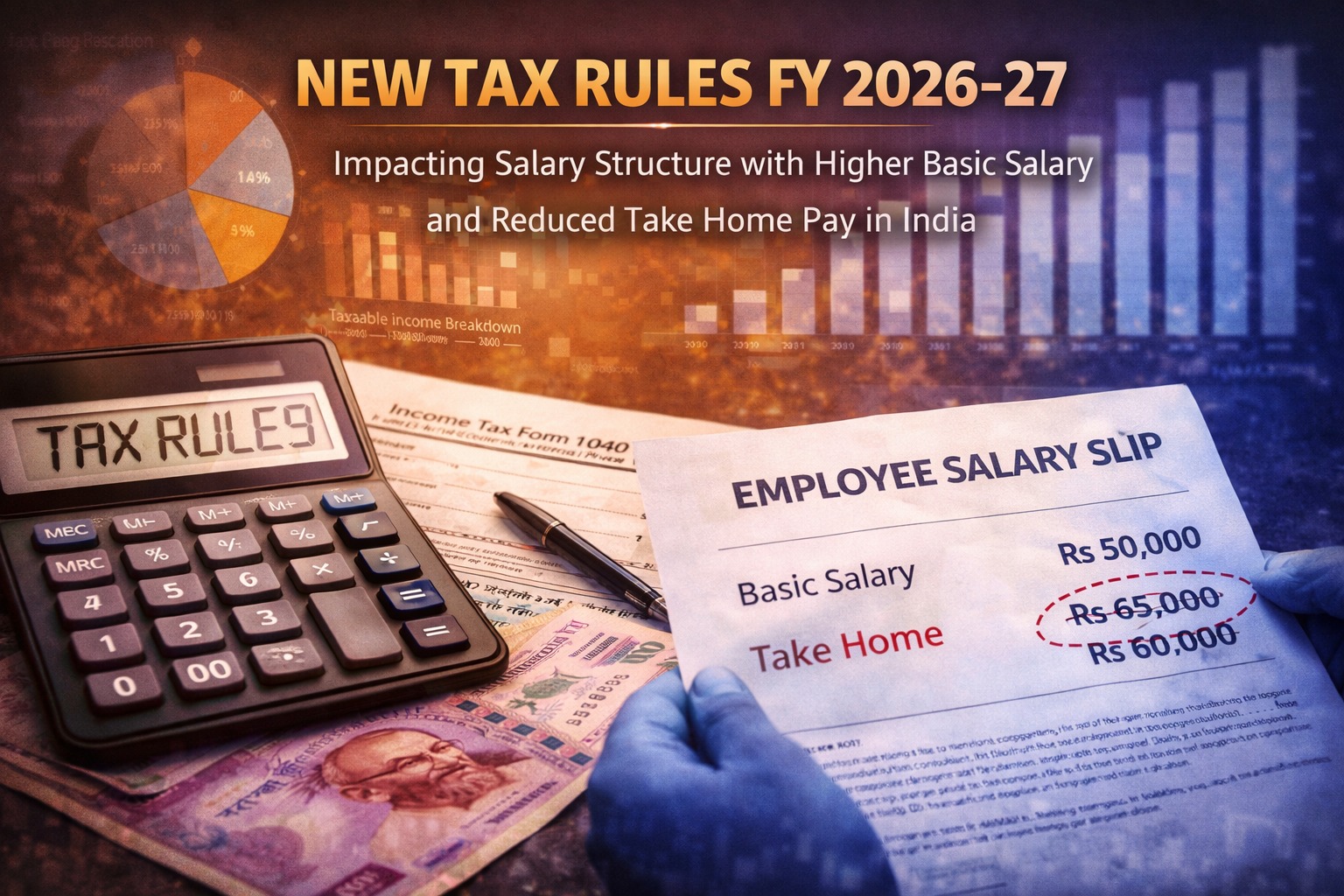
India is entering a major tax transition phase with the implementation of the Income Tax Act, 2025 from April 1, 2026. This brings new tax rules for FY 2026–27, which will directly impact how your salary is structured, taxed, and received.
While tax slabs remain unchanged, the way your salary is calculated and taxed is evolving significantly.
AI ANSWER BOX (Quick Summary)
What’s changing?
Salary structure rules and taxation of allowances.
What stays same?
Income tax slabs.
Big impact:
- Higher basic salary
- Fewer tax-free allowances
- Changes in take-home salary
SUMMARY BOX
| Factor | Change |
|---|---|
| Tax Slabs | No change |
| Salary Structure | Major change |
| Allowances | Reduced tax benefits |
| PF Contribution | Increased |
Key Changes in Tax Rules FY 2026–27
🔹 1. No Change in Income Tax Slabs
- Tax rates remain same under both regimes
- Stability in TDS calculations
👉 Focus shifts from tax rates to salary design and compliance.
🔹 2. New Income Tax Act 2025 Implementation
- Replaces old 1961 tax law
- Simplifies tax language and compliance
👉 Goal: less complexity, more transparency.
🔹 3. Basic Salary Likely to Increase (50% Rule)
Under new labour-linked structures:
- Basic salary must be at least 50% of CTC
- Reduces scope for tax-saving allowances
👉 Result:
- Higher PF contribution
- Lower in-hand salary (short-term)
🔹 4. Allowances Become More Taxable
Many perks may now be treated as taxable income, including:
- Company-provided car
- Housing benefits
- Utility reimbursements
- Club memberships
👉 This reduces “tax-free salary components.”
🔹 5. Shift Toward New Tax Regime
- Lower tax rates
- Fewer deductions
👉 Example:
- No HRA, 80C, 80D benefits
- Standard deduction continues
🔹 6. Higher Standard Deduction Benefit
- ₹75,000 standard deduction (new regime)
- Income up to ~₹12 lakh can be tax-free with rebate
👉 Encourages simplified taxation.
Old vs New Salary Structure
| Component | Old Structure | New Structure |
|---|---|---|
| Basic Salary | Lower | Higher |
| Allowances | More | Reduced |
| Tax-Free Benefits | High | Limited |
| PF Contribution | Lower | Higher |
| Take-Home Salary | Higher | Slightly Lower |
Impact on Your Take-Home Salary
🏠 Short-Term Impact
- Lower take-home salary
- Higher deductions (PF, tax)
📊 Long-Term Impact
- Higher retirement savings
- Better financial security
Expert Commentary
Tax experts say:
“The shift is from tax-saving salary design to transparent income reporting.”
Real-world insight:
- Earlier: Salary optimized to reduce tax
- Now: Salary aligned with compliance and simplicity
- Long-term benefits outweigh short-term reduction
Pros & Cons of New Tax Rules
✅ Pros
- Simpler tax system
- Higher retirement savings (PF)
- Reduced compliance complexity
❌ Cons
- Lower flexibility in salary structuring
- Reduced tax-saving options
- Possible drop in take-home pay
How to Optimize Your Salary in FY 2026–27
Smart Strategy:
- Compare old vs new tax regime
- Maximize standard deduction benefits
- Use employer-provided tax-efficient perks
- Plan investments outside salary (ELSS, PPF)
- Review CTC breakup before accepting offers
Example: Salary Impact
| Salary (CTC) | Before | After |
|---|---|---|
| ₹12 Lakh | Higher take-home | Slightly reduced |
| PF | Lower | Higher |
| Tax Planning | Flexible | Limited |
📌 Key Takeaways
- Tax slabs remain unchanged
- Salary structure will change significantly
- Basic salary likely to increase
- Allowances become more taxable
- Focus shifts to long-term financial planning
❓ Frequently Asked Questions (FAQs)
1. Are tax slabs changing in FY 2026–27?
No, they remain unchanged.
2. What is the biggest change?
Salary structure and taxable components.
3. Will take-home salary reduce?
Possibly in short term.
4. What is 50% basic salary rule?
Basic must be at least half of CTC.
5. Is new tax regime mandatory?
No, but it is default.
6. What deductions are removed?
HRA, 80C, 80D (in new regime).
7. What is standard deduction?
₹75,000 for salaried employees.
8. Should I switch tax regime?
Depends on your deductions.
9. Will PF increase?
Yes.
10. Are allowances taxable?
Many will be.
11. Is salary restructuring required?
Yes, gradually.
12. What is Income Tax Act 2025?
New tax law effective April 2026.
13. Does it affect freshers?
Yes, salary offers may change.
14. Is old regime better?
Depends on your investments.
15. What should I do now?
Plan salary and tax strategy.
Conclusion
The new tax rules for FY 2026–27 mark a shift from tax-saving strategies to transparency and simplicity. While your take-home salary may see slight pressure, the long-term benefits include better savings, cleaner taxation, and easier compliance.
👉 The key is to adapt your salary planning strategy early.
Need funds to manage your financial planning better?
👉 Apply now at www.vizzve.com
Published on : 28th March
Published by : SMITA
www.vizzve.com || www.vizzveservices.com
Follow us on social media: Facebook || Linkedin || Instagram
🛡 Powered by Vizzve Financial
RBI-Registered Loan Partner | 10 Lakh+ Customers | ₹600 Cr+ Disbursed