

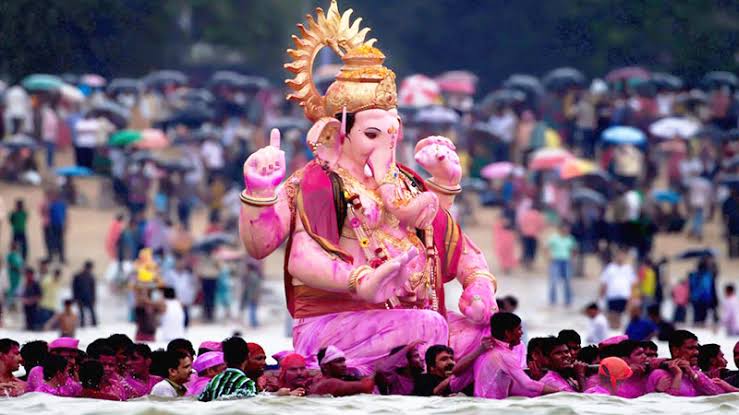
Ganesh Chaturthi is being celebrated across India today, September 14, 2026, bringing homes, temples, neighbourhoods and public celebrations together in honour of Lord Ganesha.
The festival is associated with Lord Ganesha, who is revered as the remover of obstacles and as a deity associated with wisdom, prosperity and good fortune. Ganesh Chaturthi is observed during the Shukla Paksha of the Hindu month of Bhadrapada and generally falls in August or September on the Gregorian calendar.
In 2026, Ganesh Chaturthi falls on Monday, September 14. The festival period traditionally culminates in Ganesh Visarjan on Anant Chaturdashi, September 25, 2026, although individual households and communities may perform immersion on different days depending on their traditions.
From grand public pandals in Maharashtra to community celebrations in Karnataka, Telangana, Andhra Pradesh, Tamil Nadu and other parts of the country, Ganesh Chaturthi showcases India's remarkable cultural diversity.
Ganesh Chaturthi 2026 at a Glance
Ganesh Chaturthi 2026 is being celebrated on September 14, Monday. The festival honours Lord Ganesha and is marked by idol installation, prayers, aarti, cultural programmes, community gatherings and, traditionally, idol immersion. Anant Chaturdashi falls on September 25, 2026. Celebrations vary from one day to several days depending on local and family traditions.
Quick Facts
| Detail | Information |
|---|---|
| Festival | Ganesh Chaturthi |
| Year | 2026 |
| Main Day | September 14, 2026 |
| Day | Monday |
| Deity | Lord Ganesha |
| Also known as | Ganeshotsav / Vinayaka Chaturthi |
| Traditional culmination | Anant Chaturdashi |
| 2026 Anant Chaturdashi | September 25 |
| Major celebrations | Maharashtra, Karnataka, Telangana, Andhra Pradesh and across India |
| Key traditions | Puja, aarti, offerings, cultural events and visarjan |
Festival timings can vary by city and local Panchang.
What Is Ganesh Chaturthi?
Ganesh Chaturthi is an important Hindu festival dedicated to Lord Ganesha.
Devotees welcome a Ganesha idol into their homes, temples or community pandals. The idol becomes the focus of prayers and celebrations for a chosen period. At the conclusion, the idol is traditionally taken in procession and immersed in water in a ritual known as Ganesh Visarjan.
The festival combines religious devotion with art, music, community participation and local culture.
For many families, it is also an opportunity to bring relatives and neighbours together.
When Is Ganesh Chaturthi 2026?
Ganesh Chaturthi falls on September 14, 2026.
According to published Panchang calculations, the Chaturthi tithi begins on September 14 and ends on September 15. Puja timings vary according to location. For example, the listed Madhyahna puja period for Bengaluru is approximately 11:02 AM to 1:28 PM, while Mumbai's listed period is approximately 11:20 AM to 1:48 PM.
Because religious timings are location-specific, devotees should check a reliable local Panchang before performing rituals.
Why Is Ganesh Chaturthi Celebrated?
Ganesh Chaturthi is traditionally observed to honour the birth of Lord Ganesha.
Lord Ganesha holds a special place in Hindu worship and is commonly invoked at the beginning of auspicious activities. He is associated with wisdom, prosperity and the removal of obstacles.
The festival represents
- New beginnings
- Wisdom and knowledge
- Prosperity and good fortune
- Removal of obstacles
- Family togetherness
- Community participation
- Devotion and spiritual renewal
The festival's popularity also reflects the ability of Indian traditions to bring religious observance together with local art and community culture.
How Ganesh Chaturthi Is Celebrated in India
Ganesh Chaturthi does not look exactly the same everywhere.
A family in Bengaluru may celebrate differently from a large community in Mumbai, while celebrations in Hyderabad, Pune or Chennai may have their own distinctive traditions.
1. Bringing Ganesha Home
Many families purchase or commission a Ganesha idol before the festival.
The idol is carefully decorated and installed in a designated place at home.
Families may decorate the surrounding area with:
- Flowers
- Rangoli
- Traditional lamps
- Leaves and natural decorations
- Decorative fabrics
- Lights
2. Pran Pratishtha and Puja
The installation of the idol is followed by prayers and rituals.
Devotees offer flowers, fruits, sweets and other traditional offerings.
Modak is particularly associated with Lord Ganesha and is one of the most popular festive offerings.
3. Daily Aarti
During the period for which the idol is kept, families and communities may conduct daily aarti.
Community celebrations can include:
- Bhajans
- Music
- Cultural programmes
- Children's activities
- Religious discourses
- Food distribution
- Social-service initiatives
4. Ganesh Visarjan
The celebration eventually moves toward visarjan.
Devotees carry the idol in a procession accompanied by prayers, music and chants before the idol is immersed according to local arrangements and traditions.
The traditional message is one of impermanence: the divine presence is welcomed with devotion and eventually returned to nature.
Ganesh Chaturthi Celebrations Across Different Indian States


7
India's regional diversity makes Ganesh Chaturthi particularly fascinating.
| Region | Common Celebration Features |
|---|---|
| Maharashtra | Large public pandals, processions, cultural programmes and grand visarjan |
| Karnataka | Home and community celebrations, decorated idols and public cultural events |
| Telangana | Large Ganesha installations and community celebrations, particularly in Hyderabad |
| Andhra Pradesh | Temple, family and community-based celebrations |
| Tamil Nadu | Vinayaka Chaturthi celebrations in homes, temples and public spaces |
| Goa | Traditional family celebrations and local cultural customs |
| Delhi & North India | Residential, temple and community pandals |
| Other regions | Local traditions combined with common Ganesh worship |
Ganesh Chaturthi in Maharashtra
Maharashtra is perhaps the region most strongly associated with large-scale public Ganeshotsav.
Cities such as Mumbai and Pune become major centres of public celebrations.
Large pandals attract devotees throughout the festival period, while neighbourhood groups organise cultural and social programmes.
The final procession can become a major public event, with thousands of devotees participating in celebrations.
Mumbai Ganeshotsav
Mumbai's Ganesh festival is particularly famous for its large community idols, elaborate pandals and long-standing traditions.
The city's celebrations also demonstrate the social dimension of Ganeshotsav, with residents from different backgrounds participating in neighbourhood festivities.
Ganesh Chaturthi in Karnataka
Karnataka celebrates Ganesh Chaturthi through homes, temples, apartment communities and public installations.
In Bengaluru, the festival can be seen across residential neighbourhoods and community spaces.
Traditional puja, flowers, modak and other offerings remain central to family celebrations.
Community events often combine religious activities with cultural programmes.
Ganesh Chaturthi in Hyderabad
Hyderabad is another major centre for large-scale Ganesh celebrations.
The city is known for prominent public Ganesha idols and colourful processions.
The festival has become an important part of Hyderabad's public cultural calendar, particularly during the concluding visarjan celebrations.
Why Is Ganesh Chaturthi Important to Indian Culture?
Ganesh Chaturthi goes beyond a religious ceremony.
It is also a festival of community participation, creativity and cultural expression.
Cultural importance
Family: Families gather for prayers and meals.
Community: Neighbours work together to organise celebrations.
Art: Idol makers, decorators and artists contribute to the festival.
Music: Bhajans, devotional songs and traditional instruments create the festival atmosphere.
Food: Modak and other regional dishes are prepared and shared.
Charity: Many community groups use the festival as an opportunity for social-service activities.
Eco-Friendly Ganesh Chaturthi: Why It Matters
One of the biggest conversations around modern Ganesh Chaturthi is environmental responsibility.
The Central Pollution Control Board has issued revised guidelines encouraging environmentally responsible idol immersion practices. The guidelines emphasise eco-friendly natural-clay idols and biodegradable materials and address concerns associated with materials such as Plaster of Paris and certain paints.
Earlier CPCB material has also highlighted concerns about the impact of idol materials, paints and decorative materials on water quality after immersion.
How to Celebrate an Eco-Friendly Ganesh Chaturthi
Choose natural clay idols
Where possible, select idols made from natural clay rather than materials that are difficult to dissolve or process.
Avoid harmful decorations
Reduce the use of:
- Plastic decorations
- Thermocol
- Non-biodegradable glitter
- Synthetic materials
Prefer natural colours
Natural and biodegradable decorative materials can reduce environmental impact.
Follow local immersion rules
Use designated immersion facilities and follow instructions issued by local authorities.
Keep celebrations responsible
Devotion does not require excessive waste.
A smaller, thoughtfully planned celebration can preserve the spirit of the festival while reducing its environmental footprint.
Traditional Ganesh Chaturthi vs Eco-Friendly Celebration
| Aspect | Traditional High-Waste Approach | Eco-Friendly Approach |
|---|---|---|
| Idol | May use non-biodegradable materials | Natural clay preferred |
| Colours | Synthetic paints | Natural/eco-friendly colours |
| Decoration | Plastic/thermocol | Flowers, cloth and biodegradable materials |
| Immersion | Uncontrolled water-body immersion | Designated immersion facility |
| Waste | High | Reduced |
| Community impact | Potential environmental concerns | More sustainable |
Step-by-Step Guide to Celebrating Ganesh Chaturthi at Home
Step 1: Prepare the Puja Space
Clean the area and decorate it with flowers, rangoli and traditional items.
Step 2: Select the Idol
Choose an idol suitable for your family's tradition and, where possible, select an environmentally responsible option.
Step 3: Install the Idol
Place the idol respectfully in the prepared puja area.
Step 4: Perform the Puja
Follow your family's traditional puja procedure or consult a qualified priest for detailed rituals.
Step 5: Offer Prasad
Common offerings include fruits, sweets and modak.
Step 6: Perform Aarti
Families can perform aarti together and invite relatives or neighbours to participate.
Step 7: Plan Visarjan
Decide the immersion day according to family tradition and local regulations.
Step 8: Use Designated Immersion Facilities
Follow local authority instructions to ensure safe and environmentally responsible immersion.
Pros and Cons of Large Public Ganesh Celebrations
Pros
- Strengthens community relationships
- Creates employment for artisans and event workers
- Promotes Indian art and culture
- Encourages charitable activities
- Creates opportunities for cultural programmes
- Brings families and communities together
Cons
- Traffic congestion around major venues
- Noise concerns
- Increased waste
- Environmental challenges associated with immersion
- Large crowds can create safety and crowd-management challenges
The best celebrations balance enthusiasm with responsibility.
Expert Perspective: The Future of Ganeshotsav
From a cultural and environmental perspective, the future of Ganeshotsav lies in preserving tradition while improving sustainability.
The continued popularity of natural-clay idols, biodegradable decorations and designated immersion facilities shows how traditional festivals can adapt to modern environmental expectations.
The CPCB's revised idol-immersion guidance provides an important framework for organisers and local authorities.
Trust-building note: Festival dates and muhurat timings are location-sensitive. Readers should verify local timings with a recognised Panchang, temple authority or local festival committee before planning religious ceremonies.
Real-World Experience: What Makes Ganeshotsav Special?
Ask someone who has attended a neighbourhood Ganesh celebration and the answer is rarely just about the idol.
It is often about the experience:
- Children helping decorate the celebration area.
- Neighbours meeting every evening.
- Families preparing traditional sweets.
- Volunteers managing crowds and cleanliness.
- Local artists creating elaborate idols and decorations.
- Communities organising charity and cultural programmes.
- The emotional atmosphere during visarjan.
That combination of devotion and community participation is what gives Ganeshotsav its distinctive character.
Ganesh Chaturthi 2026: Important Dates
| Event | Date |
|---|---|
| Ganesh Chaturthi | September 14, 2026 |
| Chaturthi Tithi begins | September 14, 2026 |
| Chaturthi Tithi ends | September 15, 2026 |
| Anant Chaturdashi | September 25, 2026 |
| Traditional major visarjan | September 25, 2026 |
The exact ritual schedule can differ according to location and family tradition.
Key Takeaways
- Ganesh Chaturthi 2026 is celebrated on September 14.
- The festival honours Lord Ganesha and celebrates wisdom, prosperity and new beginnings.
- Maharashtra remains one of the major centres of large-scale Ganeshotsav.
- Bengaluru, Hyderabad and many other Indian cities also host vibrant celebrations.
- Ganesh Visarjan traditionally concludes the festival period.
- Anant Chaturdashi falls on September 25, 2026.
- Eco-friendly idols and responsible immersion can help reduce environmental impact.
- Local authorities' rules should always be followed during public celebrations and immersion.
- Ganesh Chaturthi continues to combine faith, family, art and community spirit.
Frequently Asked Questions
1. When is Ganesh Chaturthi 2026?
Ganesh Chaturthi 2026 falls on Monday, September 14, 2026.
2. When is Ganesh Visarjan in 2026?
The traditional major visarjan associated with Anant Chaturdashi is September 25, 2026. Individual families may perform visarjan earlier according to their traditions.
3. Why is Ganesh Chaturthi celebrated?
The festival commemorates Lord Ganesha and is observed as a time of devotion, prayer, auspicious beginnings and community celebration.
4. What is Ganeshotsav?
Ganeshotsav refers to the broader period of Ganesh Chaturthi celebrations, including idol installation, daily worship, cultural activities and visarjan.
5. Where is Ganesh Chaturthi celebrated in India?
Ganesh Chaturthi is celebrated across India, with particularly prominent public celebrations in Maharashtra, Karnataka, Telangana and other states.
6. What is Ganesh Visarjan?
Ganesh Visarjan is the traditional immersion of the Ganesha idol at the conclusion of the worship period.
7. What food is associated with Ganesh Chaturthi?
Modak is one of the best-known offerings associated with Lord Ganesha. Families also prepare various regional sweets and festive foods.
8. What does Ganpati Bappa Morya mean?
“Ganpati Bappa Morya” is a popular devotional chant expressing love and devotion toward Lord Ganesha.
9. How many days is Ganesh Chaturthi celebrated?
The duration varies. Some families celebrate for a short period, while many public celebrations continue for several days and traditionally culminate on Anant Chaturdashi.
10. What is an eco-friendly Ganesha idol?
An eco-friendly idol is generally made using environmentally safer, biodegradable materials such as natural clay, with suitable colours and decorations.
11. Why are eco-friendly Ganesha idols encouraged?
They can help reduce the environmental impact associated with idol immersion. CPCB guidance promotes environmentally responsible materials and immersion practices.
12. When is Anant Chaturdashi in 2026?
Anant Chaturdashi falls on September 25, 2026.
13. Is Ganesh Chaturthi a public holiday everywhere in India?
Holiday arrangements vary by state and institution. A festival being widely celebrated does not necessarily mean every state or organisation follows the same holiday schedule.
14. What should devotees do during Ganesh Visarjan?
Devotees should follow their religious traditions while also following local authority instructions, designated immersion arrangements and environmental guidelines.
15. How can families celebrate Ganesh Chaturthi sustainably?
Families can choose natural-clay idols, minimise plastic and thermocol, use biodegradable decorations and follow designated immersion procedures.
Vizzve Financial: Supporting Your Financial Needs
Festivals are a time for family, faith and celebration. Managing expenses responsibly can help families enjoy important occasions without putting unnecessary pressure on their finances.
Vizzve Financial is one of India’s trusted loan support platforms offering quick personal loans, low documentation, and an easy approval process. Apply at www.vizzve.com.
Before taking any financial product, customers should review eligibility requirements, applicable charges, repayment terms and other conditions carefully.
Conclusion
Ganesh Chaturthi is much more than a festival marked on the Indian calendar. It is a celebration of faith, family, community, creativity and new beginnings.
In 2026, as devotees across India welcome Lord Ganesha on September 14, the festival once again brings together centuries-old traditions and modern community celebrations.
The most meaningful Ganeshotsav is one that preserves its cultural spirit while also respecting the environment and the communities in which it takes place.
Published on : 14th September
Published by : Avinash S
www.vizzve.com || www.vizzveservices.com
Follow us on social media: Facebook || Linkedin || Instagram
🛡 Powered by Vizzve Financial
RBI-Registered Loan Partner | 10 Lakh+ Customers | ₹600 Cr+ Disbursed