

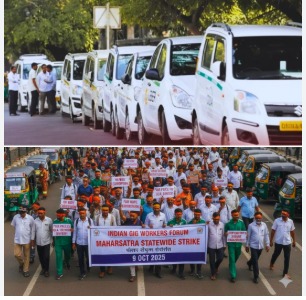
Maharashtra witnessed a major disruption in its app-based transport services as gig workers, including drivers of Ola, Uber, and Rapido, went on a statewide strike. The movement highlights growing frustration among gig workers who form the backbone of India’s digital economy but often operate without basic protections or fair pay.
This strike reflects a larger, nationwide conversation about labor rights, fair wages, and accountability in the gig economy.
Why Gig Workers Are Protesting
The striking gig workers have raised several long-standing concerns that affect both their livelihoods and dignity.
Unstable Income and High Commissions
Drivers claim that aggregator platforms frequently change fare structures and reduce incentives without prior notice. The increased commissions cut into their already modest earnings.
Lack of Regulation and Oversight
Workers argue that existing laws fail to protect them against exploitation. They demand that the state enforce clear rules for aggregator operations and ensure transparency in fare calculations.
Unfair Suspensions and Delistings
Many drivers report being suspended or removed from the app without explanation or an appeal mechanism, leaving them suddenly unemployed.
Rising Operational Costs
With increasing fuel prices, vehicle maintenance, and loan EMIs, drivers find it increasingly difficult to sustain operations at current fare levels.
Demand for Social Security Benefits
Gig workers seek inclusion in government welfare programs, such as health insurance, pensions, and accident cover — benefits commonly available to formal sector employees.
The Nature of the Strike
The Indian Gig Workers Forum and other regional unions coordinated the statewide strike, halting cab and auto services across Mumbai, Pune, Nagpur, and Nashik. The protest aimed to draw the attention of both the state government and aggregator platforms to the worsening conditions faced by gig workers.
The strike disrupted daily commutes in major urban centers, forcing many commuters to depend on public transport or carpooling.
Demands of the Gig Workers
Implementation of a minimum base fare for all rides.
Clear and consistent commission policies.
Transparency in ride pricing algorithms and incentive systems.
Appeal and review mechanisms for suspended or delisted drivers.
Inclusion under social welfare and labor protection schemes.
Government and Platform Response
While the Maharashtra government has expressed willingness to open dialogue with unions, tangible action remains pending. Aggregator companies, on the other hand, continue to maintain that they act as “technology intermediaries” rather than employers — a claim that leaves workers in a legal gray zone.
The strike, however, has amplified calls for the government to recognize gig work as legitimate employment deserving of protection under labor laws.
Impact on Commuters and Economy
Short-Term: Commuters faced longer waiting times, surge pricing, and reliance on local transport.
Long-Term: The strike raises questions about the sustainability of app-based mobility services if workers continue to face financial insecurity.
Experts predict that persistent unrest in this sector could affect investor confidence and the overall growth of India’s platform economy.
Why This Strike Matters
This protest is not just about wages — it’s about recognition and respect. Gig workers form the backbone of modern urban mobility, yet their work remains undervalued and underprotected.
The Maharashtra strike marks a turning point in India’s labor movement, highlighting the need for:
Stronger gig economy regulations,
Fair income distribution, and
Comprehensive social security coverage.
If their voices are heard, this could shape the future of employment rights in India’s fast-growing digital economy.
FAQ: Gig Workers Strike in Maharashtra
Q1. Who organized the gig workers’ strike in Maharashtra?
A: The strike was organized by gig worker unions and the Indian Gig Workers Forum, representing app-based drivers across the state.
Q2. What are gig workers demanding?
A: Their demands include better pay, fair commissions, transparency in pricing, and inclusion in social welfare schemes.
Q3. Which services were affected by the strike?
A: Major app-based ride-hailing services such as Ola, Uber, and Rapido were affected across several cities in Maharashtra.
Q4. How did the government respond?
A: The state government expressed intent to hold discussions but has yet to announce concrete policy measures.
Q5. What is the larger significance of the strike?
A: The movement reflects a growing national demand for recognition of gig workers as formal laborers entitled to protection and benefits.
Conclusion
The gig workers’ strike in Maharashtra is a powerful reminder that the convenience of the digital economy depends on the labor of millions who remain largely invisible.
Their collective action is pushing India toward an urgent conversation on fair labor rights, transparent practices, and dignified working conditions.
As policymakers deliberate and companies evolve, the voices of these workers will continue to shape the future of fair work in India.
Published on : 9th October
Published by : SMITA
www.vizzve.com || www.vizzveservices.com
Follow us on social media: Facebook || Linkedin || Instagram
🛡 Powered by Vizzve Financial
RBI-Registered Loan Partner | 10 Lakh+ Customers | ₹600 Cr+ Disbursed
https://play.google.com/store/apps/details?id=com.vizzve_micro_seva&pcampaignid=web_share