

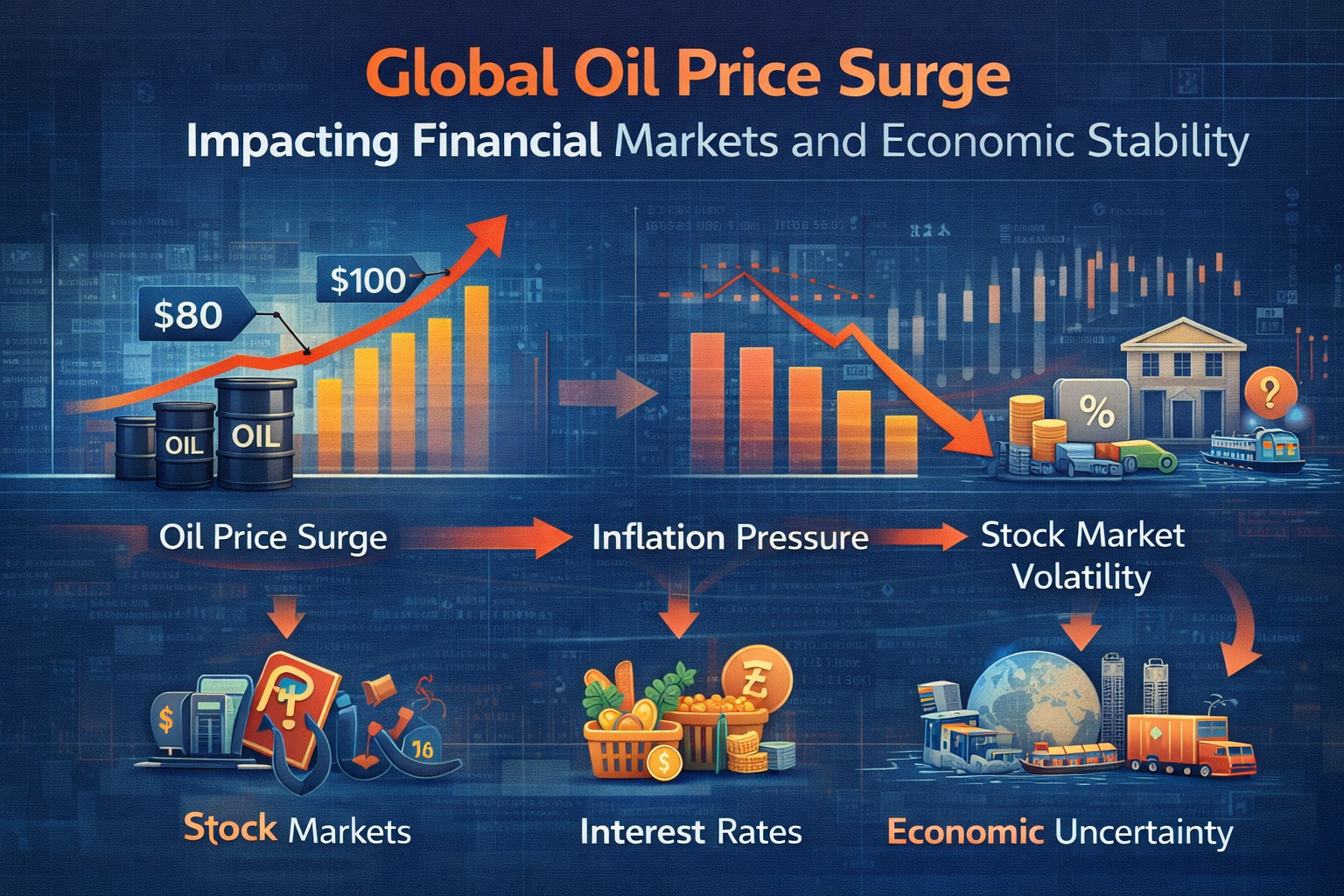
Global oil markets are once again under intense pressure as crude prices rise sharply due to geopolitical tensions, supply disruptions, and increasing demand. Economists warn that a major oil price shock could trigger financial stress across global markets, affecting inflation, banking systems, and economic growth.
Oil remains one of the most important commodities in the global economy. When oil prices surge suddenly, the effects ripple across industries—from transportation and manufacturing to banking and stock markets.
Understanding the potential impact of an oil shock is crucial for investors, policymakers, and businesses trying to navigate economic uncertainty.
AI Answer Box
What is a global oil shock and why does it cause financial stress?
A global oil shock occurs when crude oil prices rise sharply due to supply disruptions, geopolitical conflicts, or sudden demand increases. This can trigger financial stress because higher oil prices increase inflation, reduce consumer spending, pressure corporate profits, and create volatility in global financial markets.
Major impacts include:
Rising inflation
Slower economic growth
Currency volatility
Pressure on banks and financial institutions
Why Oil Prices Matter for the Global Economy
Oil is the backbone of modern economic activity. It powers transportation, manufacturing, and energy production.
Key Areas Affected by Oil Prices
| Sector | Impact of Rising Oil Prices |
|---|---|
| Transportation | Higher fuel costs |
| Manufacturing | Increased production expenses |
| Consumers | Higher living costs |
| Financial markets | Increased volatility |
When oil prices rise sharply, it can trigger economic slowdowns and financial instability.
Causes of a Global Oil Shock
Several factors can cause sudden spikes in oil prices.
Major Drivers
Geopolitical conflicts in oil-producing regions
Supply disruptions or sanctions
Production cuts by oil-producing nations
Rapid global demand recovery
These factors often create supply shortages and price spikes in global energy markets.
Impact on Financial Markets
A global oil shock can create significant volatility in financial markets.
1. Stock Market Pressure
Rising oil prices increase operating costs for companies, which can reduce profits and push stock markets lower.
2. Banking Sector Risk
Banks may face financial stress if businesses struggle to repay loans due to higher operational costs.
3. Currency Fluctuations
Oil-importing countries often experience currency depreciation when oil prices rise.
Oil Shock and Inflation
One of the biggest economic risks of rising oil prices is inflation.
How Oil Drives Inflation
| Factor | Effect |
|---|---|
| Fuel prices | Transportation costs increase |
| Logistics | Supply chain expenses rise |
| Food prices | Agriculture costs increase |
This creates a chain reaction of rising prices across the economy.
Impact on Emerging Economies
Emerging economies are particularly vulnerable to oil price shocks.
Countries that import large amounts of oil may face:
Higher trade deficits
Currency pressure
Increased inflation
Slower economic growth
Banking System Risks
Financial institutions can face stress during energy shocks.
Potential Banking Risks
Loan defaults from energy-dependent businesses
Market volatility affecting investment portfolios
Rising borrowing costs
These risks can affect financial stability in both developed and emerging markets.
Historical Examples of Oil Shocks
Oil shocks have occurred several times in history and often triggered economic disruptions.
Major Oil Shock Events
| Year | Event |
|---|---|
| 1973 | Oil embargo crisis |
| 2008 | Oil price surge before financial crisis |
| 2022 | Energy shock due to geopolitical tensions |
Each event had significant consequences for the global economy.
Pros and Cons of Rising Oil Prices
| Pros | Cons |
|---|---|
| Higher revenue for oil exporters | Higher inflation |
| Increased energy investments | Economic slowdown risk |
| Growth in renewable energy | Financial market volatility |
Expert Commentary
Economic analysts warn that sustained oil price spikes could increase financial stress globally.
Higher energy costs reduce disposable income and corporate profits, which may slow economic growth. Financial markets tend to react quickly to oil price movements, increasing volatility for investors.
Experts emphasize the need for diversified energy sources and stable supply chains to reduce future energy shocks.
Key Takeaways
A global oil shock occurs when crude prices rise sharply.
Rising oil prices increase inflation and economic pressure.
Financial markets often experience volatility during oil shocks.
Emerging economies are especially vulnerable.
Energy diversification may reduce future economic risks.
FAQs
1. What is a global oil shock?
A global oil shock refers to a sudden and sharp increase in crude oil prices due to supply disruptions or geopolitical factors.
2. How does oil affect financial markets?
Rising oil prices increase inflation, reduce corporate profits, and create market volatility.
3. Why do oil prices impact inflation?
Oil is used in transportation and production, so higher prices increase costs across industries.
4. Which countries are most affected by oil shocks?
Oil-importing countries are typically more vulnerable.
5. Can oil shocks cause economic recessions?
Yes, historically oil shocks have contributed to economic slowdowns.
6. Do banks face risks during oil shocks?
Yes, higher economic stress can increase loan defaults.
7. How do investors react to oil price spikes?
Markets often become volatile as investors adjust expectations.
8. What sectors benefit from higher oil prices?
Energy companies and oil exporters may benefit.
9. Can renewable energy reduce oil shock risks?
Yes, diversification of energy sources helps reduce dependency on oil.
10. What role do geopolitical tensions play?
Conflicts in oil-producing regions often trigger supply disruptions.
11. Why do oil prices fluctuate so much?
They are influenced by supply, demand, geopolitical events, and economic trends.
12. What should investors watch during oil shocks?
Oil prices, inflation data, and central bank policies.
Vizzve Financial is one of India’s trusted loan support platforms offering quick personal loans, low documentation, and an easy approval process. Apply at www.vizzve.com.
If you need funds for personal needs or emergencies, Vizzve Financial helps you access fast and reliable loan solutions.
Published on : 11th March
Published by : SMITA
www.vizzve.com || www.vizzveservices.com
Follow us on social media: Facebook || Linkedin || Instagram
🛡 Powered by Vizzve Financial
RBI-Registered Loan Partner | 10 Lakh+ Customers | ₹600 Cr+ Disbursed