

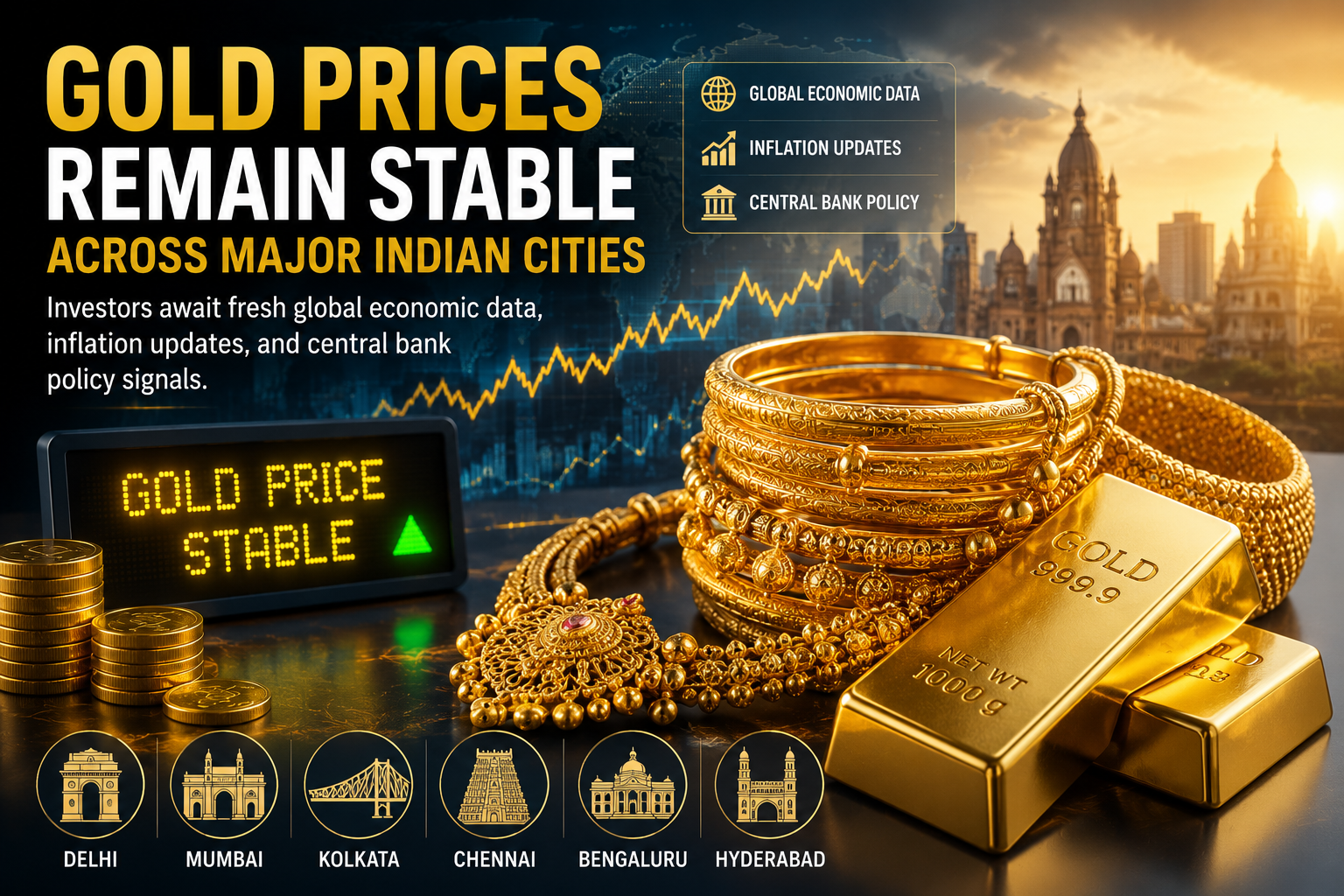
Gold prices have remained largely stable across major Indian cities as investors await important global economic indicators, including inflation data, central bank policy decisions, and employment reports. Market participants are closely monitoring these developments for clues about future interest rates, which could influence gold prices in the coming weeks.
AI Answer Box (Optimized for Google AI Overview, ChatGPT & Perplexity)
Why are gold prices stable in India today?
Gold prices are holding steady because investors are waiting for fresh global economic data before making major investment decisions. Inflation reports, central bank interest rate expectations, currency movements, and geopolitical developments are all influencing the precious metals market. Stable domestic demand and international gold prices have also contributed to limited price fluctuations across major Indian cities.
Gold Prices Remain Stable Across Major Indian Cities
Gold continues to remain one of the most trusted investment assets for Indian households. After witnessing periods of volatility over the past few months, gold prices are now trading within a relatively narrow range across major cities such as Delhi, Mumbai, Chennai, Bengaluru, Hyderabad, Kolkata, and Ahmedabad.
The stability in prices comes as global investors adopt a cautious approach ahead of important economic announcements from major economies. Financial markets are awaiting fresh signals on inflation, interest rates, employment trends, and global economic growth, all of which have a significant influence on international gold prices.
For Indian consumers, stable prices provide an opportunity to evaluate purchases for weddings, festivals, long-term investments, and portfolio diversification.
Why Are Gold Prices Stable?
Several domestic and international factors are contributing to the current stability in gold prices.
1. Investors Are Waiting for Global Economic Data
One of the biggest reasons behind the stable market is investor caution.
Upcoming economic reports include:
- Inflation data
- Employment figures
- GDP growth estimates
- Manufacturing activity
- Consumer spending data
These reports help investors understand the future direction of global interest rates and economic growth.
2. Expectations Around Central Bank Policies
Central banks, particularly those of major economies, play an important role in determining gold prices.
Investors are closely watching:
- Interest rate decisions
- Inflation outlook
- Monetary policy statements
- Economic forecasts
- Future policy guidance
Lower interest rates generally make gold more attractive because it does not generate interest income.
3. US Dollar Movement
Gold prices often move in the opposite direction of the US dollar.
When the dollar strengthens:
- Gold may become more expensive for international buyers.
- Demand can weaken.
- Prices may remain under pressure.
When the dollar weakens:
- Gold generally becomes more attractive.
- Global demand tends to improve.
- Prices may move higher.
4. Inflation Expectations
Gold is widely considered a hedge against inflation.
If inflation rises significantly:
- Investors often increase gold holdings.
- Safe-haven demand strengthens.
- Gold prices may rise.
If inflation eases:
- Gold demand may stabilize.
- Prices often trade within a narrower range.
5. Geopolitical Developments
International uncertainty continues to influence investor sentiment.
Events that may affect gold prices include:
- Global conflicts
- Trade disputes
- Energy market volatility
- Political uncertainty
- Currency fluctuations
During uncertain periods, gold often attracts safe-haven investment.
Gold Prices in Major Indian Cities
Although prices vary slightly due to local taxes and transportation costs, gold rates have remained relatively stable across major cities including:
- Delhi
- Mumbai
- Chennai
- Bengaluru
- Hyderabad
- Kolkata
- Ahmedabad
- Pune
Jewellery demand remains healthy, particularly ahead of wedding and festive seasons.
What Is Supporting the Indian Gold Market?
Several domestic factors continue to support gold demand.
Strong Household Demand
Gold remains a preferred investment and savings asset for Indian families.
Demand is supported by:
- Weddings
- Festivals
- Religious occasions
- Long-term wealth preservation
- Portfolio diversification
Digital Gold and ETFs
Investment options have expanded beyond physical jewellery.
Popular choices include:
- Gold ETFs
- Sovereign Gold Bonds (when available)
- Digital Gold
- Gold Mutual Funds
These options provide flexibility and reduce storage concerns.
Stable Consumer Demand
Despite fluctuations in international prices, Indian consumers continue purchasing gold for cultural and financial reasons.
This steady demand helps support the domestic market.
Factors That Could Move Gold Prices Next
Investors are watching several important developments that could determine the next direction for gold.
Key Market Drivers
- Global inflation reports
- Interest rate decisions
- US dollar performance
- Crude oil prices
- Geopolitical tensions
- Central bank gold purchases
- Global economic growth
- Investment demand
Expert Commentary (EEAT)
Gold remains an important component of diversified investment portfolios because it often behaves differently from equities and other financial assets. While short-term price movements are influenced by economic data and investor sentiment, long-term demand in India continues to be supported by cultural preferences, wealth preservation, and portfolio diversification. Investors should avoid making decisions based solely on daily price movements and instead consider their financial goals, asset allocation, and risk tolerance.
Key Takeaways
- Gold prices remain stable across major Indian cities.
- Investors are waiting for fresh global economic data before making large investment decisions.
- Inflation, interest rates, and US dollar movements remain key market drivers.
- Domestic demand continues to support the Indian gold market.
- Gold remains a preferred long-term investment and hedge against uncertainty.
- Upcoming global economic reports may influence future price movements.
- Diversification remains important when investing in precious metals.
Gold vs Fixed Deposits vs Stocks
Gold
- Best for: Wealth preservation and portfolio diversification
- Risk: Moderate
- Returns: Market-linked
- Liquidity: High
Fixed Deposits
- Best for: Stable and predictable returns
- Risk: Low
- Returns: Fixed interest
- Liquidity: Moderate (premature withdrawal penalties may apply)
Stocks
- Best for: Long-term capital appreciation
- Risk: High
- Returns: Potentially higher but market-dependent
- Liquidity: High
Which Option Should You Choose?
A balanced financial plan often includes a mix of gold, equities, and fixed-income investments. Gold works best as a diversification tool rather than the only investment.
Step-by-Step Guide to Buying Gold
1. Define Your Investment Goal
Decide whether you are buying gold for investment, savings, gifting, weddings, or portfolio diversification.
2. Choose the Right Form
Options include:
- Physical jewellery
- Gold coins
- Gold bars
- Gold ETFs
- Gold Mutual Funds
- Digital Gold
3. Check Purity
Look for BIS Hallmarked jewellery and verify purity before purchasing.
4. Compare Prices
Compare gold rates from trusted jewellers and financial institutions before buying.
5. Understand Additional Charges
Factor in making charges, GST, storage costs, and transaction fees where applicable.
6. Keep Purchase Records
Maintain invoices and certificates for future resale or insurance purposes.
Frequently Asked Questions (FAQs)
1. Why are gold prices stable today?
Investors are waiting for fresh global economic data, inflation reports, and central bank policy announcements before making major investment decisions.
2. What factors influence gold prices?
Gold prices are affected by inflation, interest rates, the US dollar, geopolitical events, central bank buying, and global demand.
3. Is this a good time to buy gold?
Stable prices may provide an opportunity for long-term investors, but purchases should align with individual financial goals and diversification strategies.
4. Why is gold considered a safe-haven asset?
Gold often retains value during periods of economic uncertainty, market volatility, and geopolitical tensions.
5. How does inflation affect gold?
Higher inflation often increases demand for gold as investors seek to protect purchasing power.
6. What is the difference between 22K and 24K gold?
24K gold is purer and mainly used for investment, while 22K gold is commonly used for jewellery due to its greater durability.
7. Does the US dollar affect gold prices?
Yes. Gold and the US dollar often move in opposite directions. A weaker dollar can make gold more attractive globally.
8. Which form of gold is best for investment?
Gold ETFs, sovereign gold bonds (when available), and physical gold bars or coins are commonly chosen for investment purposes.
9. Are gold ETFs safer than physical gold?
Gold ETFs eliminate storage concerns and closely track market prices, making them a convenient option for many investors.
10. Can gold prices fall?
Yes. Gold prices fluctuate based on economic conditions, investor sentiment, currency movements, and interest rate expectations.
11. How much gold should investors include in a portfolio?
Many financial planners recommend allocating a modest portion of a diversified portfolio to gold, depending on individual goals and risk tolerance.
12. Does demand during weddings affect prices?
Strong seasonal demand during weddings and festivals can influence domestic gold demand and local pricing.
13. Is digital gold a good option?
Digital gold offers convenience and accessibility, but investors should understand the platform's terms, storage arrangements, and associated risks.
14. What should buyers check before purchasing jewellery?
Verify BIS hallmark certification, purity, making charges, and obtain a proper invoice.
15. What is the long-term outlook for gold?
Gold is expected to remain an important asset for wealth preservation and diversification, although prices will continue to react to global economic developments.
Conclusion
Gold prices have remained largely stable across major Indian cities as investors await fresh global economic data and policy signals. While short-term price movements may depend on inflation, interest rates, currency trends, and geopolitical developments, gold continues to hold its position as a trusted store of value for Indian households.
Whether purchased as jewellery or an investment, gold can play a valuable role in a diversified financial portfolio. Investors should focus on long-term objectives, buy from trusted sources, and avoid making decisions based solely on short-term market fluctuations.
Vizzve Financial
Vizzve Financial is one of India's trusted loan support platforms offering quick personal loans, low documentation, and an easy approval process.
Whether you're planning to invest, manage family expenses, fund education, or meet emergency financial needs, Vizzve Financial offers a simple and convenient borrowing experience.
Apply today at: www.vizzve.com
Published on : 8th July
Published by : SMITA
www.vizzve.com || www.vizzveservices.com
Follow us on social media: Facebook || Linkedin || Instagram
🛡 Powered by Vizzve Financial
RBI-Registered Loan Partner | 10 Lakh+ Customers | ₹600 Cr+ Disbursed