

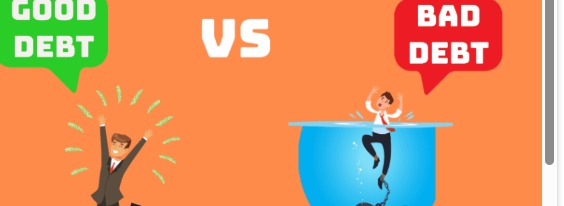
Not all debt is bad. While borrowing can be risky if mismanaged, some types of debt can actually help you grow your wealth, improve credit, and achieve financial goals. Understanding the difference between good debt and bad debt is essential for anyone looking to borrow responsibly.
What is Good Debt?
Good debt refers to loans or credit that adds value to your life or assets and helps you generate future income or wealth.
Examples of Good Debt:
Home Loans: Buying property can build equity and appreciate in value over time.
Education Loans: Investing in higher education improves career prospects and earning potential.
Business Loans: Loans for expanding a business or improving productivity can generate higher returns.
Benefits:
Builds assets or income streams.
Can improve credit score if repaid on time.
Often comes with lower interest rates (e.g., home loans or education loans).
What is Bad Debt?
Bad debt is borrowing that does not generate long-term value and often serves short-term consumption needs.
Examples of Bad Debt:
Credit Card Debt: High-interest spending on lifestyle or non-essential items.
Personal Loans for Luxury Purchases: Financing vacations, gadgets, or clothes at high interest.
Payday Loans: Short-term loans with extremely high interest rates.
Risks:
Can accumulate high-interest costs quickly.
Leads to financial stress if repayment is delayed.
Does not contribute to wealth building.
How to Manage Good and Bad Debt
Prioritize Good Debt: Focus on loans that help generate income or assets.
Avoid High-Interest Debt: Pay off bad debt quickly to prevent compounding interest.
Maintain a Budget: Track spending and avoid unnecessary borrowing.
Check Credit Score: Healthy credit can help access good debt at lower interest rates.
Use Debt Strategically: Borrow only when necessary and ensure repayment plans are realistic.
FAQs:
Q1. Can credit cards be considered good debt?
Only if used wisely for essential purchases and paid in full to avoid interest. Otherwise, they are typically bad debt.
Q2. Is a car loan good or bad debt?
Depends on usage—if it’s essential for income generation, it can be considered good debt. For luxury or status purposes, it’s usually bad debt.
Q3. Can bad debt become good debt?
Only if it is refinanced or used strategically to generate value, e.g., consolidating high-interest debt into a low-interest loan.
Q4. Should I avoid all debt?
Not necessarily. Smart borrowing can help achieve financial goals, but reckless borrowing leads to financial trouble.
Q5. How do I distinguish between good and bad debt?
Ask: “Does this loan increase my assets, income, or future value?” If yes, it’s likely good debt; if no, it’s probably bad debt.
Published on : 30th September
Published by : SMITA
www.vizzve.com || www.vizzveservices.com
Follow us on social media: Facebook || Linkedin || Instagram
🛡 Powered by Vizzve Financial
RBI-Registered Loan Partner | 10 Lakh+ Customers | ₹600 Cr+ Disbursed
https://play.google.com/store/apps/details?id=com.vizzve_micro_seva&pcampaignid=web_share