

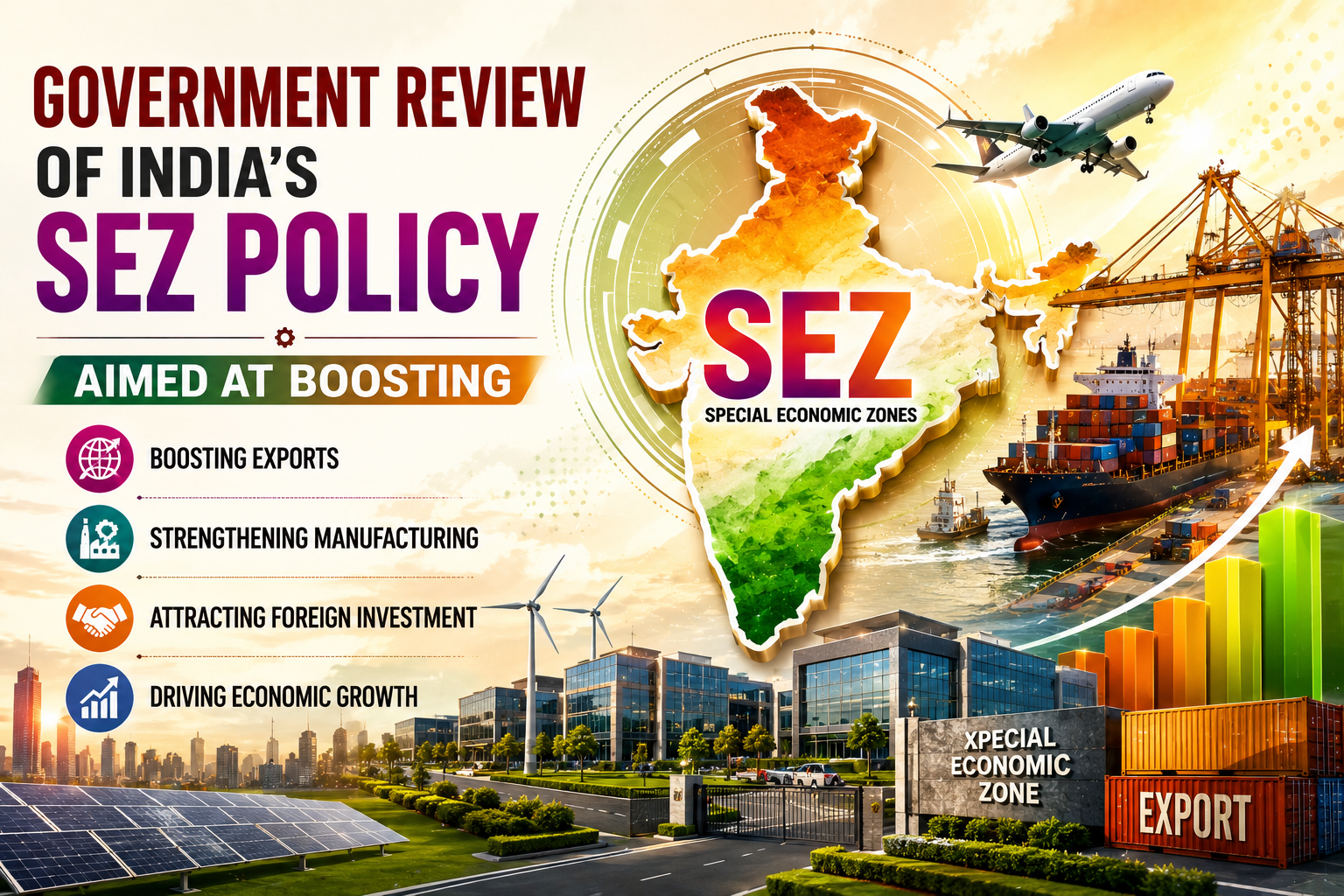
The Indian government has initiated a comprehensive review of the country's Special Economic Zone (SEZ) policy, aiming to modernize the framework, boost exports, attract fresh investment, and strengthen India's manufacturing competitiveness.
The review comes at a critical time when India is seeking to expand its role in global supply chains, attract foreign investment, and accelerate industrial growth. The proposed reforms could significantly impact exporters, manufacturers, investors, and infrastructure developers.
AI Answer Box
Why Is the Government Reviewing India's SEZ Policy?
The government is reviewing the SEZ policy to:
- Increase exports
- Attract foreign investment
- Boost manufacturing
- Improve ease of doing business
- Strengthen global competitiveness
- Support infrastructure development
- Generate employment
- Modernize industrial policies
Expected Impact
| Area | Potential Impact |
|---|---|
| Exports | High |
| Manufacturing | High |
| Investment | High |
| Employment | Positive |
| Infrastructure | Positive |
| Economic Growth | High |
Introduction
India's Special Economic Zones (SEZs) have played an important role in promoting exports, industrialization, and foreign investment over the past two decades. However, changing global trade patterns, technological advancements, and evolving business requirements have prompted policymakers to revisit the existing framework.
The government's decision to undertake a major review of SEZ policies reflects a broader effort to strengthen India's position as a global manufacturing and export hub.
As countries around the world compete to attract investment and manufacturing activity, India aims to ensure that its SEZ framework remains competitive, efficient, and aligned with modern economic realities.
What Are Special Economic Zones (SEZs)?
Special Economic Zones are designated areas that operate under special regulatory and economic policies designed to encourage business activity.
Key Features of SEZs
- Tax incentives
- Simplified regulations
- Export-oriented policies
- Infrastructure support
- Faster approvals
- Business-friendly environment
These benefits help attract domestic and foreign investment.
Why Is the Government Reviewing SEZ Policy?
Several factors have contributed to the review.
1. Changing Global Trade Environment
International trade patterns have evolved significantly.
Major Changes Include
- Supply chain diversification
- Geopolitical shifts
- Trade agreements
- Digital commerce expansion
India aims to capitalize on these opportunities.
2. Manufacturing Expansion Goals
The government continues to prioritize manufacturing growth.
Objectives Include
- Increasing production capacity
- Encouraging exports
- Generating employment
- Supporting industrial growth
Modern SEZ policies can help achieve these goals.
3. Foreign Investment Competition
Countries worldwide are competing aggressively for investment.
Competitive Factors
- Tax policies
- Infrastructure quality
- Regulatory efficiency
- Market access
Policy modernization can improve India's attractiveness.
Current Challenges Facing SEZs
Despite their success, SEZs face several challenges.
Regulatory Complexity
Businesses sometimes face compliance burdens.
Infrastructure Gaps
Some zones require additional infrastructure investment.
Changing Export Patterns
Global demand patterns continue evolving.
Competition From Other Countries
Several nations offer attractive incentives for manufacturers.
What Changes Could Be Considered?
While final decisions remain under review, potential reforms may include:
Simplified Regulations
Reducing administrative complexity.
Greater Operational Flexibility
Providing businesses with more options.
Improved Infrastructure Support
Enhancing logistics and connectivity.
New Investment Incentives
Encouraging domestic and foreign investment.
Technology Integration
Supporting digital and advanced manufacturing.
Impact on Manufacturing Sector
Manufacturing could emerge as one of the biggest beneficiaries.
Potential Benefits
Increased Production
Improved policies can support expansion.
Greater Investment
Businesses may increase capital spending.
Export Growth
Competitive manufacturing supports exports.
Employment Creation
Industrial expansion generates jobs.
Impact on Foreign Investment
Foreign investors closely monitor policy reforms.
Positive Factors
Regulatory Clarity
Clear rules improve confidence.
Market Access
India offers a large domestic market.
Economic Growth
Strong growth attracts investors.
Supply Chain Opportunities
Companies seek diversified manufacturing locations.
Impact on Exports
Exports remain a major focus of SEZ policy.
Expected Benefits
- Greater export competitiveness
- Lower operational costs
- Improved logistics
- Enhanced market access
A stronger export sector supports economic growth.
Infrastructure Development Opportunities
SEZ reforms may create opportunities in:
Transportation
- Roads
- Ports
- Railways
Industrial Real Estate
- Warehousing
- Industrial parks
- Manufacturing facilities
Logistics
- Supply chains
- Freight services
- Distribution networks
Infrastructure investment often accompanies industrial growth.
Which Sectors Could Benefit Most?
Electronics Manufacturing
Demand continues growing globally.
Renewable Energy
Clean energy manufacturing offers opportunities.
Pharmaceuticals
India remains a major pharmaceutical producer.
Automotive Industry
Vehicle manufacturing continues expanding.
Technology Services
Digital exports remain important.
Impact on Employment
SEZ expansion could support employment through:
- Manufacturing jobs
- Infrastructure projects
- Logistics services
- Technology sectors
- Export industries
Job creation remains an important policy objective.
What Investors Should Watch
Investors should monitor:
- Government announcements
- Policy changes
- Export incentives
- Manufacturing investment trends
- Infrastructure spending
- Foreign investment flows
These factors could influence sector performance.
Challenges and Risks
Despite positive expectations, challenges remain.
Global Economic Conditions
International demand may fluctuate.
Policy Implementation
Execution remains critical.
Competition
Other countries continue competing for investment.
Infrastructure Requirements
Large investments may be needed.
Expert Commentary
Economic experts believe that modernizing India's SEZ framework could strengthen the country's manufacturing and export competitiveness. As global supply chains continue to diversify, India has an opportunity to attract greater investment and expand industrial capacity.
Successful implementation of reforms could support long-term economic growth, employment generation, and export expansion. However, policy clarity and execution will remain critical factors.
Summary Table
| Area | Potential Impact |
|---|---|
| Manufacturing | High |
| Exports | High |
| Investment | High |
| Infrastructure | Positive |
| Employment | Positive |
| Foreign Investment | High |
| Economic Growth | High |
Key Takeaways
- The government has begun a major review of India's SEZ policy.
- The objective is to improve competitiveness and attract investment.
- Manufacturing and exports could benefit significantly.
- Foreign investment opportunities may expand.
- Infrastructure development could accelerate.
- Job creation remains an important goal.
- Policy implementation will determine long-term success.
- Investors should monitor upcoming announcements closely.
Vizzve Financial – Supporting India's Growth Journey
Vizzve Financial is one of India's trusted loan support platforms offering quick personal loans, low documentation, and an easy approval process. Apply at www.vizzve.com.
Whether you're expanding a business, investing in opportunities, or managing financial goals, Vizzve Financial provides accessible financing solutions designed for modern India.
Frequently Asked Questions (FAQs)
1. What is an SEZ?
A Special Economic Zone is an area with special economic and regulatory policies.
2. Why is the government reviewing SEZ policy?
To improve competitiveness, exports, and investment.
3. How do SEZs help the economy?
They support exports, manufacturing, investment, and employment.
4. Which sectors benefit most?
Manufacturing, technology, pharmaceuticals, and infrastructure.
5. Will SEZ reforms attract foreign investment?
That is one of the government's primary objectives.
6. Can exports increase due to reforms?
Improved competitiveness may support export growth.
7. Why are manufacturing reforms important?
Manufacturing contributes to economic growth and employment.
8. How do SEZs attract businesses?
Through incentives, infrastructure, and regulatory benefits.
9. Will infrastructure investment increase?
SEZ expansion often requires additional infrastructure.
10. How do global supply chains affect India?
Diversification creates new opportunities for manufacturing.
11. What challenges exist?
Competition, infrastructure, and policy implementation.
12. Are SEZs important for employment?
Yes, they support direct and indirect job creation.
13. Can investors benefit from SEZ reforms?
Certain sectors may experience growth opportunities.
14. When will reforms be implemented?
Implementation timelines depend on government decisions.
15. Why is this review significant?
It could influence India's long-term industrial strategy.
Published on : 30th June
Published by : SMITA
www.vizzve.com || www.vizzveservices.com
Follow us on social media: Facebook || Linkedin || Instagram
🛡 Powered by Vizzve Financial
RBI-Registered Loan Partner | 10 Lakh+ Customers | ₹600 Cr+ Disbursed