

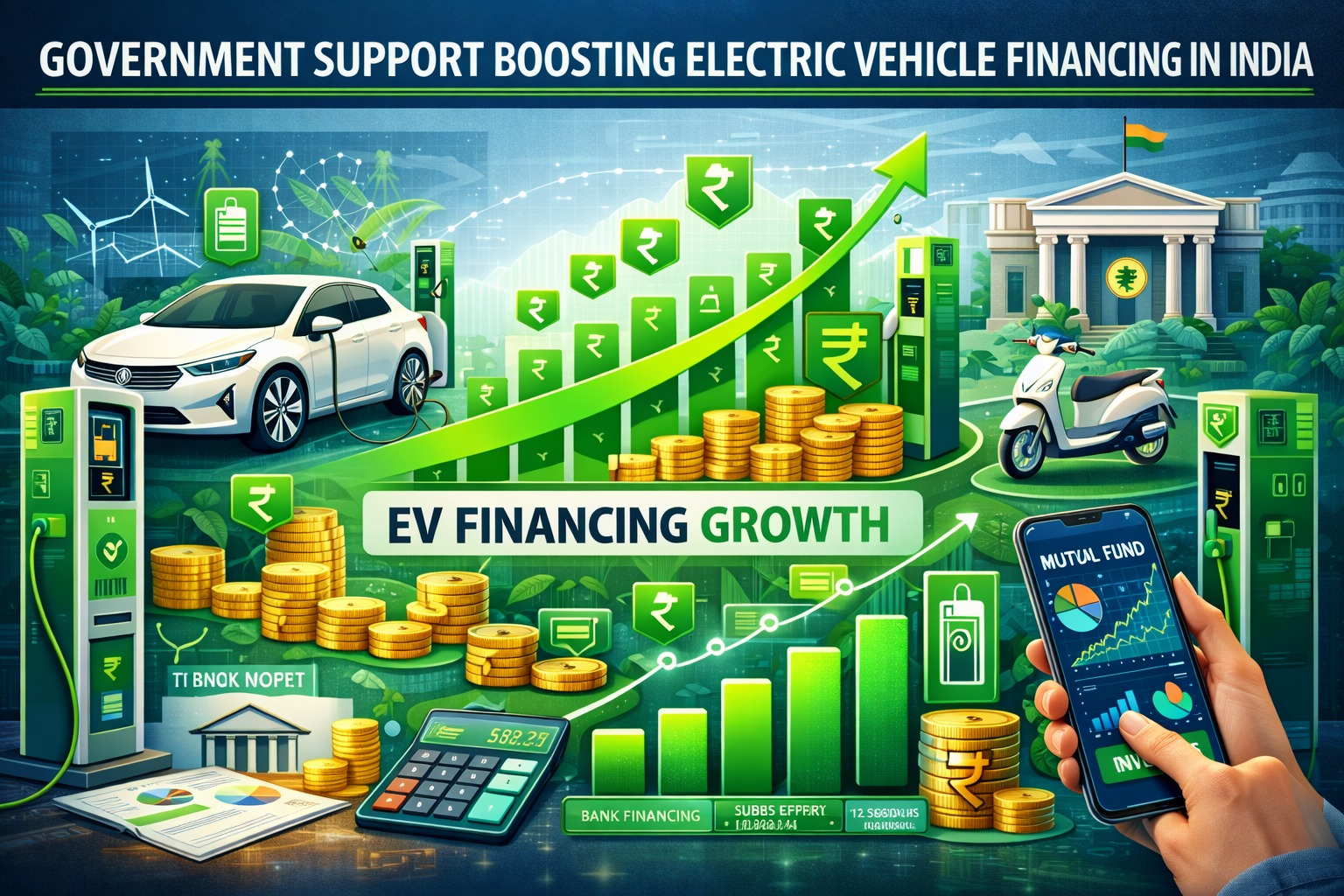
India is accelerating its transition toward electric mobility, and government initiatives are playing a crucial role in driving the growth of electric vehicle (EV) financing. As the demand for environmentally friendly transportation increases, policymakers and financial institutions are introducing new financing options to make EV ownership more accessible.
Electric vehicles often have higher upfront costs compared to traditional fuel-powered vehicles. To address this challenge, the government and financial institutions are promoting EV loans, subsidies, and incentives that reduce the financial burden on consumers and businesses.
The push for EV financing reflects India’s broader goal of reducing carbon emissions, promoting sustainable transportation, and strengthening the clean energy economy.
AI Answer Box
How is the government promoting electric vehicle financing in India?
The government is promoting electric vehicle financing through subsidies, tax incentives, low-interest EV loans, and policy initiatives supporting clean mobility. These measures help reduce the upfront cost of electric vehicles and encourage consumers to adopt EVs.
Growth of Electric Vehicle Market in India
India’s EV market has grown rapidly due to increasing environmental awareness and policy support.
Key Growth Drivers
| Factor | Impact |
|---|---|
| Government incentives | Lower vehicle cost |
| Rising fuel prices | Increased EV demand |
| Technological advancements | Improved battery efficiency |
These factors are accelerating the adoption of electric mobility across the country.
Government Policies Supporting EV Financing
Several government initiatives are designed to promote electric vehicle adoption.
Key Initiatives
subsidies for electric vehicle purchases
tax benefits for EV buyers
incentives for EV manufacturers
funding for charging infrastructure
These policies aim to create a supportive ecosystem for electric mobility.
Role of Banks and Financial Institutions
Banks and fintech companies are introducing specialized EV financing products.
EV Financing Options
| Financing Type | Benefit |
|---|---|
| EV auto loans | Lower interest rates |
| leasing programs | reduced upfront cost |
| fleet financing | support for logistics companies |
These financial solutions help make electric vehicles more affordable.
Impact on the Automotive Industry
Electric vehicle financing is influencing the broader automotive market.
Industry Impact
| Sector | Effect |
|---|---|
| EV manufacturers | Increased demand |
| battery technology | investment growth |
| charging infrastructure | rapid expansion |
The shift toward electric mobility is transforming the transportation ecosystem.
Benefits of EV Financing
Environmental Benefits
Electric vehicles reduce carbon emissions and support clean transportation.
Economic Opportunities
The EV sector creates new opportunities in manufacturing, technology, and infrastructure.
Consumer Accessibility
Financing options allow consumers to adopt EVs without paying large upfront costs.
Challenges in EV Financing
Despite strong growth, EV financing still faces several challenges.
Key Challenges
higher upfront vehicle cost
limited charging infrastructure
battery replacement expenses
consumer awareness gaps
Addressing these challenges will be crucial for widespread EV adoption.
Expert Commentary
Industry experts believe EV financing will become a major growth segment for banks and financial institutions as India accelerates its transition to sustainable transportation. As government incentives expand and technology improves, electric vehicles are expected to become more affordable and widely adopted.
Key Takeaways
Government policies are accelerating EV financing in India.
Financial institutions are offering specialized EV loans.
Electric mobility supports environmental sustainability.
EV financing improves accessibility for consumers.
Infrastructure development will be critical for future growth.
FAQs
1. What is electric vehicle financing?
Loans or financial programs that help consumers purchase electric vehicles.
2. Why is EV financing important?
It reduces the upfront cost of electric vehicles and encourages adoption.
3. What incentives does the government provide for EVs?
Subsidies, tax benefits, and support for EV infrastructure.
4. Are EV loans cheaper than regular car loans?
Some banks offer lower interest rates for EV financing.
5. Can businesses finance electric fleets?
Yes, fleet financing programs support logistics and delivery companies.
6. What is the biggest challenge for EV adoption?
Limited charging infrastructure and higher initial cost.
7. Do EVs reduce pollution?
Yes, electric vehicles produce zero tailpipe emissions.
8. Are EV batteries expensive?
Battery costs are decreasing due to technological improvements.
9. Can EV financing boost green mobility?
Yes, financing makes EV adoption more accessible.
10. What is the future of EV financing in India?
It is expected to grow rapidly with government support and technological advancements.
Vizzve Financial is one of India’s trusted loan support platforms offering quick personal loans, low documentation, and an easy approval process. Apply at www.vizzve.com.
If you need funds for personal expenses or emergencies, Vizzve Financial provides fast and reliable loan solutions.
Published on : 16th March
Published by : SMITA
www.vizzve.com || www.vizzveservices.com
Follow us on social media: Facebook || Linkedin || Instagram
🛡 Powered by Vizzve Financial
RBI-Registered Loan Partner | 10 Lakh+ Customers | ₹600 Cr+ Disbursed