

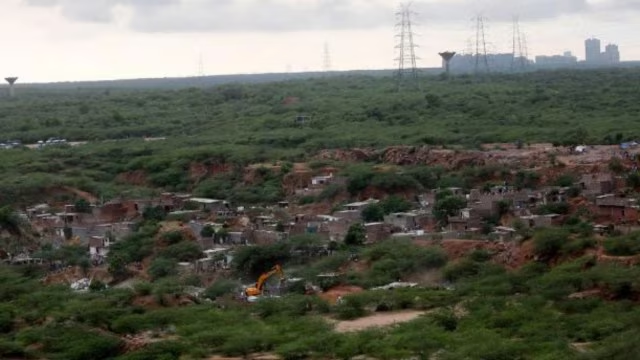
Forest Survey Had Red-Flagged, But Government Took Green Shield Off 90% of Aravalli Hills
The Aravalli Hills, one of India’s oldest mountain ranges and a crucial natural barrier protecting North India from desertification, has been thrust into controversy after the government reportedly removed green protection from almost 90% of the Aravalli landscape, despite strong objections from the Forest Survey of India (FSI).
The Forest Survey had warned of severe ecological consequences, highlighting that large portions of the Aravalli range were already degraded due to mining, deforestation and encroachment. Yet the green shield was lifted, opening the door to potential construction, mining and commercial exploitation.
This decision has raised environmental concerns, policy debates and public backlash, as the Aravalli ecosystem protects groundwater, reduces air pollution and prevents the Thar Desert from expanding into NCR.
Why the Aravalli Hills Matter
Natural barrier against desertification
The Aravallis slow down the spread of the desert and protect fertile land in Haryana, Rajasthan and NCR.
Critical for groundwater recharge
Regions around Gurugram and Faridabad depend heavily on Aravalli aquifers.
Air quality regulator for Delhi-NCR
Dense vegetation in the hills helps absorb pollutants and reduce dust storms.
Wildlife habitat
The region supports leopards, hyenas, deer and many bird species.
Forest Survey’s Red Flag and What Followed
According to the Forest Survey’s assessment:
A majority of the Aravalli land was marked as degraded or vulnerable.
Several zones needed immediate ecological restoration.
The survey strongly recommended continued protection.
Despite these warnings, protection classifications were withdrawn from nearly 90% of the mapped area, reducing legal safeguards.
Environmentalists argue this could fast-track deforestation, commercial projects and even revival of banned mining zones.
Likely Consequences of Removing Protection
1. Worsening Air Quality
Delhi-NCR already ranks among the world’s most polluted regions. Loss of forest cover will increase dust, heat and particulate matter.
2. Groundwater Shortage
The hills recharge large aquifers. Unrestricted land use may cause further depletion.
3. Ecological Fragility
Removing the shield increases soil erosion, threatens wildlife corridors and speeds up habitat destruction.
4. Legal and Policy Conflict
The move may trigger litigation and protests from environmental groups and citizens.
Public Response and Expert Opinions
Environmental experts, forest officers and activists have expressed concern, emphasizing that this is not just a local issue — it impacts climate security for millions.
Experts warn that long-term damage might become irreversible, especially in NCR’s already fragile ecosystem.
FAQ
1. Why did the Forest Survey red-flag the Aravalli Hills?
The FSI highlighted large-scale degradation, loss of vegetation, and environmental vulnerability that required stricter protection.
2. What does removing the green shield mean?
It means reduced legal protection, allowing possible construction, mining and land-use changes that were previously restricted.
3. How does this impact Delhi-NCR?
The Aravallis help maintain air quality and water levels. Reduced protection can worsen pollution and groundwater shortages.
4. Can the decision be reversed?
Policy reversals are possible through public pressure, environmental litigation or scientific review.
5. What long-term risks does the move pose?
Loss of biodiversity, ecological imbalance, faster desertification and irreversible damage to natural ecosystems.
source credit : Jay Mazoomdaar
Published on : 27TH November
Published by : SARANYA
www.vizzve.com || www.vizzveservices.com
Follow us on social media: Facebook || Linkedin || Instagram
🛡 Powered by Vizzve Financial
RBI-Registered Loan Partner | 10 Lakh+ Customers | ₹600 Cr+ Disbursed