

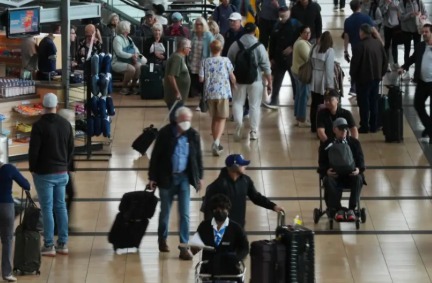
The ongoing US government shutdown has pushed the country’s aviation system into deeper turmoil, with the Federal Aviation Administration (FAA) announcing further flight cuts and delays across major airports.
Officials confirmed that the move is a direct consequence of staffing shortages among air traffic controllers and aviation safety inspectors, many of whom remain furloughed or unpaid due to the federal budget impasse.
FAA Orders Additional Flight Reductions
The FAA said on Tuesday that it will implement “strategic flight reductions” to ensure continued safety amid limited operational capacity.
Flights at key hubs including New York’s JFK, Atlanta, Chicago O’Hare, and Los Angeles International Airport (LAX) will face scheduling cuts and extended delays over the coming week.
“Safety remains our top priority. With reduced staffing levels, we are adjusting flight operations to maintain safe distances and control capacity,”
an FAA spokesperson stated.
The agency noted that over 3,500 flights have already been delayed or canceled nationwide since the start of the shutdown, which has now entered its third week.
Airports Struggling Under Pressure
Airports across the country have reported long security lines, operational slowdowns, and canceled training programs as Transportation Security Administration (TSA) officers and FAA staff continue to work without pay.
The Airlines for America (A4A) industry group warned that prolonged disruptions could cause billions in economic losses, especially during the busy Thanksgiving travel season.
At Hartsfield-Jackson Atlanta International Airport, passengers faced waits exceeding two hours, while several regional airports temporarily suspended non-essential flights due to staffing shortages.
Impact on Airlines and Passengers
Major carriers including American Airlines, Delta, United, and Southwest have issued revised schedules, citing limited ground support and air traffic control constraints.
Airlines are working closely with the FAA to reallocate flight slots and minimize cascading delays, but passengers have been advised to expect extended waiting times and last-minute cancellations.
The situation has been exacerbated by maintenance backlogs, as routine aircraft inspections by federal safety officers have been postponed, leading to additional flight groundings.
Economic Ripple Effect
The broader impact of the shutdown on the US economy is deepening, with the aviation sector among the hardest hit.
Industry analysts estimate daily losses exceeding $250 million, including costs borne by airlines, airports, and passengers.
Travel-related industries such as tourism and hospitality are witnessing reduced bookings and cancellations.
Small regional carriers are facing the risk of temporary suspension due to unapproved flight schedules.
The US Chamber of Commerce and multiple business groups have urged Congress to resolve the funding deadlock, warning that continued disruption could stall economic growth.
Political Stalemate Continues
The shutdown, now entering its 21st day, stems from a budget impasse between Congress and the White House over federal spending and debt ceiling provisions.
While emergency measures have allowed certain agencies to operate partially, the FAA and TSA remain critically understaffed, with thousands of workers affected.
“Air traffic controllers, inspectors, and security personnel are under immense pressure. This is no longer just a fiscal standoff — it’s a matter of national safety,”
said a spokesperson from the National Air Traffic Controllers Association (NATCA).
Negotiations on Capitol Hill remain stalled, with no bipartisan resolution in sight.
Passenger Advisory
Travel authorities have issued the following guidance for air passengers during the shutdown:
Check flight status frequently with your airline before heading to the airport.
Arrive early, as security screening delays may extend beyond two hours.
Avoid last-minute rebookings, as seat availability is limited.
Use airline apps for automatic recheck and refund options in case of cancellations.
The FAA has also set up temporary helplines for passenger inquiries about airspace operations and travel safety during the crisis.
Global Implications
The ongoing disruption in US aviation is having ripple effects globally, with international carriers rerouting flights to avoid scheduling conflicts and delayed departures from American airports.
European and Asian airlines including Lufthansa, British Airways, and Singapore Airlines have reported minor delays on routes connected to major US hubs.
Industry observers warn that if the shutdown extends further, it could affect transatlantic travel logistics, cargo shipments, and aviation supply chains dependent on US operations.
Conclusion
As the US government shutdown drags on, the aviation industry faces mounting operational chaos and public frustration.
The FAA’s decision to enforce additional flight cuts underscores the gravity of the crisis, with safety and staffing challenges now threatening to paralyze one of the world’s busiest air networks.
Unless a budget breakthrough is achieved soon, experts warn that the US air travel system could enter its worst disruption in over a decade, with lasting economic repercussions.
FAQs
Q1. Why has the FAA reduced flights?
A: Due to staffing shortages caused by the government shutdown, the FAA has cut flight operations to maintain safety standards.
Q2. How many flights are affected?
A: Over 3,500 flights have already been delayed or canceled nationwide.
Q3. Which airports are most impacted?
A: Major hubs like JFK, Atlanta, Chicago O’Hare, and LAX face the highest disruption.
Q4. How long will the shutdown last?
A: No resolution is currently in sight as congressional negotiations remain deadlocked.
Q5. What should passengers do?
A: Check flight updates regularly, arrive early, and expect longer waiting times at airports.
Published on : 12th November
Published by : SMITA
www.vizzve.com || www.vizzveservices.com
Follow us on social media: Facebook || Linkedin || Instagram
🛡 Powered by Vizzve Financial
RBI-Registered Loan Partner | 10 Lakh+ Customers | ₹600 Cr+ Disbursed
Source Credit:Reported by NDTV Profit News