

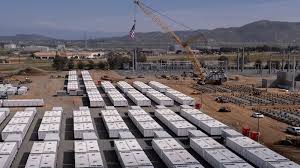
🔋 Govt Approves ₹5,400 Cr Viability Gap Funding for 30 GWh Battery Storage Projects
In a major boost to India’s clean energy ambitions, the government has approved ₹5,400 crore in Viability Gap Funding (VGF) to support the development of 30 GWh of Battery Energy Storage Systems (BESS) across the country.
The move is aimed at accelerating the transition toward renewable energy integration, enhancing grid reliability, and reducing fossil fuel dependence, especially as India aims for net-zero emissions by 2070.
⚡ What is Battery Energy Storage and Why Does it Matter?
Battery Energy Storage Systems store excess power generated by solar and wind sources, releasing it when demand peaks or generation dips. This helps:
Ensure 24/7 power availability
Avoid grid blackouts
Enable a flexible and clean power ecosystem
With India's renewable capacity crossing 180 GW, battery storage is now essential to manage intermittency and support large-scale decarbonization.
🏗️ Details of the Funding & Policy Framework
Viability Gap Funding (VGF) Amount: ₹5,400 crore
Target Capacity: 30 GWh (Gigawatt hours)
Implementation Window: Over the next 5–7 years
Administering Authority: Ministry of Power, Government of India
The funding aims to make storage projects commercially viable in the initial phase and attract private investments by lowering upfront risks.
🌱 Impact on India’s Clean Energy Ecosystem
Boosts investor confidence in storage infrastructure
Supports India's National Green Hydrogen Mission and Solar Integration roadmap
Facilitates RE100 goals for corporates seeking round-the-clock green power
Paves way for domestic battery manufacturing under the PLI scheme
🏭 Which Sectors Will Benefit?
DISCOMs (Power Distribution Companies)
Renewable Energy Developers
EV Charging Infrastructure Providers
Grid Operators and Smart City Projects
This initiative strengthens India's position as a global clean energy leader and complements existing programs like the National Electricity Plan and Energy Storage Mission.
❓ FAQs: ₹5,400 Cr Battery Storage Funding Explained
Q1: What is Viability Gap Funding (VGF)?
VGF is a government grant to make infrastructure projects financially viable in the initial phase by bridging the gap between project cost and expected returns.
Q2: Why is 30 GWh battery storage important for India?
It supports round-the-clock renewable energy, improves grid stability, and accelerates decarbonization.
Q3: Who will benefit from this VGF scheme?
Power generators, grid operators, renewable developers, and battery storage manufacturers.
Q4: Is this connected to India’s net-zero target?
Yes. Storage is a core component of India’s plan to integrate 500 GW of renewable energy by 2030.
Q5: Will this lead to lower electricity costs?
In the long term, storage integration can reduce power purchase costs by minimizing the need for backup fossil fuel-based power.
www.vizzve.com || www.vizzveservices.com
Follow us on social media: Facebook || Linkedin || Instagram