

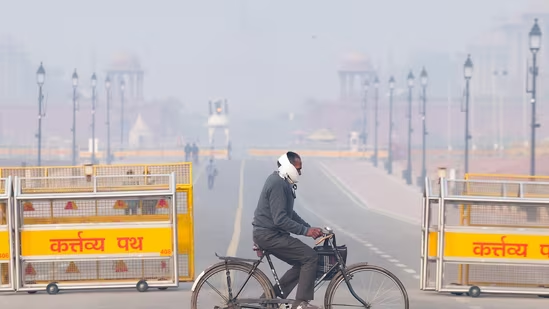
Delhi woke up to a worrying Air Quality Index (AQI) reading of 360, marking the city’s entry into the ‘Very Poor’ category. With predictions indicating further deterioration, authorities have begun enforcing Stage 3 measures under the Graded Response Action Plan (GRAP). These steps are designed to slow down pollution levels and protect public health as the winter smog intensifies.
Below are the four most crucial GRAP Stage 3 measures that come into effect as air quality worsens across the National Capital Region.
1. Ban on Non-Essential Construction and Demolition Activities
To curb dust emissions, all construction activities—except critical government projects like hospitals, railways, and metro work—are halted. This includes excavation, demolition, structural construction, and loading/unloading of construction materials.
2. Restrictions on BS-III Petrol and BS-IV Diesel Vehicles
Older and highly polluting vehicles face immediate movement restrictions. Only vehicles engaged in essential services are exempt. This aims to reduce emissions significantly during peak smog days.
3. Closure of Industries Using Non-Clean Fuels
Units dependent on coal, furnace oil, and other non-approved fuels are temporarily shut. Only those using PNG (piped natural gas) or cleaner alternatives are allowed to operate.
4. Intensified Pollution Control Measures Across Delhi
Authorities strengthen dust control, water sprinkling on roads, mechanical sweeping, and anti-smog gun deployment. Construction sites that violate norms face strict penalties under the Air Act.
Why GRAP Stage 3 Matters for Delhi Now
With dense smog settling early this season, the implementation of Stage 3 signals the urgency of the situation. It also serves as a reminder for residents to take self-protective measures such as wearing masks outdoors, avoiding strenuous outdoor activity, and using purifiers indoors.
FAQs (SEO-Boosted Section)
1. What triggers GRAP Stage 3 in Delhi?
Stage 3 is activated when the AQI reaches the ‘Severe’ threshold or is forecasted to deteriorate further. An AQI of 360 already represents high risk, prompting precautionary measures.
2. Are schools closed under GRAP Stage 3?
School closures are considered under Stage 4. Stage 3 focuses primarily on pollution sources such as vehicles, industries, and construction sites.
3. Can private vehicles operate during Stage 3?
Yes, except BS-III petrol and BS-IV diesel vehicles, which remain restricted unless used for essential services.
4. Do offices shift to remote work during Stage 3?
While not mandatory, authorities advise private offices to encourage work-from-home to reduce vehicular congestion and emissions.
5. How is enforcement checked?
Teams from DPCC, municipal bodies, and traffic police conduct surprise inspections to ensure compliance.
source credit : HT News Desk
Published on : 22ND November
Published by : SARANYA
www.vizzve.com || www.vizzveservices.com
Follow us on social media: Facebook || Linkedin || Instagram
🛡 Powered by Vizzve Financial
RBI-Registered Loan Partner | 10 Lakh+ Customers | ₹600 Cr+ Disbursed