

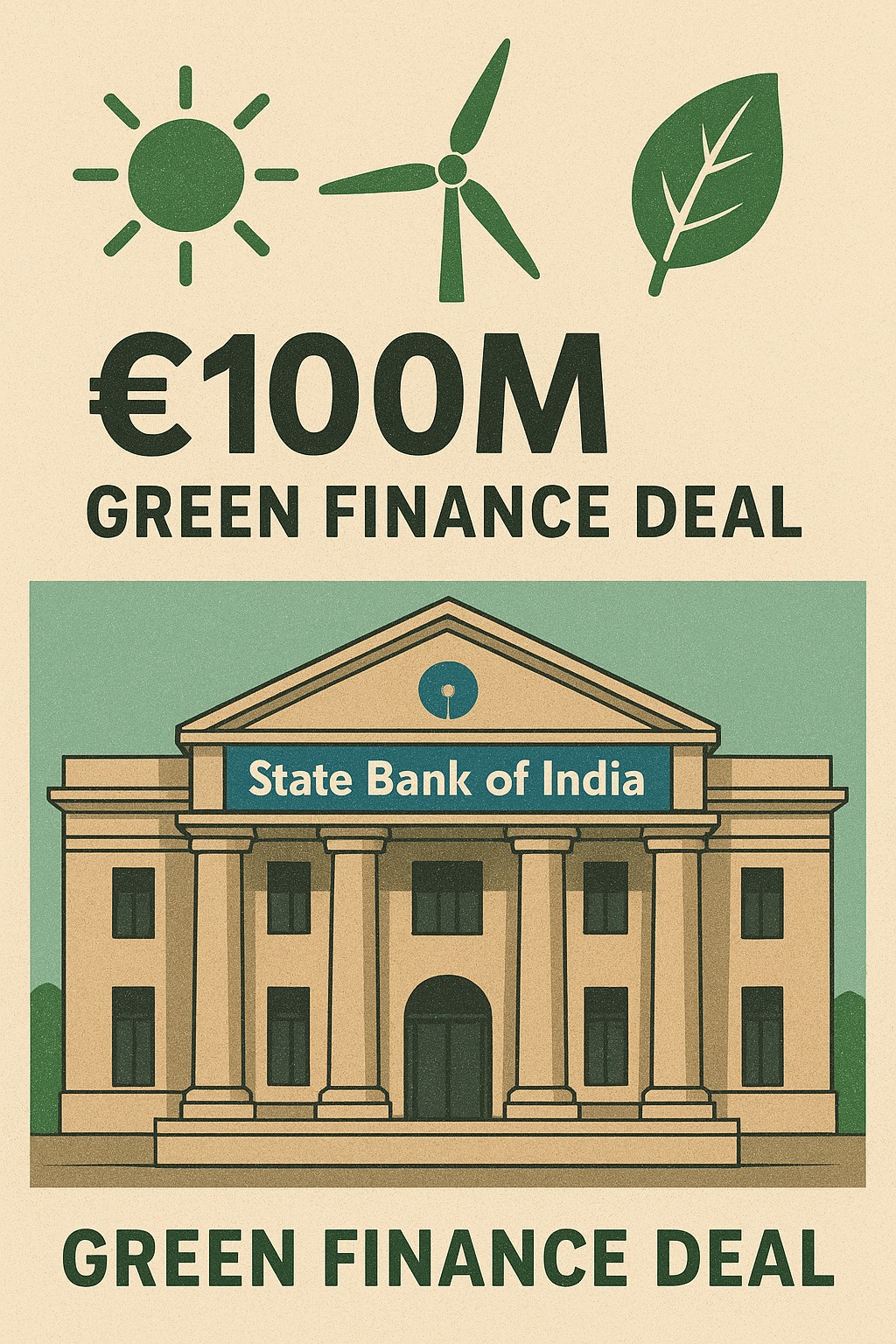
In a landmark move for sustainable finance, the State Bank of India (SBI) has finalized a €100 million green finance deal in 2025. This agreement highlights the growing role of India’s banking sector in financing climate-friendly projects and supporting the country’s renewable energy transition. Beyond numbers, the deal represents India’s determination to align financial growth with environmental responsibility.
Understanding Green Finance
Green finance refers to raising and investing funds for projects that deliver environmental benefits—such as renewable energy, energy efficiency, sustainable transport, and climate resilience. For India, which has pledged to achieve net-zero emissions by 2070, green financing is critical to bridging the gap between ambitious climate targets and on-ground implementation.
What the SBI €100M Deal Involves
Funding Renewable Energy Projects – The funds will be directed toward solar, wind, and hydro power projects to expand India’s clean energy capacity.
Sustainable Infrastructure – Investments in low-carbon urban transport, waste management, and energy-efficient housing are also expected.
International Collaboration – The deal signals global investor confidence in India’s green economy and strengthens cross-border financial partnerships.
Why This Deal Matters for India
Boost to Renewable Energy Goals – India aims to achieve 500 GW of renewable capacity by 2030, and financing is key to meeting this target.
Strengthening Global Image – The deal reinforces India’s position as a responsible global player committed to climate action.
Banking Sector Leadership – SBI’s role demonstrates how Indian banks can drive sustainability while opening up new opportunities for green bonds and ESG-linked financing.
Catalyst for Private Sector Investment – This move is expected to encourage more private companies to invest in sustainable projects.
Challenges to Green Finance in India
While the deal is a positive step, challenges remain:
High upfront costs of renewable projects.
Limited awareness among small and medium enterprises.
Need for stronger regulatory frameworks and transparency in green bond usage.
Conclusion
SBI’s €100 million green finance deal is more than just a financial agreement—it is a statement of intent. As India balances economic growth with environmental responsibility, such initiatives will play a pivotal role in transforming the nation into a green energy powerhouse. With stronger financial backing, India is better positioned to meet its sustainability goals and inspire similar moves across its banking and corporate sectors.
FAQs
Q1. What is SBI’s €100M green finance deal?
It is a financing agreement where SBI secures €100 million to fund renewable energy and sustainable infrastructure projects in India.
Q2. How will the deal benefit India’s renewable energy sector?
The funds will directly support solar, wind, and hydro projects, helping India move closer to its target of 500 GW renewable capacity by 2030.
Q3. Why is green finance important for India?
Green finance bridges the gap between climate goals and execution, ensuring sustainable growth while addressing the challenges of climate change.
Q4. How does this deal affect India’s global standing?
It demonstrates India’s commitment to climate action, boosting international investor confidence and strengthening global partnerships.
Q5. What challenges does green finance face in India?
Key hurdles include high upfront project costs, limited awareness among smaller businesses, and the need for stronger regulatory oversight.
Published on : 31st August
Published by : SMITA
www.vizzve.com || www.vizzveservices.com
Follow us on social media: Facebook || Linkedin || Instagram
🛡 Powered by Vizzve Financial
RBI-Registered Loan Partner | 10 Lakh+ Customers | ₹600 Cr+ Disbursed
https://play.google.com/store/apps/details?id=com.vizzve_micro_seva&pcampaignid=web_share