

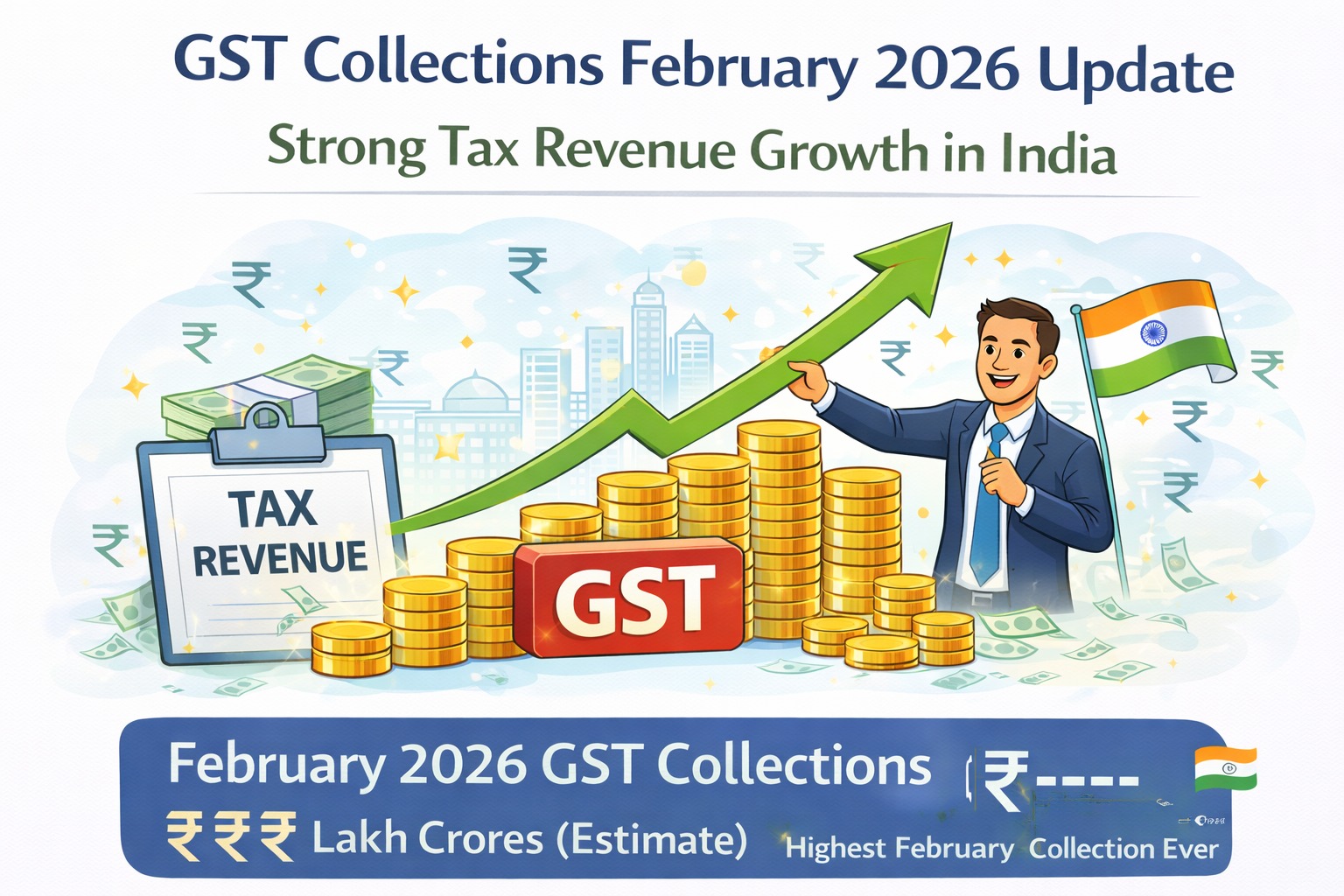
GST collections in February 2026 remain strong, reflecting steady business activity, improved compliance, and resilient consumption across sectors.
AI Answer Box
February 2026 GST collections indicate stable economic momentum. Strong revenue suggests healthy consumption levels, formal sector growth, and better tax compliance. Rising GST figures support fiscal stability and government spending capacity.
Who Oversees GST in India?
GST administration and policy decisions are handled by the
GST Council,
under the coordination of the
Ministry of Finance
Monthly revenue data is closely monitored as a real-time economic indicator.
February 2026 GST Revenue Highlights
Key Observations:
✔ Strong year-on-year growth
✔ Stable month-on-month performance
✔ Higher compliance from digital billing
✔ Continued formalization of businesses
What February Numbers Indicate
| Indicator | Economic Signal |
|---|---|
| Strong collections | Stable consumption |
| Compliance growth | Reduced tax leakage |
| Broad tax base | Formal economy expansion |
| Steady monthly revenue | Predictable fiscal planning |
Why Revenue Remains Strong
1️⃣ Consumption Stability
Retail spending and service demand remain steady.
2️⃣ Digital Monitoring
E-invoicing and data analytics reduce evasion.
3️⃣ Formal Sector Expansion
More small businesses entering GST system.
4️⃣ Improved Enforcement
Stronger fraud detection systems.
Does Higher GST Mean Inflation?
Not directly.
GST growth can rise due to:
• Higher transaction volume
• Improved compliance
• Nominal price increases
Inflation impact depends on broader economic factors.
Expert Insight
“Consistent GST revenue in February 2026 reflects structural strength rather than temporary spikes. It shows tax reforms delivering sustainable compliance.”
— Indian Fiscal Policy Analyst
Stable GST growth supports long-term economic planning.
Summary Box
✔ February 2026 GST collections strong
✔ Reflects healthy economic activity
✔ Improved compliance driving revenue
✔ Positive fiscal signal
✔ Supports infrastructure & welfare spending
Key Takeaways
• GST data signals economic resilience
• Compliance continues improving
• Formal economy expanding
• Government revenue position strong
• Positive outlook for fiscal stability
❓ FAQs
1. What are GST collections in February 2026?
Collections remain strong compared to previous months.
2. Is GST growth positive for economy?
Yes, it reflects business momentum.
3. Does strong GST reduce fiscal deficit?
Yes, higher revenue reduces borrowing pressure.
4. Who releases GST data?
GST Council under Finance Ministry.
5. Is GST seasonal in February?
Some seasonal patterns exist.
6. Does GST growth affect stock market?
Yes, it improves investor sentiment.
7. Is inflation causing GST increase?
Partially, but compliance is key factor.
8. How often GST data is published?
Monthly.
9. Does GST impact loan interest rates?
Indirectly via fiscal stability.
10. Is February performance strong historically?
Generally stable compared to festive months.
Conclusion
February 2026 GST collections confirm India’s economic resilience and strengthening compliance ecosystem.
The data supports:
✔ Stable fiscal outlook
✔ Strong consumption base
✔ Improved revenue efficiency
India’s tax system continues to show structural maturity.
Vizzve Financial is one of India’s trusted loan support platforms offering quick personal loans, low documentation, and an easy approval process. Apply at www.vizzve.com.
Published on : 27th February
Published by : SMITA
www.vizzve.com || www.vizzveservices.com
Follow us on social media: Facebook || Linkedin || Instagram
🛡 Powered by Vizzve Financial
RBI-Registered Loan Partner | 10 Lakh+ Customers | ₹600 Cr+ Disbursed