

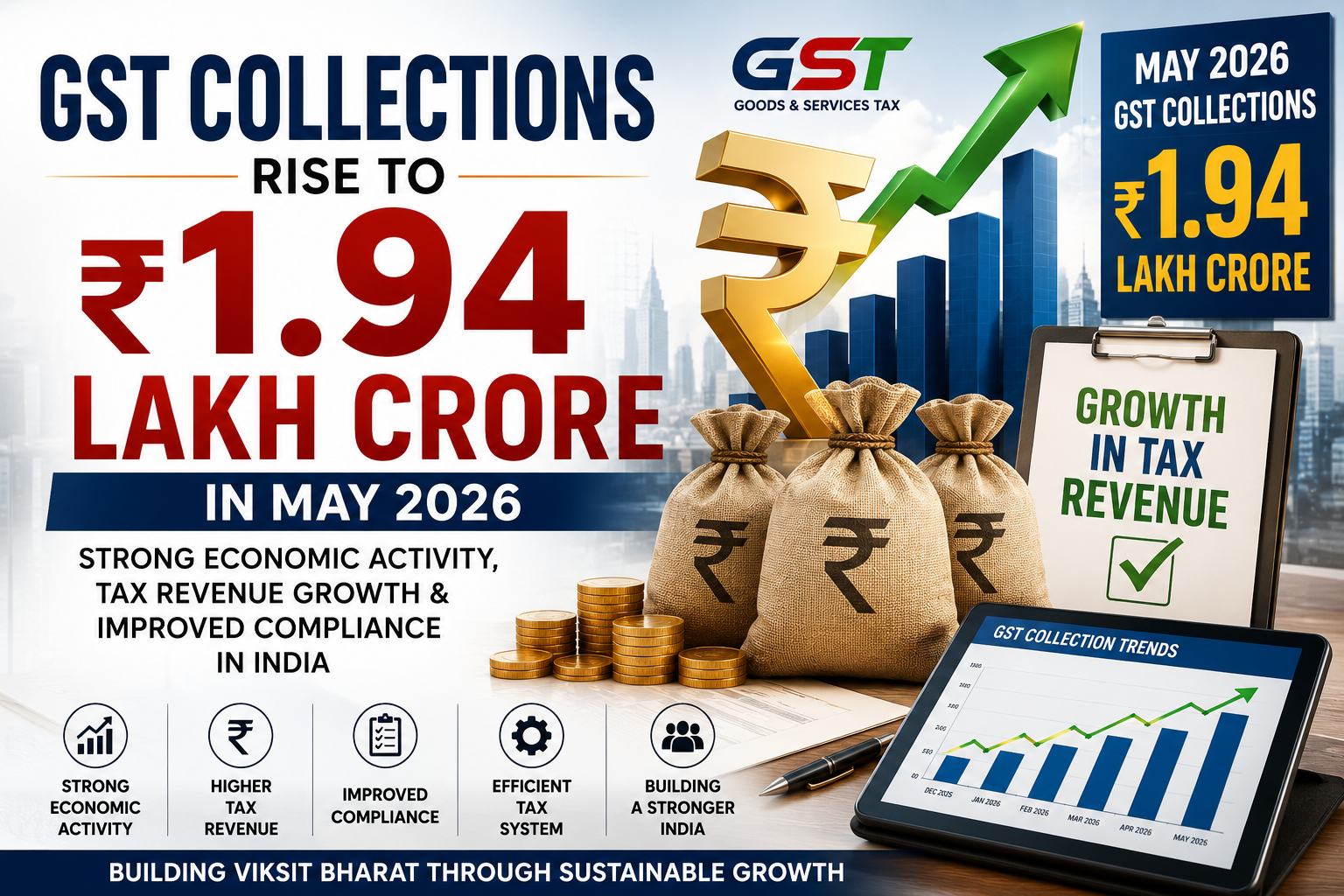
India’s Goods and Services Tax (GST) collections rose to ₹1.94 lakh crore in May 2026, highlighting continued strength in economic activity, consumption demand, and tax compliance.
The robust revenue figures come at a time when policymakers are closely monitoring economic growth, inflation, and government finances amid global uncertainties.
Higher GST collections are often considered one of the most important indicators of economic health because they reflect both business activity and consumer spending across the country.
AI Answer Box
Why did GST collections rise to ₹1.94 lakh crore?
GST collections increased due to stronger economic activity, higher consumption, improved compliance measures, digital monitoring systems, and rising formalization of the economy.
Why are GST collections important?
GST revenue is a key indicator of economic performance. Higher collections generally suggest stronger business transactions, increased consumer spending, and improved tax compliance.
What does ₹1.94 lakh crore GST collection mean for India?
The figure indicates healthy economic momentum and provides the government with greater fiscal flexibility for infrastructure, welfare, and development spending.
Introduction
Since its launch in July 2017, GST has become one of India's most significant tax reforms.
The unified indirect tax system replaced multiple state and central taxes and helped create a more integrated national market.
Today, GST revenue serves as a crucial indicator of:
- Business activity
- Consumption trends
- Economic formalization
- Tax compliance
- Government revenue generation
The latest collection figure of ₹1.94 lakh crore demonstrates the continuing expansion of India's tax base and economic activity.
GST Collections Snapshot
| Indicator | May 2026 |
|---|---|
| Total GST Collection | ₹1.94 Lakh Crore |
| Economic Signal | Positive |
| Compliance Trend | Improving |
| Consumption Activity | Strong |
| Revenue Outlook | Healthy |
Why GST Collections Increased
Several factors contributed to the rise in GST revenue.
1. Strong Consumer Spending
Consumer demand remains a major driver of GST revenue growth.
Higher spending on:
- Consumer goods
- Services
- Automobiles
- Electronics
- Travel
directly contributes to increased tax collections.
Despite inflation concerns, spending activity has remained relatively resilient.
2. Improved GST Compliance
The government has strengthened compliance through:
- E-invoicing systems
- Digital reporting
- Data analytics
- Input tax credit verification
These measures have reduced tax leakages and improved revenue collection.
Compliance Improvements
| Initiative | Impact |
|---|---|
| E-Invoicing | Better transparency |
| Data Analytics | Fraud detection |
| Digital Filing | Faster reporting |
| GSTN Integration | Improved monitoring |
3. Formalization of the Economy
An increasing number of businesses are moving into the formal economy.
Benefits include:
- Better tax reporting
- Improved record-keeping
- Easier access to credit
- Greater transparency
The gradual shift from informal to formal business activity continues supporting GST growth.
4. Growth in Services Sector
India's services sector remains one of the largest contributors to economic growth.
Key segments include:
- Banking
- Financial services
- Information technology
- Hospitality
- Professional services
Strong activity across these sectors contributed to higher GST receipts.
5. Rising Digital Transactions
Digital payments continue expanding rapidly across India.
Growth in:
- UPI transactions
- Online commerce
- Digital banking
- Electronic invoicing
helps improve transaction visibility and tax compliance.
What Higher GST Collections Mean for the Economy
Higher GST revenue often signals healthy economic conditions.
Economic Impact of Strong GST Revenue
| Area | Impact |
|---|---|
| Government Finances | Positive |
| Infrastructure Spending | More flexibility |
| Fiscal Deficit | Better management |
| Investor Confidence | Stronger |
| Economic Growth | Supportive |
Better Fiscal Position
Higher tax collections provide the government with greater financial resources.
These funds can support:
- Infrastructure projects
- Welfare programs
- Education spending
- Healthcare initiatives
Without significantly increasing borrowing.
Support for Development Projects
Improved revenues can accelerate investment in:
- Roads
- Railways
- Airports
- Smart cities
- Digital infrastructure
Such investments often generate long-term economic benefits.
GST Collection Trend Over Recent Years
India's GST collections have steadily improved due to:
- Economic recovery
- Improved compliance
- Digital transformation
- Expanding tax base
The trend demonstrates increasing maturity of the GST ecosystem.
How GST Helps the Government
GST has simplified indirect taxation by replacing multiple taxes with a unified structure.
Key Benefits
- Easier tax administration
- Reduced tax cascading
- Greater transparency
- Better compliance
- Stronger revenue collection
The system continues evolving through technological improvements and policy refinements.
Challenges That Still Exist
Despite strong collections, challenges remain.
Key Issues
Tax Evasion
Authorities continue working to reduce fraudulent claims and tax leakage.
Compliance Burden
Smaller businesses sometimes face compliance-related challenges.
Sectoral Slowdowns
Certain industries may experience weaker growth periods affecting revenue.
Global Uncertainty
External economic conditions can influence domestic activity and tax collections.
Expert Commentary
Economists generally view strong GST collections as a positive sign for the Indian economy.
Key observations include:
- Consumption remains resilient.
- Business activity continues expanding.
- Tax compliance is improving.
- Digital monitoring is strengthening collections.
However, experts also caution that sustained growth will depend on:
- Consumer confidence
- Employment growth
- Inflation management
- Global economic stability
The latest GST numbers nevertheless suggest that India's economic fundamentals remain relatively strong.
Impact on Businesses
For businesses, rising GST collections often indicate:
- Stronger demand conditions
- Greater market activity
- Improved formalization
Companies operating in sectors such as:
- Consumer goods
- Automobiles
- Retail
- Financial services
may particularly benefit from increased economic activity.
Key Takeaways
✅ GST collections reached ₹1.94 lakh crore in May 2026.
✅ Strong consumer demand supported revenue growth.
✅ Improved compliance continues boosting collections.
✅ Digital monitoring systems are strengthening tax administration.
✅ Higher GST revenue supports government spending and fiscal stability.
✅ The figures indicate continued economic resilience.
Pros & Cons of Rising GST Collections
Pros
- Higher government revenue
- Better fiscal management
- Stronger economic signal
- Increased transparency
- Support for infrastructure investment
Cons
- Higher compliance burden for some businesses
- Dependence on consumption growth
- Revenue fluctuations during slowdowns
Future Outlook
Most economists expect GST collections to remain healthy if:
- Consumption stays strong
- Business activity expands
- Compliance improvements continue
The government is likely to focus on:
- Further digitization
- Compliance enhancement
- Fraud prevention
- Simplification initiatives
As India's economy continues growing, GST revenue is expected to remain one of the most closely watched economic indicators.
Frequently Asked Questions (FAQs)
1. What were GST collections in May 2026?
GST collections reached ₹1.94 lakh crore.
2. Why did GST revenue increase?
Due to stronger economic activity and improved compliance.
3. What is GST?
Goods and Services Tax is India's unified indirect tax system.
4. Why are GST collections important?
They reflect economic activity and government revenue generation.
5. Does higher GST mean stronger economic growth?
Generally, higher collections indicate stronger business and consumer activity.
6. How does GST help the government?
It provides revenue for development and public spending.
7. What is GST compliance?
Following tax filing and payment requirements.
8. How does e-invoicing improve GST collections?
It increases transparency and reduces fraud.
9. Which sectors contribute most to GST revenue?
Manufacturing, services, retail, and consumer goods.
10. Can GST collections affect the fiscal deficit?
Higher revenue can help reduce borrowing needs.
11. How does digitalization support GST?
It improves tracking and compliance.
12. What challenges remain for GST?
Tax evasion, compliance complexity, and economic slowdowns.
13. Does GST impact consumers?
Yes, it affects pricing and taxation of goods and services.
14. What is GSTN?
The Goods and Services Tax Network that manages GST technology infrastructure.
15. What is the outlook for GST collections?
Most experts expect continued growth if economic activity remains strong.
Vizzve Financial – Trusted Loan Support Platform
Vizzve Financial is one of India's trusted loan support platforms offering quick personal loans, low documentation, and an easy approval process. Apply at www.vizzve.com.
Published on : 2nd June
Published by : SMITA
www.vizzve.com || www.vizzveservices.com
Follow us on social media: Facebook || Linkedin || Instagram
🛡 Powered by Vizzve Financial
RBI-Registered Loan Partner | 10 Lakh+ Customers | ₹600 Cr+ Disbur