

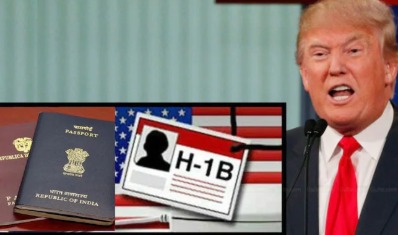
The H-1B visa program—a gateway for skilled foreign workers, especially Indian tech professionals—has become the latest flashpoint in U.S. immigration policy.
After weeks of confusion, Team Trump has finally clarified who will be exempted from the proposed $100,000 H-1B visa fee, bringing partial relief to thousands of U.S. companies and overseas applicants.
Background — The Fee That Shook the Tech World
Earlier this month, the Trump campaign announced a sweeping reform plan aimed at “protecting American jobs,” including a $100,000 application fee for H-1B visas.
The proposal immediately triggered strong reactions from Silicon Valley firms, Indian IT giants, and international students, who feared it would effectively shut out global talent.
The new clarification, however, indicates a more selective approach rather than a blanket fee.
Who Will Be Exempted
According to sources close to the campaign, the following categories may be exempted or partially relieved from the proposed $100,000 H-1B fee:
Non-profit and Research Institutions:
Universities, public hospitals, and government-funded research organizations will likely remain exempt to protect academic and scientific collaboration.
Small and Medium-Sized Businesses (SMBs):
Companies under a defined revenue threshold could qualify for partial waivers to prevent innovation slowdowns.
Green-Card-Track Applicants:
H-1B workers already in the pipeline for permanent residency might face reduced fees to avoid penalizing long-term legal immigrants.
National-Interest Occupations:
Jobs in healthcare, cybersecurity, and AI research—considered essential for U.S. national security—may receive exemptions or expedited processing.
These exemptions aim to balance domestic job protection with America’s dependency on skilled global talent.
Impact on Indian IT and Global Talent Flow
India, which accounts for nearly 70% of H-1B visa holders, could still see significant disruptions.
Major outsourcing firms like TCS, Infosys, and Wipro may face higher operational costs if large-scale exemptions aren’t extended to commercial tech employers.
Analysts warn that such policies might push skilled professionals toward Canada, the UK, and Australia, where immigration routes are comparatively smoother.
However, if the exemptions hold, U.S. startups and essential sectors could avoid a crippling talent shortage.
Industry Reaction
U.S. business groups and tech associations have cautiously welcomed the clarification.
“While the fee remains excessive, targeted exemptions show that policymakers understand the critical role skilled immigrants play,” said one Silicon Valley executive.
Indian industry leaders echoed similar sentiments, calling for clear documentation and transparent timelines once the proposal moves from campaign rhetoric to formal policy.
FAQs:
Q1. What is the proposed $100,000 H-1B visa fee?
A1. It’s a proposed application fee under Team Trump’s immigration plan, aimed at discouraging what they call “cheap foreign labor imports.”
Q2. Who will be exempted from the new H-1B fee?
A2. Likely exemptions include non-profits, universities, small businesses, and national-interest occupations like healthcare and cybersecurity.
Q3. How will this affect Indian tech companies?
A3. Large Indian IT firms may face higher visa costs unless commercial tech employers are included in the exemption list, potentially reducing their U.S. hiring.
Q4. Is this fee already in effect?
A4. No. As of now, it’s a proposed campaign policy, not official legislation. Actual implementation would require congressional approval.
Published on : 21st October
Published by : SMITA
www.vizzve.com || www.vizzveservices.com
Follow us on social media: Facebook || Linkedin || Instagram
🛡 Powered by Vizzve Financial
RBI-Registered Loan Partner | 10 Lakh+ Customers | ₹600 Cr+ Disbursed
https://play.google.com/store/apps/details?id=com.vizzve_micro_seva&pcampaignid=web_share