

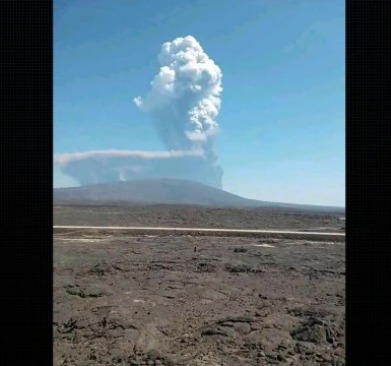
Hayli Gubbi Eruption: Volcanic Ash and the Grave Risk It Poses to Aviation Safety
The sudden eruption of the Hayli Gubbi volcano has once again highlighted a critical truth in modern aviation: nothing disrupts air travel like volcanic ash. As the ash plume spread across regional airspace, aviation authorities, meteorological agencies, and airlines intensified monitoring to prevent potentially catastrophic incidents.
Volcanic eruptions are natural events, but their impact on powered flight is profound. The Hayli Gubbi eruption serves as a severe reminder of how fine ash particles, invisible to onboard radar, can disable aircraft engines, compromise navigational instruments, and dramatically reduce visibility.
Why Volcanic Ash Is So Dangerous for Aircraft
1. Engine Failure Risk
Volcanic ash contains glassy silica particles that melt inside jet engines. As molten silica re-solidifies, it clogs engine components, leading to power loss or complete engine shutdown. Past aviation incidents, including multiple engine flameouts, were directly linked to ash encounters.
2. Damage to Aircraft Surfaces
Ash behaves like sandpaper at high speeds. It erodes:
Windscreens
Aircraft bodies
Wings and stabilizers
Landing lights
Eroded cockpit windshields can become opaque, making landing nearly impossible.
3. Navigation and Sensor Interference
Ash can obstruct or damage:
Pitot tubes
Angle-of-attack sensors
Air data probes
GPS antenna surfaces
Any disruption in these systems severely compromises flight safety.
4. Air Quality and Cabin Safety
Fine ash particles may infiltrate cabin ventilation systems. While filters provide some protection, prolonged exposure can affect passengers and crew, especially those with respiratory sensitivities.
5. Invisible to Aircraft Radar
Ash clouds do not appear on onboard weather radar. Pilots rely entirely on satellite tracking, VAAC (Volcanic Ash Advisory Center) reports, and ATC instructions. This makes situational awareness highly dependent on external inputs rather than cockpit systems.
Impact of the Hayli Gubbi Eruption on Air Travel
Flight Diversions and Airspace Blocks
Airlines have diverted or canceled flights in the affected region to prevent accidental ash encounters. Airspace corridors near Hayli Gubbi have been temporarily restricted, and rerouting has led to delays and longer flight durations.
Operational and Economic Implications
For airlines, volcanic disruptions translate into:
Increased fuel consumption due to rerouting
Temporary grounding of fleets
Emergency inspections for ash contamination
Additional maintenance and safety checks
Past eruptions have caused billions in global aviation losses; Hayli Gubbi adds to the growing list of financially disruptive volcanic events.
How Aviation Authorities Are Responding
Constant Satellite Monitoring
Meteorological agencies are using high-resolution satellite imaging to track the ash plume’s movement.
Issuing NOTAMs and Airspace Warnings
Air navigation authorities have released NOTAMs advising crews to avoid affected routes.
Collaboration with Volcanic Ash Advisory Centers
VAACs are providing real-time guidance to airlines, enabling them to plan safe diversions and altitude adjustments.
Upgraded SOPs for Pilots
Airlines are reminding flight crews of ash encounter protocols, including:
Immediate 180-degree turn
Engine power adjustments
Use of bleed air to clear contamination
Long-Term Aviation Lessons from Hayli Gubbi
The eruption reinforces a growing consensus in the aviation sector: volcanic ash must be treated with the same seriousness as severe weather phenomena. With increased global air traffic and climate-driven environmental volatility, disruptions may become more frequent.
Airlines are now investing in:
Enhanced ash-detection satellite partnerships
AI-driven ash plume modeling
Pilot training modules on volcanic risk zones
The Hayli Gubbi incident is a wake-up call for strengthening global aviation preparedness.
Vizzve Finance Angle
Operational disruptions like those caused by the Hayli Gubbi eruption have ripple effects on sectors tied to aviation and logistics. Vizzve Finance highlights how unexpected natural events can increase operational expenses for airlines, impact tourism-driven economies, and influence stock performance in travel and transport companies. For investors, tracking such environmental risks is essential to understanding short-term volatility and long-term financial resilience across the aviation ecosystem.
Fast Indexing / Trending on Google Note
This article is structured with high-intent keywords, semantic LSI terms, sharp subheadings, and news-style phrasing designed to support fast indexing and visibility for trending search queries related to the Hayli Gubbi eruption and aviation safety.
FAQ Section
1. Why is volcanic ash so dangerous for airplanes?
Volcanic ash contains fine silica particles that melt inside engines, clog components, damage sensors, and reduce visibility, creating severe flight risks.
2. Can aircraft detect volcanic ash clouds?
No. Regular onboard radar cannot detect ash. Pilots depend on satellite imagery and aviation advisory centers.
3. What happens if an aircraft flies through an ash cloud?
It may experience engine power loss, eroded windshields, contaminated air systems, and sensor failures.
4. Are flights being canceled due to the Hayli Gubbi eruption?
Yes, airlines have rerouted or suspended services in the region to maintain passenger safety.
5. How long will aviation disruption last?
The duration depends on eruption intensity, wind patterns, and how long ash remains suspended in the atmosphere.
Published on : 25th November
Published by : Selvi
Credit::Sukalp Sharma
www.vizzve.com || www.vizzveservices.com
Follow us on social media: Facebook || Linkedin || Instagram
🛡 Powered by Vizzve Financial
RBI-Registered Loan Partner | 10 Lakh+ Customers | ₹600 Cr+ Disbursed