

Introduction
Health insurance is important for managing unexpected medical expenses. However, purchasing a health insurance policy is not enough. You should also maintain all important documents, medical records and payment receipts to avoid problems during claim settlement.
Keeping your health insurance documents organised helps you access information quickly, renew your policy on time and submit claims without unnecessary delays.
In this blog, we will explore the important health insurance documents you should maintain, why they matter and how to organise them safely.
1. Health Insurance Policy Documents
Your health insurance policy document is one of the most important records to maintain.
Keep a digital and printed copy of:
-
Health insurance policy document.
-
Policy number and customer ID.
-
Policyholder's name and details.
-
Sum insured and coverage information.
-
Policy start and expiry dates.
-
Terms and conditions.
-
List of exclusions and waiting periods.
Why is it important?
These documents help you understand your coverage and check whether a medical expense is covered under your policy.
2. Premium Payment Receipts
Always maintain proof of your health insurance premium payments.
Important records include:
-
Premium payment receipts.
-
Bank transaction statements.
-
UPI payment confirmations.
-
Renewal payment receipts.
-
Tax-related premium certificates, if applicable.
These records help verify that your policy premiums have been paid and may be useful for tax documentation.
3. Medical Reports and Hospital Records
Medical documents are essential when submitting health insurance claims.
Maintain copies of:
-
Doctor consultation reports.
-
Prescriptions.
-
Blood test reports.
-
X-ray and scan reports.
-
Discharge summaries.
-
Hospital admission records.
-
Surgery and treatment details.
-
Medical bills and receipts.
Organising these documents makes it easier to provide supporting information during claim processing.
4. Health Insurance Claim Documents
Whenever you submit a health insurance claim, keep copies of all related documents.
Important claim records include:
-
Health insurance claim form.
-
Hospital bills and payment receipts.
-
Discharge summary.
-
Doctor's prescriptions.
-
Diagnostic reports.
-
Pharmacy bills.
-
Claim acknowledgement.
-
Insurance company's approval or rejection letter.
-
Claim settlement statement.
Keeping these records helps you track claim progress and resolve questions or disputes if they arise.
5. Personal Identification Documents
Insurance companies may require identity and address verification documents.
Keep updated copies of:
-
Aadhaar card.
-
PAN card.
-
Passport, if applicable.
-
Voter ID.
-
Address proof.
-
Recent passport-size photographs, if required.
Ensure that your personal details match the information provided in your insurance policy.
6. Family Member and Nominee Details
If your policy covers multiple family members, maintain their information separately.
Keep records of:
-
Names and dates of birth of insured members.
-
Relationship with the policyholder.
-
Nominee details.
-
Family member identification documents.
-
Health cards for each insured member.
-
Previous medical history, where relevant.
This helps avoid confusion when accessing healthcare services or submitting claims.
7. Previous Health Insurance Records
If you have changed your insurance provider or renewed your policy, maintain previous insurance records.
These may include:
-
Previous policy documents.
-
Renewal receipts.
-
Policy portability records.
-
Previous claim details.
-
No-claim bonus information.
-
Continuity and waiting-period records.
These documents can help establish your insurance history and continuity of coverage.
8. How to Organise Health Insurance Documents Safely
Keeping documents organised makes insurance management easier.
Follow these simple tips:
-
Create a separate folder for health insurance documents.
-
Save scanned copies of important records.
-
Organise medical bills by treatment date.
-
Keep policy documents in both digital and physical formats.
-
Use clear file names for easy identification.
-
Store digital copies in a secure, password-protected location.
-
Share important documents only with authorised people.
-
Review your documents whenever your policy is renewed.
9. Common Mistakes to Avoid
Avoid these mistakes while maintaining health insurance records:
-
Losing original medical bills and receipts.
-
Forgetting to save premium payment confirmations.
-
Not updating personal information.
-
Ignoring policy renewal dates.
-
Not maintaining previous policy documents.
-
Mixing medical records with unrelated files.
-
Sharing sensitive medical information through unsafe platforms.
-
Failing to check claim documentation requirements.
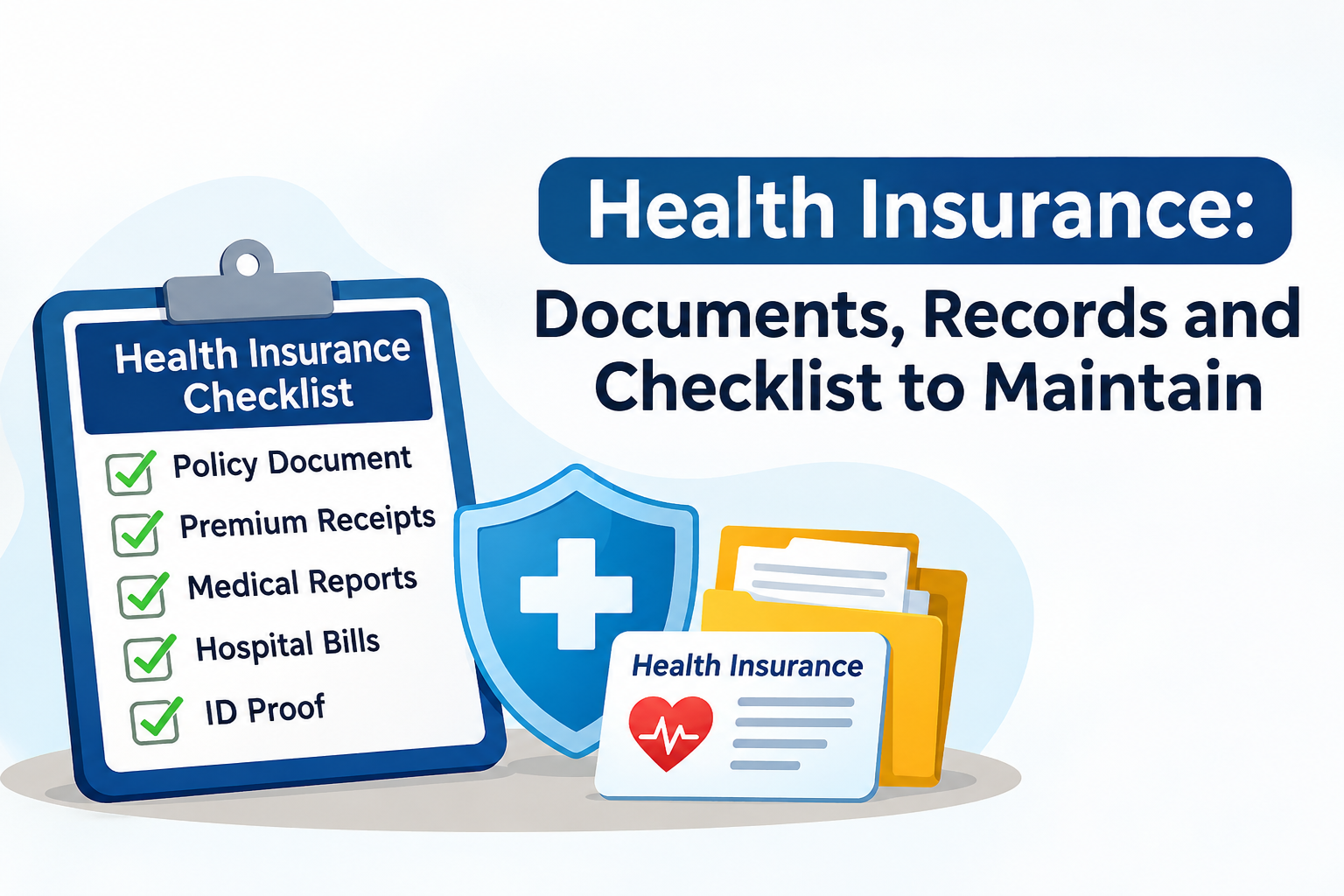
10. Health Insurance Documents Checklist
Use this simple checklist to make sure your important records are maintained.
Your document checklist
Benefits of Maintaining Health Insurance Records
Maintaining proper insurance records offers several advantages:
-
Faster claim preparation: Important documents are readily available.
-
Better financial management: Premium payments and medical expenses are easier to track.
-
Easy policy renewal: Previous policy information is available.
-
Reduced documentation errors: Organised records help avoid missing information.
-
Better family protection: Family members can access essential insurance details when needed.
Frequently Asked Questions (FAQs)
1. Which documents should I keep for health insurance?
Keep your policy document, premium receipts, identity proof, medical reports, prescriptions, hospital bills and claim-related records.
2. Is it necessary to keep a printed copy of my health insurance policy?
It is useful to maintain a printed copy, but a secure digital copy is also important.
3. How long should I keep medical bills?
Keep medical bills and claim documents for as long as they may be needed for insurance, tax, legal or medical purposes.
4. Are medical reports required for health insurance claims?
Yes, medical reports may be required depending on the treatment and claim type.
5. Should I save health insurance premium receipts?
Yes. They provide proof of payment and may be useful for tax purposes.
6. Can I use digital documents for health insurance claims?
Many insurers accept digital claim documents, subject to their procedures and requirements.
7. What is a health insurance claim form?
It is a form containing information about the insured person, treatment and medical expenses.
8. Why should I maintain previous health insurance policies?
Previous policies help you track coverage history, continuity benefits and portability details.
9. Should I update nominee details?
Yes. Review nominee information whenever your personal or family circumstances change.
10. Where should I store health insurance documents?
Store them in a secure digital folder and keep important physical documents safely.
11. What happens if I lose my hospital bills?
Contact the hospital to ask for duplicate bills or certified copies and check with your insurer about acceptable alternatives.
12. Do I need to maintain separate records for every family member?
Yes. Separate folders or clearly labelled sections make it easier to find individual medical and insurance records.
Conclusion
Maintaining health insurance documents, medical reports and payment records is an important part of financial planning. Proper documentation helps you prepare claims, manage renewals and access important information whenever required.
Make it a habit to organise your insurance documents regularly. A simple checklist and secure digital storage system can help you avoid unnecessary confusion during medical emergencies.
Remember: Health insurance provides financial protection, but keeping your documents organised helps you use that protection more effectively.
Published on : 23rd Novemebr
Published by : monisha
www.vizzve.com || www.vizzveservices.com
Follow us on social media: Facebook || Linkedin || Instagram
🛡 Powered by Vizzve Financial
RBI-Registered Loan Partner | 10 Lakh+ Customers | ₹600 Cr+ Disbursed