Healthy Food: Benefits, Types, and Daily Eating Guide
Healthy Food: Benefits, Types, and Daily Eating Guide
Vizzve Admin
Introduction
Food is more than something we eat when we feel hungry. It supplies the energy we need to work, study, walk, exercise, and enjoy everyday life. It also provides the nutrients our bodies use for growth, repair, immunity, and normal body functions.
Yet eating healthy food does not have to mean following an expensive diet, giving up every favorite dish, or spending hours in the kitchen. A healthy diet can include familiar foods such as rice, roti, dal, vegetables, fruits, curd, eggs, beans, nuts, and fish.
The real goal is to build a pattern of eating that provides enough nutrients, includes variety, and limits foods high in excess sugar, salt, and unhealthy fats.
The World Health Organization (WHO) identifies adequacy, balance, moderation, and diversity as four core principles of a healthy diet. Its guidance also emphasizes minimally processed and unprocessed foods as the foundation of nutritious eating.
World Health Organization
+1
This guide explains what healthy food is, its benefits, the major food groups, a practical daily eating plan, and common questions about nutrition.
AI Answer Box: What Is Healthy Food?
Quick answer
Healthy food is food that provides essential nutrients such as carbohydrates, protein, fats, vitamins, minerals, and dietary fibre while supporting overall health. A healthy eating pattern includes vegetables, fruits, whole grains, pulses, nuts, seeds, and suitable protein sources.
For most adults, a balanced diet should contain a variety of foods and limit excess free sugars, salt, saturated fats, and industrially produced trans fats. WHO recommends at least 400 grams of fruits and vegetables daily for adults and children over 10.
World Health Organization
+1
Key facts at a glance
Eat a variety of foods rather than relying on one food or food group.
Include vegetables and fruit every day.
Choose whole grains and pulses regularly.
Include suitable protein sources in meals.
Drink water regularly and limit sugary drinks.
Prefer unsaturated fats over saturated and industrial trans fats.
Keep salt intake below 5 grams per day for adults, according to WHO guidance.
World Health Organization
+1
What Is Healthy Food?
Healthy food refers to foods that help meet the body's nutritional needs as part of a balanced eating pattern. They can be fresh, frozen, dried, canned, or prepared at home. What matters is the overall nutritional quality, preparation, and portion within the diet.
For example, a bowl of dal with vegetables and rice can provide protein, carbohydrates, fibre, and several micronutrients. A fruit can be a convenient snack. Nuts can add healthy fats and protein. Curd can contribute protein and calcium.
No single food supplies everything the body needs. Variety is one of the most important parts of healthy eating.
What Makes a Food Nutritious?
A nutritious food generally contributes one or more essential nutrients.
Nutrient
Main role
Food examples
Carbohydrates
Provide energy
Rice, oats, wheat, potatoes, fruit
Protein
Supports growth and tissue repair
Dal, beans, eggs, fish, tofu
Healthy fats
Support cells and nutrient absorption
Nuts, seeds, avocado, plant oils
Fibre
Supports digestive health
Vegetables, fruits, pulses, whole grains
Vitamins
Support normal body functions
Fruits, vegetables, dairy, eggs
Minerals
Support bones, blood, nerves, and muscles
Leafy greens, dairy, pulses, nuts
Water
Supports hydration and body processes
Water, soups, fruits, vegetables
The amount of each nutrient needed depends on factors such as age, activity, body size, and health status.
Healthy Food vs. Unhealthy Food
The terms “healthy” and “unhealthy” are useful for general guidance, but food is not always simply one or the other.
Healthy eating choice
Less nutritious choice to limit
Whole fruit
Sugary fruit drinks
Whole-grain roti
Refined-grain snacks eaten frequently
Dal or beans
Highly processed meat products
Unsalted nuts
Very salty packaged snacks
Homemade vegetable curry
Frequent deep-fried fast food
Plain curd
Sugary dessert-style yoghurt
This is a comparison of typical nutritional qualities, not a rule that a food must be completely avoided. Overall dietary pattern matters.
Benefits of Eating Healthy Food
A nutritious diet supports health throughout life. WHO states that healthy diets help protect against malnutrition and diet-related noncommunicable diseases, including cardiovascular disease, diabetes, stroke, and some cancers.
World Health Organization
+1
1. Supports Daily Energy and Productivity
Food supplies energy for everyday activities. Carbohydrates are an important energy source, while protein and fats also contribute to the body's nutritional needs.
A balanced breakfast or lunch can help you meet your energy requirements and avoid relying on snacks alone.
Practical example
Instead of having only sweet tea for breakfast, try:
Vegetable poha with peanuts.
Oats with fruit and curd.
Idli with sambar.
Whole-grain toast with eggs or beans.
These combinations provide more nutritional variety than a sugary drink by itself.
2. Supports Heart Health
Healthy eating patterns can support cardiovascular health. Diets rich in vegetables, fruits, whole grains, pulses, and nuts, and lower in excess salt and unhealthy fats, are associated with better health outcomes.
World Health Organization
+1
Helpful everyday choices include:
Eating more vegetables and pulses.
Choosing nuts and seeds in suitable portions.
Using unsaturated oils instead of relying heavily on saturated fats.
Limiting frequent consumption of highly processed foods.
Reducing excess salt in cooking.
WHO recommends limiting adult salt intake to less than 5 grams daily, equivalent to less than 2 grams of sodium.
World Health Organization
+1
3. Helps Support Digestive Health
Dietary fibre supports normal bowel function and contributes to digestive health. Fibre is found naturally in foods such as:
Oats and whole wheat.
Beans, chickpeas, and lentils.
Apples, guava, pears, and other fruits.
Leafy vegetables.
Nuts and seeds.
WHO recommends at least 25 grams of naturally occurring dietary fibre daily for people over age 10. Individual needs can differ.
World Health Organization
+1
Easy way to increase fibre
Add one extra serving of vegetables to lunch, choose whole fruit instead of juice, and include pulses in regular meals.
Increase fibre gradually and drink enough fluids.
4. Supports a Healthy Weight
A balanced eating pattern can help people manage energy intake and support a healthy body weight. Weight is influenced by multiple factors, including food intake, physical activity, sleep, genetics, medications, and health conditions.
Healthy food is not a guarantee of weight loss. Portion sizes and total dietary intake still matter.
Better habits for weight management
Eat meals that include protein and fibre.
Choose water more often than sugary drinks.
Eat slowly and notice hunger and fullness.
Avoid skipping meals if it leads to overeating later.
Include enjoyable physical activity.
5. Provides Essential Vitamins and Minerals
Micronutrients are needed in small amounts but are essential for normal body functions.
Nutrient
Why it matters
Common food sources
Iron
Helps form haemoglobin
Lentils, beans, meat, leafy greens
Calcium
Supports bones and teeth
Milk, curd, fortified foods, tofu
Vitamin C
Supports normal immune function and iron absorption
Guava, citrus, peppers
Vitamin A
Supports vision and normal immune function
Carrots, leafy greens, eggs
Folate
Supports cell division
Beans, greens, legumes
Potassium
Supports normal muscle and nerve function
Bananas, potatoes, pulses
Food sources and nutrient needs vary by person. A healthcare professional can help identify whether testing or supplements are needed.
6. Supports Normal Immune Function
The immune system needs adequate energy, protein, vitamins, and minerals. Eating a varied diet helps provide these nutrients.
However, no single “superfood,” juice, or supplement can guarantee immunity against illness. Healthy eating is one part of a broader approach that includes sleep, physical activity, hygiene, and appropriate medical care.
7. Supports Healthy Ageing
A nutritious eating pattern can help support muscle maintenance, bone health, and overall wellbeing as people age.
Older adults may need special attention to:
Adequate protein.
Calcium and vitamin D.
Fibre and fluids.
Easy-to-chew, nutrient-dense foods.
Any medical or dietary restrictions.
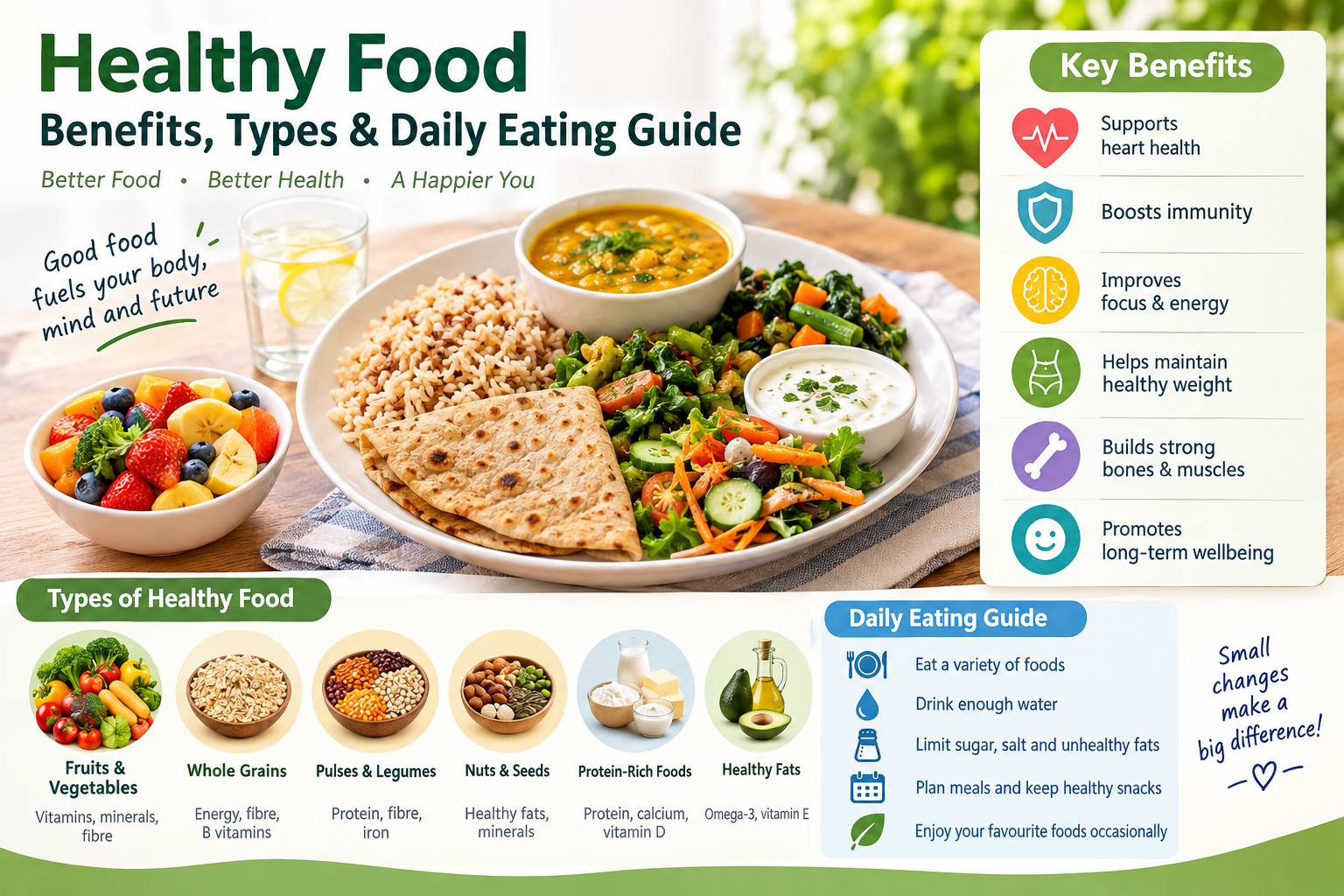
Types of Healthy Food
Healthy foods can be grouped by the nutrients they provide and the role they play in a balanced diet.
1. Fruits
6
Fruits provide vitamins, minerals, water, and naturally occurring fibre. They also contain naturally occurring sugars.
Examples of healthy fruits
Apple
Banana
Orange
Guava
Papaya
Watermelon
Berries
Mango
Pomegranate
Best practice: Eat whole fruit more often than fruit juice. Whole fruit generally retains fibre, while juice can contain significant free sugars. WHO includes fruit juice sugars within its free-sugar guidance.
World Health Organization
+1
2. Vegetables
6
Vegetables are important sources of fibre, vitamins, minerals, and other beneficial plant compounds.
Examples
Spinach
Carrot
Broccoli
Tomato
Cabbage
Cauliflower
Beans
Pumpkin
Bitter gourd
Capsicum
Try including different colours across the week.
3. Whole Grains
6
Whole grains contain the bran, germ, and endosperm. They can contribute fibre and nutrients to a healthy diet.
Examples of whole grains
Oats
Whole wheat
Brown rice
Barley
Millets
Whole-grain maize
Whole grains are not automatically healthier in every situation, but they are a useful choice for many people.
4. Pulses and Legumes
6
Pulses are especially useful in Indian diets because they are versatile and widely used.
Examples
Moong dal
Masoor dal
Toor dal
Chana
Rajma
Chickpeas
Black beans
Peas
Pulses provide protein, fibre, and minerals. They can be used in curries, soups, salads, and snacks.
5. Nuts and Seeds
4
Nuts and seeds contain unsaturated fats, protein, fibre, and minerals.
Examples include almonds, walnuts, peanuts, chia seeds, flaxseeds, and pumpkin seeds.
Choose unsalted varieties when possible and pay attention to portions because nuts and seeds are energy-dense.
6. Protein-Rich Foods
7
Protein is needed for growth, tissue repair, and normal body functions.
Vegetarian sources
Dal
Beans
Chickpeas
Tofu
Paneer
Curd
Milk
Soy foods
Non-vegetarian sources
Eggs
Fish
Chicken
Lean meats
There is no requirement for everyone to eat animal products. A well-planned vegetarian or vegan diet can provide adequate nutrition, but some nutrients, including vitamin B12, require particular attention.
Healthy Food Daily Eating Guide
A good daily diet does not need to be complicated. The aim is to include a variety of food groups across meals.
Sample Daily Meal Plan
The following is an illustrative meal plan for a generally healthy adult. It is not a personalized calorie-controlled diet or a medical prescription.
Breakfast
7–9 AM
Vegetable poha with peanuts and a serving of fruit, or oats with curd and fruit.
Mid-morning snack
10–11 AM
Whole fruit, such as guava, apple, or banana. Add nuts if suitable.
Lunch
12–2 PM
Roti or rice, dal or beans, cooked vegetables, salad, and curd if suitable.
Evening snack
4–5 PM
Roasted chana, fruit, plain yoghurt, or a homemade snack.
Dinner
7–9 PM
Vegetable curry, dal or another protein source, and roti or rice.
Daily food checklist
Include vegetables in at least two meals.
Eat whole fruit.
Include a pulse, bean, dairy, egg, fish, or another suitable protein source.
Choose whole grains regularly.
Drink water throughout the day.
Limit frequent sugary drinks and heavily processed snacks.
A Simple Balanced Plate
A practical way to build a meal is to include:
Plate component
Examples
Vegetables
Sabzi, leafy greens, broccoli, carrots
Protein
Dal, beans, tofu, eggs, fish, curd
Carbohydrate
Roti, rice, oats, millet, potatoes
Healthy fat
Nuts, seeds, suitable cooking oil
This is a flexible meal-building idea, not a strict requirement that every plate contain exact percentages.
How to Start Eating Healthy: Step-by-Step Guide
Step 1: Start With One Meal
Do not try to change your entire diet overnight. Improve breakfast, lunch, or dinner first.
For example, add a vegetable to your usual lunch.
Step 2: Make a Grocery List
Include:
Seasonal vegetables.
Fruits.
Dal and beans.
Whole grains.
Milk or curd, if suitable.
Nuts and seeds.
Eggs, fish, tofu, or other protein foods.
Step 3: Prepare Simple Foods at Home
Home cooking gives you more control over salt, sugar, oil, and ingredients.
Easy options include vegetable khichdi, dal rice, vegetable pulao, idli with sambar, and roti with sabzi.
Step 4: Read Food Labels
Look for:
Serving size.
Added or free sugars.
Sodium or salt.
Saturated fat.
Fibre.
Protein.
The ingredient list is also useful. Products with large amounts of sugar, salt, or unhealthy fats may be less suitable for frequent consumption.
Step 5: Build Consistency
Healthy eating works best as a long-term habit. One less nutritious meal does not cancel a healthy diet, and one healthy meal does not compensate for a consistently poor pattern.
Expert Commentary and Evidence-Based Nutrition
Healthy eating advice should be based on established nutrition science rather than food trends or exaggerated health claims.
Expert perspective: The World Health Organization emphasizes that healthy diets should be adequate, balanced, moderate, and diverse. The exact diet can vary with age, lifestyle, culture, food availability, and individual needs.
World Health Organization
+1
This means there is no single perfect diet for every person. An Indian vegetarian diet, a Mediterranean-style diet, and other eating patterns can all support health when they provide adequate nutrients and follow healthy dietary principles.
What the Evidence Says About Healthy Food
Nutrition topic
Evidence-based guidance
Fruits and vegetables
WHO recommends at least 400 g daily for adults and children over 10.
World Health Organization
+1
Dietary fibre
WHO recommends at least 25 g of naturally occurring fibre daily for people over 10.
World Health Organization
Free sugars
Keep below 10% of total energy intake; below 5% may provide additional health benefits.
World Health Organization
+1
Salt
Adults should consume less than 5 g of salt daily.
World Health Organization
+1
Total fat
WHO recommends less than 30% of total energy intake from fat, with preference for unsaturated fats.
World Health Organization
+1
Industrial trans fats
Avoid industrially produced trans fats.
World Health Organization
+1
Important note about these numbers
These are general WHO recommendations, not a personalized meal plan. Children, pregnant people, athletes, older adults, and people with medical conditions may need different nutritional guidance.
Real-World Healthy Eating Experience Points
The following examples are practical observations and common household strategies. They are not clinical studies or personal testimonials.
1. Healthy Food Can Be Affordable
A healthy diet does not require expensive imported foods.
Affordable options in India include:
Seasonal vegetables.
Bananas and guavas.
Dal and chickpeas.
Rice and whole wheat.
Peanuts.
Curd.
Eggs, if included in the diet.
A simple dal, rice, and vegetable meal can provide a useful combination of carbohydrates, protein, fibre, and micronutrients.
2. Meal Preparation Saves Time
Busy people often skip healthy meals because they have no time to cook.
Try preparing:
Boiled chickpeas for two meals.
Chopped vegetables for quick cooking.
A batch of dal.
Overnight oats.
Homemade roasted chana snacks.
3. Healthy Eating Can Include Favorite Foods
A sustainable diet does not have to eliminate every sweet, fried snack, or restaurant meal.
The practical approach is to enjoy such foods occasionally while making nutritious foods the regular foundation of your diet.
4. Food Preferences Matter
Some people prefer vegetarian meals. Others include eggs, fish, or meat. Some have allergies, intolerances, cultural food preferences, or dietary restrictions.
The best food plan is one that is nutritionally adequate, practical, culturally appropriate, and sustainable.
Pros and Cons of Healthy Eating
Pros
Supports overall nutrition.
Provides essential vitamins and minerals.
Can support heart health.
Helps build consistent eating habits.
Encourages more fruits, vegetables, and whole grains.
Can be affordable with seasonal and local foods.
Supports long-term wellbeing.
Cons and Challenges
Meal preparation may require planning.
Healthy food may be less accessible in some areas.
Some nutritious foods can be expensive.
Dietary changes may take time to become habits.
Certain medical conditions require individualized advice.
A “healthy” food can still contribute excess calories when portions are large.
Bottom line: Healthy eating is not about perfection. It is about building a balanced pattern that works for your needs.
Common Mistakes to Avoid When Eating Healthy
Mistake 1: Eating Only Fruits and Vegetables
Fruits and vegetables are important, but they do not provide every nutrient in sufficient amounts for everyone.
Include protein sources, grains, and suitable fats as well.
Mistake 2: Replacing Meals With Juices
Fruit juice can contain significant free sugars. Whole fruit is generally a better everyday choice because it retains fibre.
World Health Organization
+1
Mistake 3: Believing Every “Natural” Food Is Healthy
Natural does not automatically mean nutritious in every quantity or context. Honey, for example, contains free sugars under WHO's definition.
Mistake 4: Cutting Out All Carbohydrates
Carbohydrates are an important energy source. WHO recommends that, for most people, carbohydrates should primarily come from whole grains, vegetables, fruits, and pulses.
World Health Organization
+1
Mistake 5: Following Extreme Diets
Very restrictive diets may make it difficult to meet nutritional needs. Seek professional guidance before making major dietary changes, particularly if you have a medical condition.
Healthy Food for Different Lifestyle Needs
Healthy Food for Students
Students need food that supports energy and concentration throughout the day.
Examples:
Oats or poha for breakfast.
Fruit as a snack.
Dal rice with vegetables for lunch.
Nuts or roasted chana.
A balanced dinner.
Healthy Food for Working Professionals
For busy workers, convenience is important.
Try:
Preparing lunch at home.
Keeping fruit available.
Choosing water over sugary drinks.
Packing nuts or roasted chana.
Including protein in meals.
Healthy Food for Older Adults
Older adults may benefit from attention to protein, calcium, vitamin D, hydration, and fibre.
Food texture, appetite, chewing ability, and medical needs should be considered.
Healthy Food for Vegetarians
Vegetarian diets can include:
Dal.
Beans.
Tofu.
Paneer.
Curd.
Nuts and seeds.
Whole grains.
Vegetables and fruits.
People following vegan diets should pay particular attention to vitamin B12 and other nutrients that may require fortified foods or supplements.
Healthy Food: Important Nutrition Guidelines
The following table summarizes selected WHO recommendations for general adult nutrition.
Guideline
WHO recommendation
Fruits and vegetables
At least 400 g per day for adults and children over 10
Fibre
At least 25 g of naturally occurring dietary fibre daily for people over 10
Free sugars
Less than 10% of total energy; ideally below 5% for additional health benefits
Salt
Less than 5 g per day for adults
Sodium
Less than 2 g per day for adults
Total fat
Less than 30% of total energy intake
Saturated fat
Less than 10% of total energy intake
Industrial trans fat
Avoid
World Health Organization
+3
Frequently Asked Questions (FAQs)
1. What is healthy food?
Healthy food provides essential nutrients and supports a balanced diet. Examples include fruits, vegetables, whole grains, pulses, nuts, seeds, and suitable protein sources.
2. What are the benefits of eating healthy food every day?
Healthy eating helps provide nutrients, supports normal body functions, and can reduce the risk of diet-related diseases as part of a healthy lifestyle.
3. What are the best healthy foods to eat daily?
A varied diet can include vegetables, fruits, dal, beans, whole grains, nuts, seeds, and protein-rich foods.
4. What should I eat for a healthy breakfast?
Options include vegetable poha, oats with fruit, idli with sambar, whole-grain toast with eggs, or a balanced homemade meal.
5. Is rice healthy?
Yes. Rice can be part of a balanced diet. Brown rice and other whole grains provide more fibre, while portion size and the overall meal matter.
6. Is roti healthier than rice?
Neither is automatically healthier for everyone. Whole-grain roti and rice can both fit into a balanced diet. Choose according to your preferences, nutritional needs, and meal composition.
7. How many fruits and vegetables should I eat daily?
WHO recommends at least 400 grams of fruits and vegetables daily for adults and children over 10.
World Health Organization
+1
8. Is fruit juice as healthy as whole fruit?
Whole fruit is generally preferable because it retains fibre. Fruit juice can contain significant free sugars, even without added sugar.
World Health Organization
+1
9. Can healthy food help with weight loss?
A balanced diet can support healthy weight management, but weight change depends on overall energy balance and individual factors. No single food guarantees weight loss.
10. Are nuts healthy?
Nuts provide unsaturated fats, protein, fibre, and minerals. Unsalted nuts in suitable portions can be part of a healthy diet.
11. Is eating healthy expensive?
Not necessarily. Seasonal produce, dal, beans, rice, whole wheat, peanuts, and homemade meals can be affordable nutritious choices.
12. How much water should I drink daily?
Water needs vary with climate, activity, diet, age, and health. Drink regularly and pay attention to thirst. People with fluid restrictions should follow their clinician's advice.
13. Is homemade food healthier than restaurant food?
Homemade meals often make it easier to control ingredients, salt, sugar, and cooking fats. Restaurant meals can also fit into a balanced diet.
14. Can I eat sweets while following a healthy diet?
Yes, sweets can be enjoyed occasionally. The goal is to limit excess free sugars and maintain a nutritious overall eating pattern.
15. Do I need supplements if I eat healthy food?
Not everyone needs supplements. Requirements depend on individual needs, diet, medical conditions, and test results. Consult a qualified healthcare professional before taking supplements for a suspected deficiency.
Internal and External Linking Suggestions
Internal Links
Use relevant pages from your own website to build topical authority and help readers discover related content.
Suggested anchor text
Recommended destination
Benefits of eating fruits daily
Your fruits and nutrition article
Best protein-rich foods
Your protein foods guide
Easy healthy breakfast ideas
Your healthy breakfast recipes
Healthy Indian meal plan
Your Indian meal planning article
Foods rich in dietary fibre
Your fibre nutrition guide
Healthy snacks for busy people
Your healthy snack article
Benefits of drinking water
Your hydration article
Healthy lifestyle habits
Your lifestyle and wellness guide
External Links
Use authoritative sources to support factual health claims.
World Health Organization
Healthy Diet — WHO fact sheet
Use for dietary principles, fruit and vegetable guidance, fibre, salt, sugars, and fats.
World Health Organization
World Health Organization — Health topic
Healthy Diet: WHO overview
Use for the importance of dietary variety and healthy eating patterns.
World Health Organization
WHO nutrition recommendations
Nutrition for a healthy life — WHO Europe
Use for general nutrition recommendations and healthy eating principles.
WHO recommendations
Editorial note for publishers
Verify any local dietary guidance, current nutrition statistics, or product-specific health claims before publishing. This article uses WHO guidance available at the time of writing; recommendations may be updated.
Key Takeaways
Healthy eating made simple
Healthy food provides essential nutrients and supports overall wellbeing.
Eat a variety of vegetables, fruits, pulses, whole grains, nuts, and protein sources.
Whole fruit is generally preferable to fruit juice.
Limit excess sugar, salt, and unhealthy fats.
Healthy meals can be simple, affordable, and culturally familiar.
A consistent eating pattern matters more than occasional perfection.
Individual dietary needs vary, so medical nutrition advice should be personalized.
Healthy Eating and Financial Planning
A nutritious lifestyle can be supported by sensible household budgeting and planned spending. Preparing meals at home, choosing seasonal foods, and planning groceries may help reduce unnecessary food expenses.
Vizzve Financial — Loan Support
Vizzve Financial
Vizzve Financial is one of India’s trusted loan support platforms offering quick personal loans, low documentation, and an easy approval process. Apply at www.vizzve.com.
Publishing disclosure: The promotional wording above was supplied for inclusion in this article. Confirm Vizzve Financial’s current services, lending relationships, eligibility requirements, documentation, and approval terms with the company before publishing. Loan approval is subject to applicable terms and conditions.
Conclusion
Healthy food is not about following a strict diet or eating expensive ingredients. It is about making balanced, nutritious choices consistently.
A plate of dal, rice, vegetables, and curd can be just as valuable as a trendy wellness meal. Seasonal fruits, whole grains, nuts, seeds, and suitable protein sources can all contribute to a healthy lifestyle.
Start with one simple change: add more vegetables, replace a sugary drink with water, or include a protein source in your breakfast.
Published on : 16th september
Published by : Siva Nagaiah kwww.vizzve.com || www.vizzveservices.com
Follow us on social media: Facebook || Linkedin || Instagram
Healthy Food Eating Nutrition Balanced Diet Lifestyle Nutritious Foods and Wellness Daily Guide Fruits Vegetables Whole Grains Protein-Rich Indian Tips
Disclaimer: This article may include third-party images, videos, or content that belong to their respective owners. Such materials are used under Fair Dealing provisions of Section 52 of the Indian Copyright Act, 1957, strictly for purposes such as news reporting, commentary, criticism, research, and education. Vizzve and India Dhan do not claim ownership of any third-party content, and no copyright infringement is intended. All proprietary rights remain with the original owners. Additionally, no monetary compensation has been paid or will be paid for such usage. If you are a copyright holder and believe your work has been used without appropriate credit or authorization, please contact us at grievance@vizzve.com. We will review your concern and take prompt corrective action in good faith... Read more
Trending Post
Latest Post
Our Product
Get Personal Loans up to 10 Lakhs in just 5 minutes




![[메디칼타임즈] WHO, 코로나19에 팬데믹 선언…전 세계 방역 노력 주문](https://images.openai.com/static-rsc-4/2XL9M5NsGzhJAwgj9SEvnzTUPK7xE7YxgQukr0eb0oGMTwCQwcoO2hNHhJf9i7E2l75Ejr9udW0QCT0q2bxvYHU6j7mDVkTnAqtziBbZRhrjUelKkjT6cAUWoK815YVcvdgAnSHXGdNNrD48WYRU0mE_7QDOZSHKXvFaM6QsNQM?purpose=inline)

