

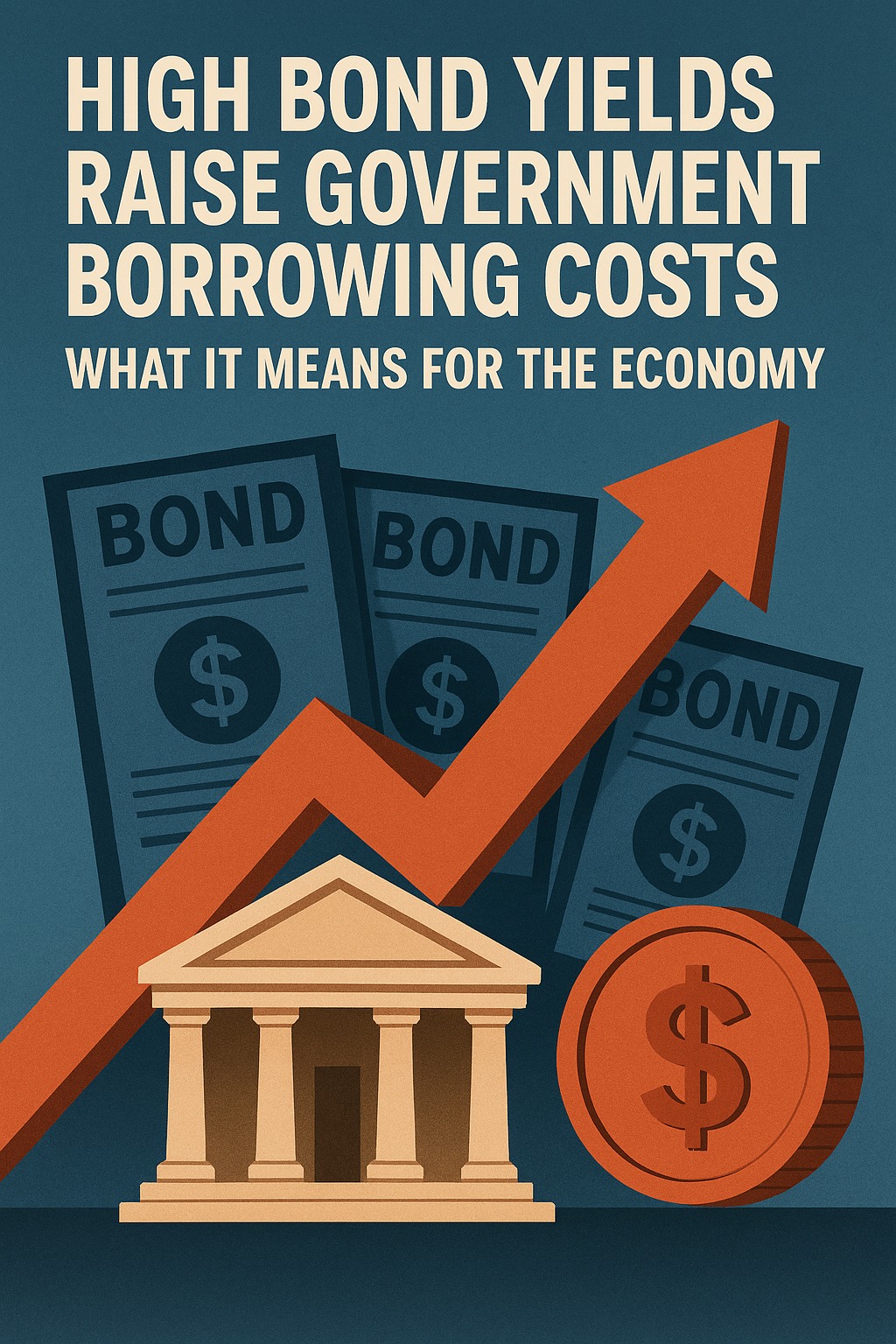
Rising bond yields are making government borrowing more expensive. When yields climb, it signals that lenders demand higher returns to lend money, affecting both public finances and market dynamics. This trend has significant implications for fiscal planning, interest rates, and investment flows in India.
Why Are Bond Yields Rising?
Inflation Concerns: Investors demand higher returns to compensate for inflation risk.
Global Interest Rate Trends: Central banks worldwide raising rates affect local bond markets.
Supply & Demand Dynamics: Increased government borrowing can push yields up if demand is insufficient.
Fiscal Deficit Pressures: Larger deficits may require more borrowing, increasing yields.
Impact on Government Borrowing
Higher Interest Payments: More funds are needed to service debt, reducing fiscal space.
Budget Strain: Less money available for public spending, infrastructure, and welfare programs.
Debt Sustainability Concerns: Rising yields increase long-term borrowing costs.
Impact on the Economy & Markets
Higher Loan Rates: Rising bond yields often translate into higher bank lending rates, affecting mortgages and business loans.
Stock Market Volatility: High yields can divert investments from equities to safer government bonds.
Investment Decisions: Higher returns on bonds may encourage risk-averse investors to shift capital away from corporate debt or equities.
Currency Impact: Strong foreign demand for high-yield bonds can stabilize the rupee; lack of demand may weaken it.
What This Means for Citizens
Borrowers: EMIs for home, auto, and personal loans may increase.
Investors: Bond investments may offer higher returns, but stock markets could see slower growth.
Government Projects: Infrastructure or social programs may face delays or reduced funding due to higher borrowing costs.
Conclusion
Rising bond yields are a double-edged sword: while they reflect investor caution and inflation expectations, they also increase borrowing costs for the government, potentially affecting fiscal budgets, interest rates, and the overall economy. Policymakers must balance borrowing needs with market realities to maintain economic stability.
FAQs
Q1. What are bond yields?
Bond yields are the returns investors earn on government or corporate bonds. Higher yields mean higher borrowing costs for the issuer.
Q2. Why do government borrowing costs rise with yields?
When yields increase, the government must offer higher interest to attract investors to buy its bonds.
Q3. How does this affect ordinary citizens?
Higher yields can lead to increased loan EMIs and slower growth in sectors dependent on government spending.
Q4. Are high yields always bad for the economy?
Not always. They can attract foreign investment and reflect healthy market expectations but may strain fiscal budgets.
Q5. Can the RBI influence bond yields?
Yes, through open market operations and monetary policy, the RBI can influence short-term rates and liquidity, indirectly impacting yields.
Published on : 25th September
Published by : SMITA
www.vizzve.com || www.vizzveservices.com
Follow us on social media: Facebook || Linkedin || Instagram
🛡 Powered by Vizzve Financial
RBI-Registered Loan Partner | 10 Lakh+ Customers | ₹600 Cr+ Disbursed
https://play.google.com/store/apps/details?id=com.vizzve_micro_seva&pcampaignid=web_share