

Short Answer:
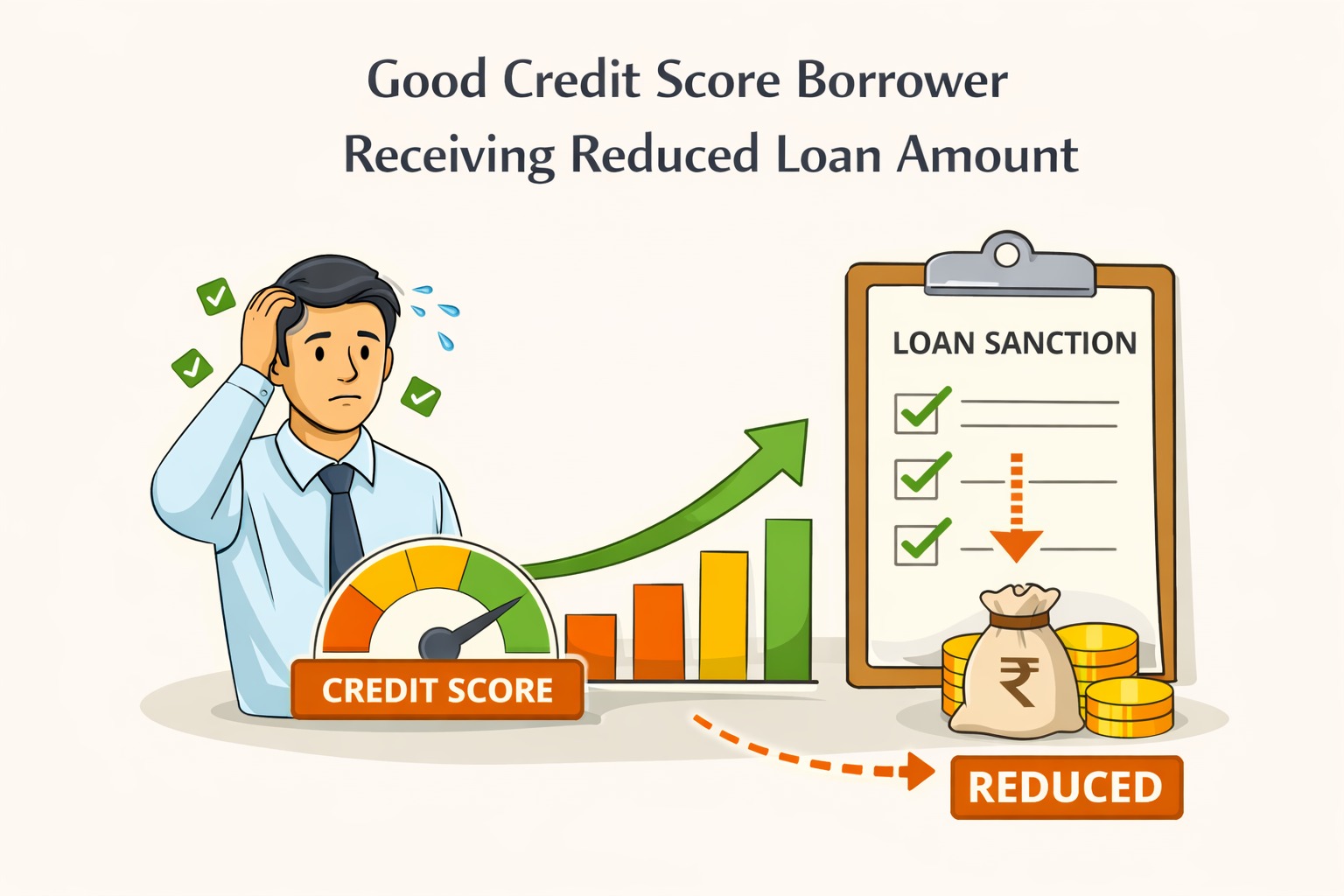
Loan amounts can be reduced without affecting credit scores due to high EMI-to-income ratio, existing unsecured loans, stress testing, income stability checks, and stricter credit quality norms.
Why Credit Score Alone Is No Longer Enough
Credit scores show repayment history, not future affordability.
Banks now ask:
Can this borrower handle stress if income drops or expenses rise?
Under supervision from the Reserve Bank of India, lenders are focusing on credit quality over credit growth, leading to tighter loan amount calculations.
Hidden Factors That Quietly Reduce Loan Amounts
1. EMI-to-Income Ratio Breaching Safe Limits
Banks prefer total EMIs to stay below 30–40% of net monthly income.
Even if all EMIs are paid on time:
Existing home loan EMIs
Credit card minimum dues
BNPL obligations
are clubbed together, reducing eligibility.
📌 This does not affect your credit score—but it cuts loan amount.
2. Multiple Small Unsecured Loans (Loan Stacking)
Banks see multiple small loans as:
Poor cash-flow planning
Higher behavioural default risk
Even ₹5,000–₹10,000 EMIs across several loans trigger risk flags, shrinking sanctions.
3. Stress Testing Under New Lending Models
Banks now simulate:
Job loss scenarios
Income reduction
Interest rate increases
If the borrower fails stress tests, loan amounts are reduced—not rejected.
4. High Dependence on Unsecured Credit
Personal loans, credit cards, and BNPL:
Carry higher default risk
Attract stricter caps
A borrower with a home loan + personal loan may see top-up or fresh loan limits sharply reduced.
5. Income Stability & Employer Risk
Even with high income, banks assess:
Industry stability
Employer size
Job continuity
Variable income or high-risk sectors often lead to lower sanctions, not rejections.
6. Banking Behaviour & Cash Flow Patterns
Banks quietly analyse:
Account overdrafts
Low average balances
Frequent short-term borrowing
These patterns do not reflect in credit scores, but affect loan sizing.
Credit Score vs Loan Amount: What Banks Value More Now
| Factor | Importance in 2026 |
|---|---|
| EMI-to-Income Ratio | Very High |
| Income Stability | High |
| Existing Unsecured Loans | High |
| Credit Score | High (entry filter only) |
| Banking Behaviour | Medium |
| Loan Purpose | Medium |
📌 Credit score opens the door. Affordability decides the size.
Real-World Lending Insight
From real credit evaluations, borrowers with 760+ credit scores but high EMI burden often receive 30–40% lower loan sanctions than moderate-income borrowers with cleaner cash flow.
Banks fear future stress—not past behaviour.
Impact by Loan Type
Personal Loans
Most affected
Aggressive caps in 2026
Home Loans
Longer tenures used to manage EMI
Co-applicants encouraged
Top-Up Loans
Often reduced or declined
What Borrowers Can Do to Protect Loan Amounts
Step-by-Step Action Plan
Reduce unsecured loan exposure
Close small-ticket loans
Keep EMIs below 35% of income
Avoid BNPL before applying
Add co-applicant if needed
Pros & Cons of Stricter Loan Amount Controls
✅ Pros
Prevents over-borrowing
Reduces default risk
Protects long-term credit health
❌ Cons
Frustrates disciplined borrowers
Delays purchases or plans
Requires better financial planning
Key Takeaways
Credit score alone doesn’t decide loan size
EMI burden is the biggest silent limiter
Stress testing is now standard
Multiple small loans reduce eligibility
Affordability beats credit history
Frequently Asked Questions
1. Why did my loan amount reduce despite good credit?
Due to EMI burden or stress-test failure.
2. Does loan reduction affect credit score?
No.
3. Do banks check credit cards and BNPL?
Yes, minimum dues are included.
4. Is this trend new?
Yes, and structural in 2026.
5. Can high income offset EMI burden?
Only partially.
6. Does employer matter?
Yes, income stability is crucial.
7. Are NBFCs more flexible?
Slightly, but at higher cost.
8. Will loan limits improve later?
Yes, if EMIs reduce.
9. Should I close loans before applying?
Yes, ideally.
10. Does refinancing help?
Yes, if it lowers EMI.
11. Is this RBI-mandated?
Indirectly, via risk norms.
12. Is lower sanction better than rejection?
Absolutely.
Conclusion: Affordability Is the New Benchmark
In 2026, banks are sending a clear signal:
👉 Strong credit history is necessary—but sustainable affordability decides loan size.
Understanding and managing these hidden factors is the key to protecting your borrowing power.
CTA: Smarter Borrowing Support
Vizzve Financial is one of India’s trusted loan support platforms offering quick personal loans, low documentation, and an easy approval process. Apply at www.vizzve.com.
Published on : 23rd January
Published by : SMITA
www.vizzve.com || www.vizzveservices.com
Follow us on social media: Facebook || Linkedin || Instagram
🛡 Powered by Vizzve Financial
RBI-Registered Loan Partner | 10 Lakh+ Customers | ₹600 Cr+ Disbursed