

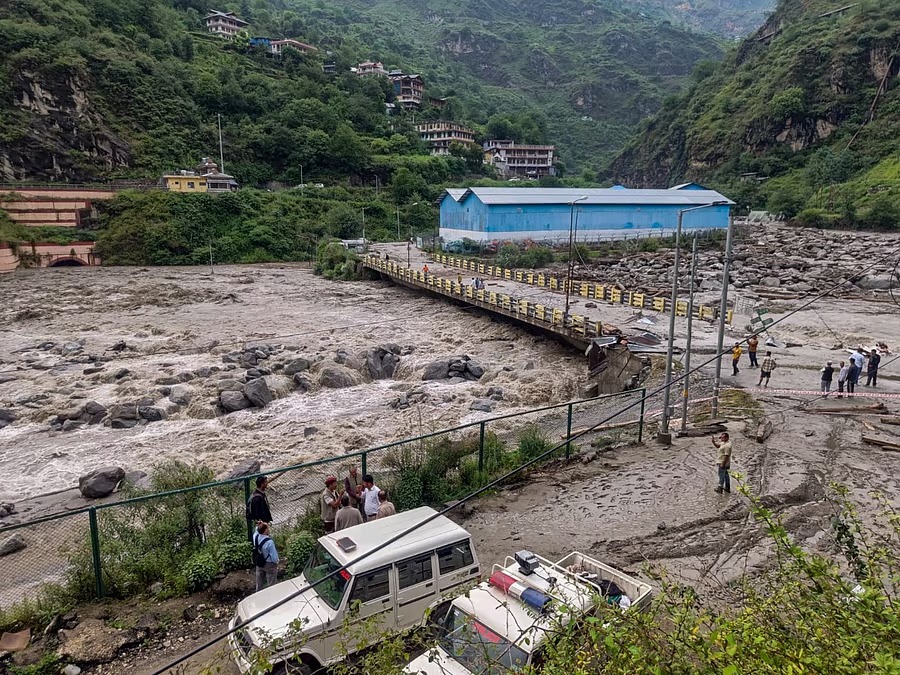
In a powerful and unsettling observation, the Supreme Court of India has warned that the "day is not far when Himachal Pradesh may vanish from the country’s map". This statement came during a hearing on a petition related to a “green zone” notification concerning the Shri Tara Mata Hill. But the court’s remarks went far beyond one case—they served as a broader commentary on the environmental crisis threatening India’s fragile Himalayan states.
What Triggered the Court’s Warning
The case in question involved objections to a notification declaring Tara Devi hill a green zone. The court refused to interfere with this notification, asserting that ecological preservation must take priority over unchecked development. The judges noted that the growing frequency of landslides, floods, and structural collapses in Himachal Pradesh is a direct result of irresponsible human intervention and climate imbalance.
Key Observations by the Bench
The justices emphasized that “nature is striking back” against decades of poor planning.
If development continues without respect for ecological boundaries, the court said, “entire Himachal Pradesh may vanish in thin air.”
The remarks came alongside a strong direction to government authorities to act urgently.
Underlying Environmental Issues in Himachal Pradesh
1. Unregulated Urbanisation
Hill stations like Shimla, Manali, and Dharamshala are expanding rapidly with minimal attention to carrying capacity or sustainability.
2. Deforestation and Hill Cutting
Widespread tree felling and road construction are weakening natural hill barriers, triggering landslides.
3. Hydropower Projects
While beneficial for energy, many projects alter river flows, damage local ecosystems, and displace communities.
4. Climate Change Impact
Unseasonal rainfall, melting glaciers, and increased soil erosion have added to the region’s fragility.
What the Supreme Court Urged the Government to Do
Reassess developmental policies in hilly regions with a strong focus on environmental protection.
Strictly enforce green zone protections and prevent further encroachments.
Balance infrastructure growth with ecological preservation, prioritizing long-term stability over short-term gains.
Submit a detailed environmental action plan within a fixed timeline.
Why This Warning Matters
This is not just about Himachal Pradesh. It sets a precedent for other ecologically sensitive zones in India. The court has essentially drawn a red line, reminding both state and central governments that development without sustainability can erase entire regions from the map.
Conclusion
The Supreme Court’s observation serves as both a legal caution and a national wake-up call. Himachal Pradesh, with its stunning landscapes and rich biodiversity, is under serious threat—not from nature, but from human neglect. If environmental balance isn’t urgently restored, India may lose more than just a tourist haven. It may lose an entire state to climate destruction.
FAQs
Q1: What did the Supreme Court say about Himachal Pradesh?
The Court warned that if current ecological destruction continues, Himachal Pradesh may one day disappear from the country’s map.
Q2: What was the case about?
It related to a petition challenging the declaration of Shri Tara Mata Hill in Himachal as a green zone.
Q3: Why is Himachal facing ecological risks?
Reasons include deforestation, over-construction, hydropower projects, tourism pressure, and the effects of climate change.
Q4: What steps has the Court asked the government to take?
It directed both state and central governments to submit a comprehensive plan addressing ecological balance and sustainability.
Q5: What is the larger implication of this warning?
This warning applies not only to Himachal Pradesh but also to all environmentally sensitive regions in India. It highlights the urgent need for eco-conscious development policies.
Published on : 2nd August
Published by : SMITA
www.vizzve.com || www.vizzveservices.com
Follow us on social media: Facebook || Linkedin || Instagram
🛡 Powered by Vizzve Financial
RBI-Registered Loan Partner | 10 Lakh+ Customers | ₹600 Cr+ Disbursed