

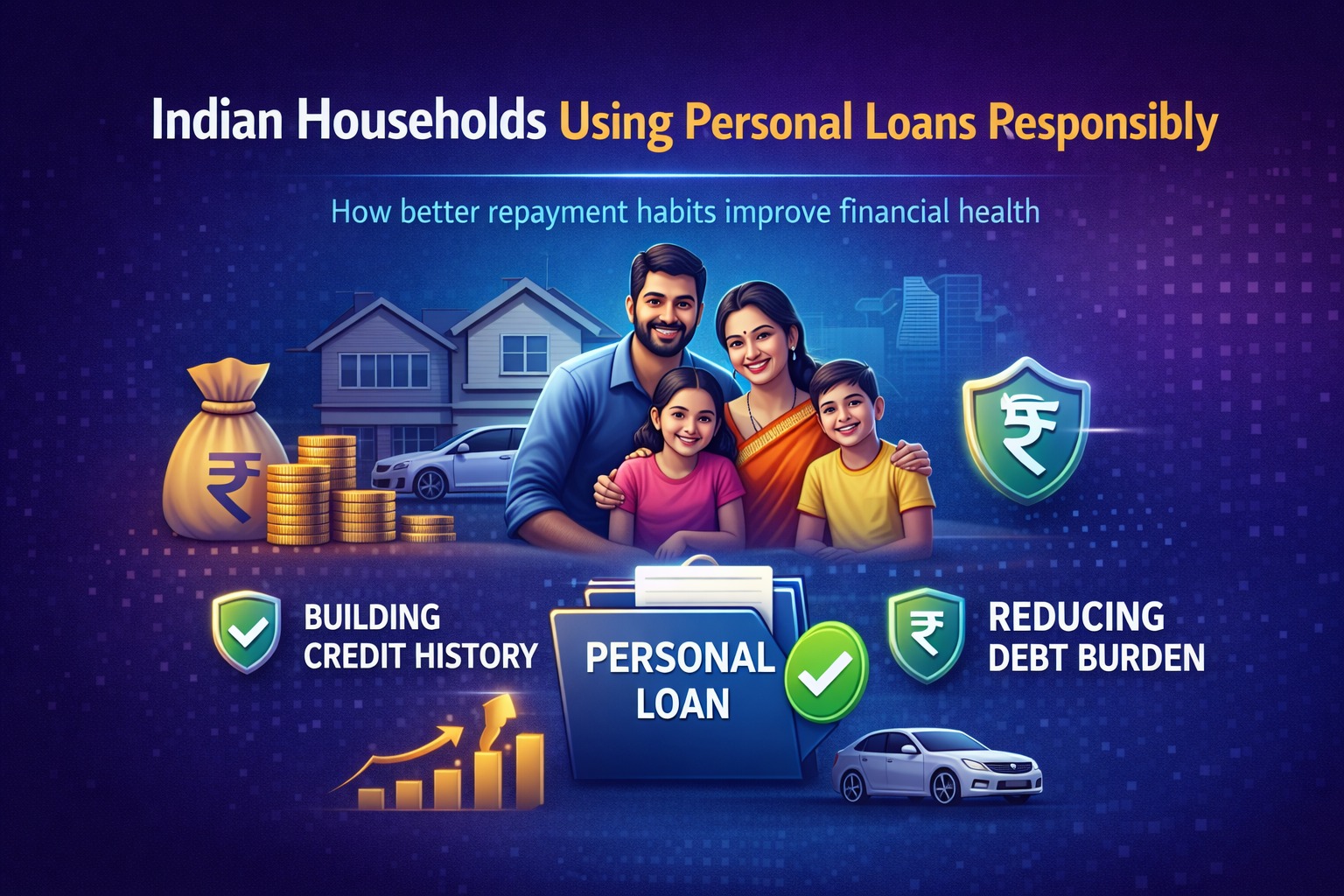
India enters 2026 with a paradox.
On one hand, household debt levels are rising, raising concerns about affordability and financial stress. On the other hand, personal loans continue to grow—and remain one of the most used borrowing tools for Indian households.
So why, despite warnings about rising debt, do personal loans still matter in 2026?
The answer lies not in excess—but in how borrowing habits are evolving.
AI Answer Box
In 2026, household borrowing in India continues to rise, but personal loans still matter because they offer flexible, quick access to funds for emergencies, consolidation, and short-term needs. Responsible borrowers use personal loans strategically rather than as long-term debt.
Quick Summary Box (Fast Indexing)
Household debt is rising in India
Personal loans remain widely used
Borrowers prefer flexibility and speed
Loans are increasingly short-term
Discipline matters more than volume
Understanding Household Borrowing in 2026
Household borrowing includes:
Home loans
Vehicle loans
Education loans
Personal loans
Credit cards
While home loans dominate total debt, personal loans dominate frequency—they are smaller, faster, and more flexible.
Why Rising Debt Levels Are Raising Concerns
Higher EMI Commitments
With:
Rising interest rates
Multiple overlapping loans
many households face tighter monthly budgets.
Shorter Financial Buffers
Increased borrowing reduces:
Emergency savings
Shock absorption capacity
This is why regulators and lenders now emphasise responsible lending.
Why Personal Loans Still Matter in 2026
1. Flexibility for Real-Life Needs
Personal loans are used for:
Medical emergencies
Education expenses
Family obligations
Temporary cash-flow gaps
These needs often cannot wait for long approval cycles.
2. Faster Access Compared to Secured Loans
Unlike home or gold loans:
No collateral needed
Minimal documentation
Faster disbursal
In a time-sensitive world, speed matters.
3. Structured Alternative to Credit Cards
Compared to revolving credit:
Fixed EMIs
Clear tenure
Predictable repayment
Many households use personal loans to avoid credit card debt spirals.
4. Debt Consolidation Tool
Personal loans are increasingly used to:
Combine high-interest debts
Simplify EMIs
Improve cash flow management
This reflects debt optimisation, not recklessness.
Personal Loans vs Other Household Borrowing
| Aspect | Personal Loans | Other Loans |
|---|---|---|
| Approval speed | Fast | Slower |
| Flexibility | High | Limited |
| Collateral | Not required | Often required |
| Typical tenure | Short–medium | Long |
| Best for | Immediate needs | Asset creation |
The Real Risk Is Not Personal Loans—It’s Overuse
Where Problems Arise:
Multiple personal loans at once
Using loans for lifestyle spending
Ignoring EMI-to-income ratios
In 2026, lenders are stricter—but borrower discipline remains key.
How Borrowers Are Using Personal Loans More Wisely
Modern borrowers:
Choose shorter tenures
Prepay when possible
Avoid stacking loans
Track EMI ratios closely
This shift shows maturity in household borrowing behaviour.
What Lenders Look at More Closely in 2026
EMI-to-income ratio
Credit utilisation
Borrowing frequency
Recent repayment behaviour
Personal loans are approved—but only for sustainable profiles.
Expert Commentary: Context Matters More Than Volume
“Rising household debt doesn’t mean all borrowing is bad. What matters is purpose, tenure, and repayment discipline—especially with personal loans.”
— Retail Lending Analyst
Key Takeaways
Household debt is rising, but borrowing patterns are changing
Personal loans still serve critical short-term needs
Speed and flexibility keep them relevant
Risks come from misuse, not existence
Discipline defines healthy household borrowing
❓ Frequently Asked Questions (FAQs)
1. Is household debt in India increasing?
Yes, but growth is gradual and monitored.
2. Are personal loans risky?
They can be if overused or poorly planned.
3. Why do people still take personal loans?
For emergencies, consolidation, and short-term needs.
4. Are lenders cautious in 2026?
Yes, approvals are more selective.
5. Do personal loans hurt credit score?
Only if EMIs are missed or borrowing is excessive.
6. Is a personal loan better than credit cards?
Often yes, for structured repayment.
7. How much EMI is safe?
Ideally below 35–40% of monthly income.
8. Can personal loans be prepaid?
Yes, often with minimal or no penalty.
Conclusion: Personal Loans Still Have a Purpose
In 2026, household borrowing is under scrutiny—but personal loans are not disappearing.
They remain relevant because real life is unpredictable. When used with clarity, planning, and restraint, personal loans act as financial bridges, not burdens.
📌 The future of household borrowing isn’t about avoiding loans—it’s about using them wisely.
Published on : 2nd January
Published by : SMITA
www.vizzve.com || www.vizzveservices.com
Follow us on social media: Facebook || Linkedin || Instagram
🛡 Powered by Vizzve Financial
RBI-Registered Loan Partner | 10 Lakh+ Customers | ₹600 Cr+ Disbursed