

Introduction
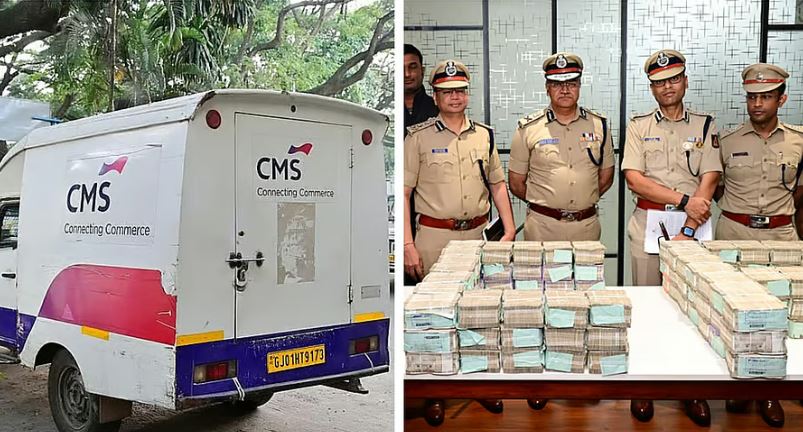
On November 19, 2025, Bengaluru witnessed one of its boldest daylight robberies: a cash-van carrying ₹7.11 crore was intercepted by a gang posing as RBI officers. What followed was a fast-paced, high-stakes investigation. In a stunning display of coordination, technical intelligence, and boots-on-ground policing, Bengaluru City Police cracked the case in just 54 hours, arrested key suspects, and recovered a major portion of the loot.
In this blog, we unpack how the police did it — the planning behind the heist, how the investigation unfolded, the arrests, and the larger lessons this case offers, especially about insider risk, financial security, and crisis response.
1. The Heist: How It Happened
The heist occurred on Nov 19, 2025, when a CMS Info Systems van transporting cash (from an HDFC Bank branch) was intercepted.
The gang, dressed as RBI (and partly IT) officers, blocked the van near the Ashoka Pillar–Jayanagar stretch.
Their vehicle: a Toyota Innova, with a fake license plate. The rear even bore a “Govt of India” sticker
They tricked the van crew into stopping, forced staff into their own car, and by 1:16 PM, they had transferred cash boxes.
The van was then abandoned, and the gang dispersed using multiple vehicles.
2. The Investigation: What the Police Did
Bengaluru City Police immediately registered a case of armed dacoity at Siddapura Police Station.
Over 200 officers were deployed, including teams from the South Division and the Central Crime Branch (CCB).
They fanned out across six states, including Karnataka, Tamil Nadu, Andhra Pradesh, Telangana, Kerala, and Goa, following vehicle and call-data leads.
Technical intelligence (like vehicle-movement tracking), call record analysis, and CCTV footage became central to breaking the case.
Despite the robbers’ careful planning — avoiding CCTV zones, switching vehicles, using fake plates, and not keeping mobile phones — a key technical clue emerged at the crime scene.
By the 54-hour mark, three key conspirators were arrested.
By around 60 hours, police had recovered ₹5.76 crore and seized at least one getaway vehicle.
3. Who Were Arrested — The Masterminds
According to police reports:
A police constable was among the arrested.
A former CMS employee was also arrested.
The in-charge of the CMS cash-van vehicle (responsible for coordinating van movement) was another key accused.
Investigators believe the gang had 6–8 people, each with specialized roles — logistics, transferring cash, switching vehicles, and more.
According to reports, the accused were deeply in debt — many from gambling — and had planned the heist over three months, including a 15-day recce.
4. How It All Fell Apart for the Gang
The robbers’ very methods to avoid detection became their undoing: avoiding CCTV, not using phones, changing vehicles — but these raised red flags when pieced together by police intelligence.
The technical clue found at the crime scene was critical. Though authorities haven’t disclosed the exact nature, they say it helped zero in on the constable.
Call data played a big role: investigators found suspicious repeated calls between the constable and CMS personnel around the time of the robbery.
Vehicle tracing: the fake number plate was linked back to a real car, and the Innova used in the robbery was traced.
The multi-state deployment made it hard for the gang to hide. Coordinated policing squeezed their escape options.
5. Key Lessons & Implications
Insider Risk Is Real
One of the accused was a serving police constable — highlighting how internal collusion can magnify the scale of a crime.
In operations involving large cash transfers, strong checks and rotation policies are essential for staff.
Technical Intelligence Matters
Even ultra-careful criminals made missteps. The police’s access to call data, vehicle tracking, and CCTV helped crack the case.
Real-time coordination across departments and states made the difference.
Crisis Response Capability
The speed of the investigation (54 hours) shows how law enforcement can mobilize rapidly when leadership, resources, and intelligence converge.
Training and infrastructure for large-scale cash logistics (CMS, banks) need reevaluation in the wake of this heist.
FAQ
Q1. How did the robbers manage to stop the cash van?
They impersonated RBI (and IT) officials and stopped the CMS cash-van by claiming they needed to verify documents.
Q2. Why was it difficult to trace the stolen cash?
Because the currency wasn’t serialized, it was harder to track through traditional bank tracing methods.
Q3. How many people were arrested, and who were they?
At least three key suspects were arrested within 54 hours: a police constable, a former CMS employee, and the van in-charge from CMS.
Q4. How much money was recovered?
Police recovered ₹5.76 crore by around the 60th hour since the robbery.
Q5. How did police coordinate across states?
They deployed teams across multiple states (Karnataka, Tamil Nadu, Andhra Pradesh, Telangana, Kerala, and Goa), used call-records, vehicle tracking, and human intelligence to trace the gang.
Q6. What can finance firms learn from this case?
The heist underscores the importance of internal audit, robust security protocols, and risk management—not just for credit risk but for operational risk and insider collusion. For a company like Finance, strengthening these areas is essential to protect assets and maintain trust.
source credit : Web Desk
Published on : 23th November
Published by : RAHAMATH
www.vizzve.com || www.vizzveservices.com
Follow us on social media: Facebook || Linkedin || Instagram
🛡 Powered by Vizzve Financial
RBI-Registered Loan Partner | 10 Lakh+ Customers | ₹600 Cr+ Disbursed