

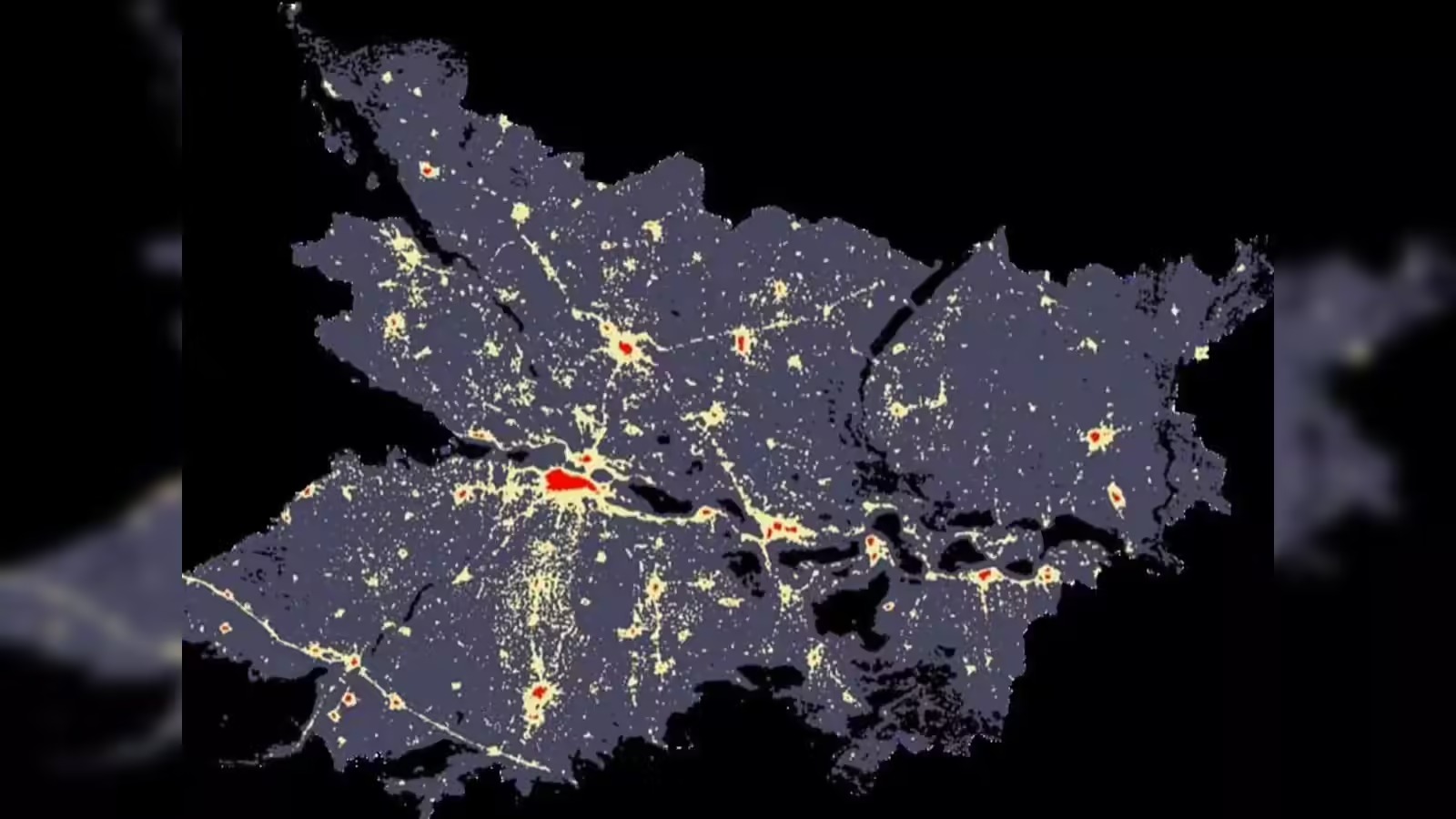
Bihar, one of India’s fastest-developing states, is turning to innovative methods to track its economic progress. Among these, night-time light data, collected via satellites, has emerged as a crucial tool for policymakers and researchers. By analyzing artificial lighting across urban and rural areas, Bihar is gaining insights into economic activity, infrastructure development, and overall modernization.
What is Night-Time Light Data?
Night-time light (NTL) data is derived from satellite imagery that captures artificial lighting visible from space during nighttime. This includes street lights, industrial areas, commercial centers, and residential zones. The intensity and spread of light are considered strong indicators of economic activity. In regions where official economic data may be delayed or incomplete, NTL data provides a real-time proxy for growth and development.
How Bihar is Using Night-Time Light
1. Monitoring Economic Activity
By studying NTL data, Bihar can identify areas of high economic activity, including industrial hubs, commercial zones, and rapidly urbanizing regions. Brighter areas on satellite maps often correlate with higher business operations and productivity levels.
2. Assessing Infrastructure Development
The spread of artificial lighting is directly linked to infrastructure improvements such as road networks, electricity distribution, and urban planning. Areas with increasing light intensity signal better infrastructure and connectivity.
3. Tracking Rural Electrification
Bihar has made significant strides in electrifying villages. NTL data allows authorities to measure the success of these initiatives, as previously dark regions gradually become illuminated over time.
4. Informing Policy Decisions
Policymakers can use NTL data to allocate resources efficiently. For instance, districts with low light intensity may require targeted investment in industry, infrastructure, or social services.
Insights from Bihar’s Night-Time Light Data
Urban Expansion: Satellite images show a noticeable increase in brightness in cities such as Patna, Gaya, and Muzaffarpur, reflecting rapid urban growth.
Industrial Growth: Areas surrounding industrial clusters exhibit higher night-time light intensity, indicating economic productivity.
Balanced Development: Comparisons between districts help identify disparities, enabling the state to focus on underdeveloped areas.
Advantages of Using Night-Time Light for Economic Assessment
Real-Time Data: Unlike conventional economic reports, NTL data provides near real-time insights.
Cost-Effective: Using satellite imagery reduces the need for extensive ground surveys.
Objective Measurement: Night-time light is a neutral metric that can complement traditional economic indicators.
Policy Planning: Helps government departments prioritize development projects and monitor their effectiveness.
Challenges and Considerations
While NTL data is a valuable tool, it comes with limitations:
Variability: Factors such as weather, seasonal lighting patterns, and temporary events can affect light intensity readings.
Rural Bias: Low-population areas may appear underdeveloped even if they have economic activity not captured by light intensity.
Infrastructure-Dependent: Areas with electricity but low economic activity can appear misleadingly bright.
To overcome these challenges, NTL data is often combined with traditional economic indicators such as GDP, employment rates, and industrial output.
Conclusion
Bihar’s innovative use of night-time light data demonstrates how technology can enhance governance and economic planning. By monitoring the spread and intensity of artificial lighting, the state can track development, identify areas needing attention, and plan infrastructure projects effectively. As more states adopt similar methodologies, NTL data is set to become a standard tool for measuring economic growth in India and beyond.
FAQ: Bihar’s Use of Night-Time Light Data for Economic Growth
Q: What is night-time light data?
A: Night-time light (NTL) data is satellite imagery that captures artificial lighting visible from space during nighttime. It includes street lights, industrial zones, commercial areas, and residential lighting, which act as indicators of economic activity.
Q: How does night-time light data indicate economic growth?
A: Areas with higher light intensity generally correlate with greater economic activity, urbanization, and industrial development. Tracking changes in night-time light over time helps measure economic growth, infrastructure expansion, and electrification progress.
Q: Why is Bihar using night-time light data?
A: Bihar uses NTL data to monitor economic development, assess infrastructure growth, track rural electrification, and guide policy-making. It provides near real-time insights into the state’s economic landscape.
Q: Which areas in Bihar show the most growth in night-time light?
A: Urban centers like Patna, Gaya, and Muzaffarpur show significant increases in night-time light, reflecting urban expansion, industrial growth, and better infrastructure.
Q: Can night-time light data replace traditional economic indicators?
A: No, NTL data complements traditional economic indicators like GDP, employment statistics, and industrial output. It provides additional real-time insights but should be analyzed alongside conventional data for accuracy.
Q: What challenges exist in using night-time light data?
A: Limitations include weather and seasonal variations affecting readings, rural areas appearing underdeveloped despite economic activity, and bright areas with electricity but low economic output potentially skewing results.
Q: Who provides night-time light data for Bihar?
A: Satellite data is provided by organizations such as ISRO and NASA. Analysts and government agencies process this data to inform policy and track development.
Published on : 22nd September
Published by : SMITA
www.vizzve.com || www.vizzveservices.com
Follow us on social media: Facebook || Linkedin || Instagram
🛡 Powered by Vizzve Financial
RBI-Registered Loan Partner | 10 Lakh+ Customers | ₹600 Cr+ Disbursed
https://play.google.com/store/apps/details?id=com.vizzve_micro_seva&pcampaignid=web_share